
Manchester Water Works presents FY2026 budget, proposes 3% rate increase
Get AI-powered insights, summaries, and transcripts
Subscribe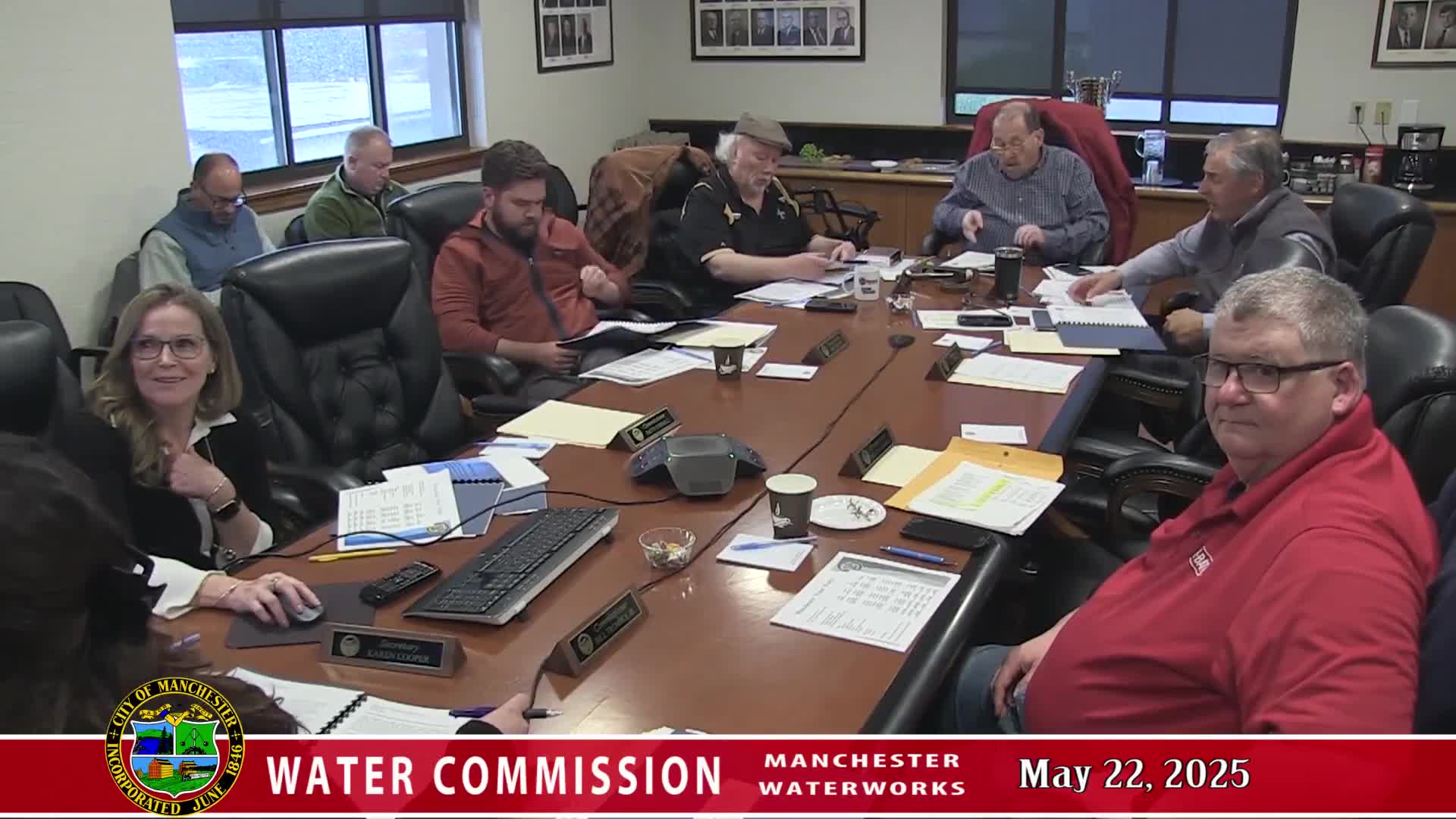
Summary
Directors presented a FY2026 operating and capital budget totaling roughly $31.0 million and recommended a 3% rate increase on water service and usage effective after Sept. 30, 2025; board was given time to review before a June vote.
Manchester Water Works senior staff presented the utility’s proposed fiscal year 2026 budget at the May 22 meeting, proposing total uses of cash of roughly $31.0 million and recommending a 3% increase in water rates and service charges effective for usage after Sept. 30, 2025.
Phil (Director) told commissioners the budget maintains staff levels, addresses ongoing capital maintenance needs for aging plant and distribution assets, and funds design of a new administration and distribution facility. Phil said the budget includes an increase in salaries and benefits tied to moving employees onto the Evergreen compensation scale and incorporates a tentative agreement with the union (discussed separately). “We’re recommending another 3% rate increase,” Phil said.
Key budget points identified by staff include: - Operating revenue projection: roughly $24.5 million (inclusive of rate increase assumptions). - Capital financing: planned transfers from reserves and remaining go‑bond proceeds totaling about $3.4 million plus other capital financing sources; bond proceeds include about $1.5 million still available for on‑call engineering and raw water projects. - Proposed capital projects: distribution relay work, treatment plant equipment replacements (pumps and ozone system work), a proposed new administration/garage design ($1.5 million design estimate), and contingency funding earmarked for unplanned treatment or source issues. - Staffing/costs: budget assumes nearly full staffing (~90 FTEs), with total salaries and wages of roughly $7.19 million reflecting Evergreen changes and step/benefit impacts.
Staff said the budget was adjusted since an April draft to reduce some capital items and consolidate contingency funds under finance and administration to preserve flexibility. The board did not vote to adopt the budget at the May 22 meeting; Phil said the board will be asked to adopt the FY2026 budget and the 3% tariff increase at its June meeting.
Staff provided an affordability analysis required by the state: using Manchester household income assumptions, staff said the utility’s proposed rates remain well below the state’s 1–2% affordability guideline (the utility’s current burden estimated at 0.54% of household income). Staff also noted developments under consideration (the proposed bottling/Hooksett sale) could materially increase capital availability if finalized.