
‘Free the pickle’: Manchester residents press aldermen to align food rules with state homestead law after cease-and-desist
Get AI-powered insights, summaries, and transcripts
Subscribe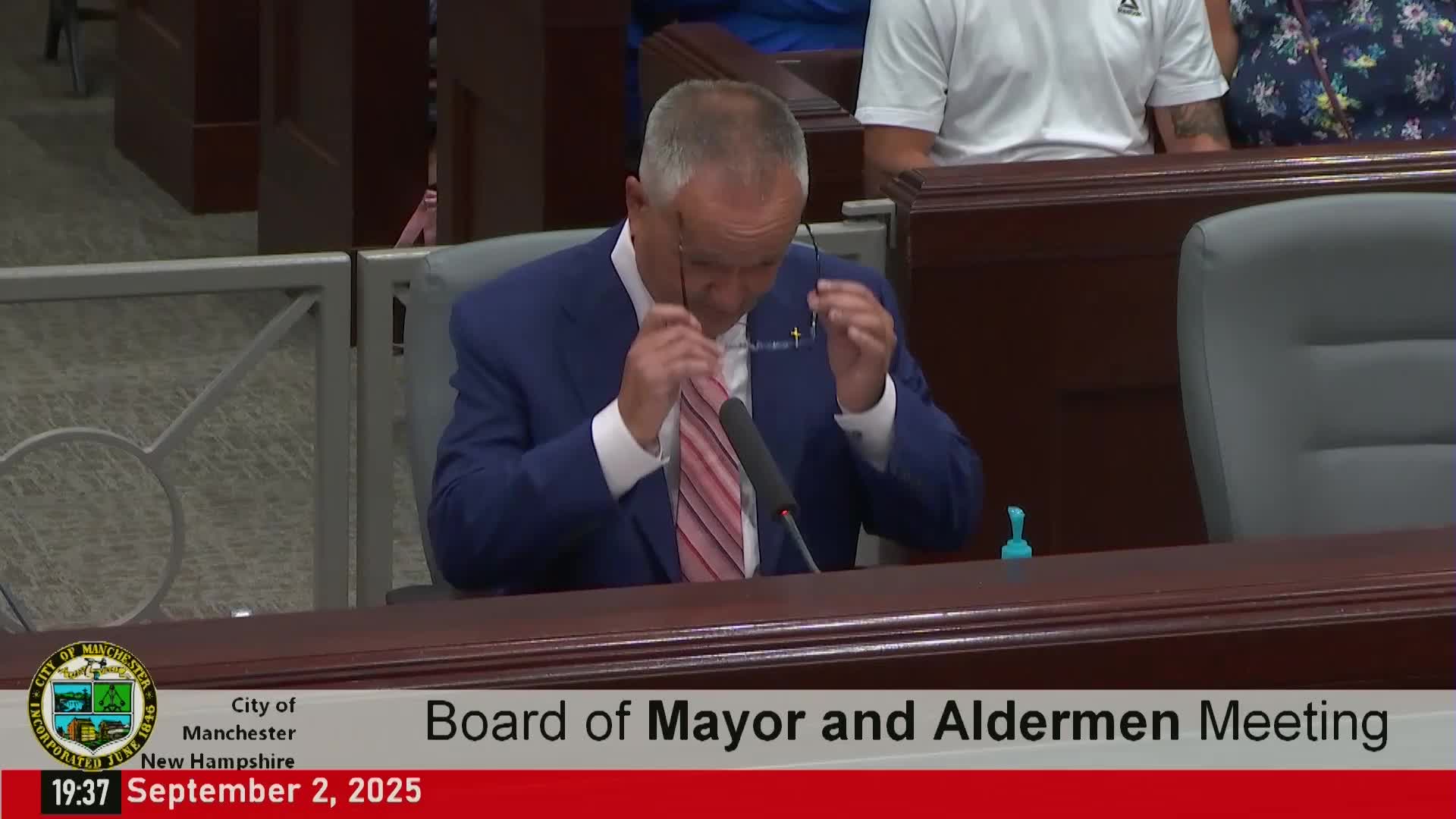
Summary
Residents criticized a health‑department cease‑and‑desist letter sent over home‑canned pickles and urged aldermen to amend the city’s decades‑old food ordinance to match New Hampshire homestead/cottage laws. The board referred the matter to committee for review.
Several residents and organizers told the Board of Mayor and Aldermen the city’s enforcement of its food service ordinance has been heavy‑handed and asked the board to amend the municipal code to mirror state homestead and cottage‑food laws.
Daniel Murray, a long‑time Holt Avenue resident, said the Manchester Health Department issued him a cease‑and‑desist over home‑canned “bread and butter pickles.” “For the record, I never said I was selling them,” Murray told aldermen, describing phone calls, a right‑to‑know request and national media attention. “This fight is not for me. It's about every bake sale, every church, every organization trying to raise money.”
Other speakers, including Nathan Dwyer and Nate Dwyer, referenced the state’s Food Freedom / homestead laws and said Manchester’s municipal code imposes additional restrictions that harm small, informal food efforts and fundraisers. “New Hampshire has a very good Food Freedom Act,” Dwyer said. “Manchester seeks to override New Hampshire’s homesteading law — that is wrong and a clear overreach.”
City health staff responded at the meeting, explaining their role and why they respond to complaints. Aaron Krutzke, the department’s environmental health supervisor, said the department is legally obliged to follow up on complaints and that the main safety concern centers on potentially hazardous, temperature‑controlled foods — not baked goods or many pickled items. He said the department is open to revising local rules and noted the department is a “self‑inspecting community” with an established local health code.
Aldermen debated whether to make a quick change or to study the matter. Alderman Long said the city ordinance dates to 1969 and needs updating; Alderman Vincent and others favored committee review to craft a measured amendment. By voice vote the board agreed to refer any proposed changes and the broader discussion to the relevant committee for further study.
Health officials said they will continue to enforce existing code for public‑distribution events and investigate complaints, but committed to working with the board and community groups to identify safe, practical options such as licensing, shared commercial kitchens or exemptions for low‑risk bake sales.