Get Full Government Meeting Transcripts, Videos, & Alerts Forever!
Get email alerts on the Open Meeting Law Training topic
No spam. Unsubscribe anytime.
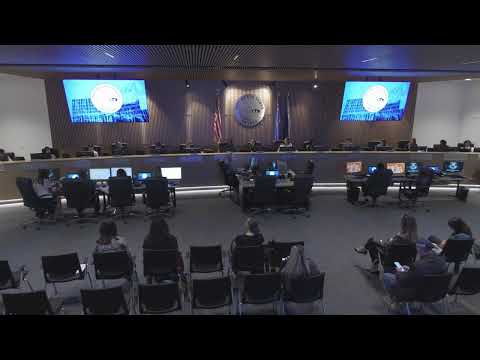
City clerk briefs new youth council on Nevada open meeting law, records and public‑comment rules
Summary
City Clerk Lou Anne Holmes presented an overview of Nevada's open meeting law to the Youth Leadership Advisory Council, covering quorum rules, agenda and notice requirements, restrictions on serial or informal deliberations, recording and minutes, and public comment periods.
The City Clerk provided a training for the newly formed Youth Leadership Advisory Council on Nevada’s open meeting law, records and public‑comment rules and how they apply to the council’s work.
City Clerk Dr. Lou Anne Holmes explained that a public meeting occurs when a quorum of council members convenes to deliberate or take action. With 20 members currently appointed, the clerk said the council’s quorum is 11 members (half the membership plus one). She warned members against creating a “serial quorum” — including via emails, group chats or informal gatherings — that would amount to prohibited deliberations outside a posted public meeting. The clerk emphasized that votes and deliberations must be public and transparent and cannot be taken in secret.
Holmes summarized procedural requirements the clerk’s office will support: agendas and any backup materials will be posted and made available to the public in advance (the law requires notice; the city typically posts agendas well before the minimum three working days); meeting locations must be accessible; minutes and an audio record will be kept and posted; and the council must provide two public‑comment periods on each agenda (one focused on agenda items and one for general citizen participation). She also advised how chairs should run meetings under Robert’s Rules of Order and how members should seek recognition to speak through the chair.
Members asked whether group chats are permissible. Holmes said social chats or team‑building group messages are not illegal but cautioned members to avoid discussing council business there, because such exchanges can create records and risk an open meeting violation if they include deliberation among a quorum. The clerk’s office will supply agendas and summary minutes for approval at subsequent meetings and will help the council comply with records requests and accessibility requirements.
Holmes concluded by reminding members that the council’s business must be conducted openly so the public can observe and participate and that staff (including the ex officio liaison) may communicate logistical information to members while avoiding deliberative exchanges that would create a quorum outside a public meeting.