Get Full Government Meeting Transcripts, Videos, & Alerts Forever!
Get email alerts on the School Assignment topic
No spam. Unsubscribe anytime.
Wake County staff review 2026–27 enrollment proposals after extensive public engagement
Summary
District staff summarized public engagement on draft 2026–27 student assignment proposals, responded to recurring concerns about stability, calendar alignment and crowding, and said a public hearing will be held Oct. 21 with a final board vote planned for Nov. 18.
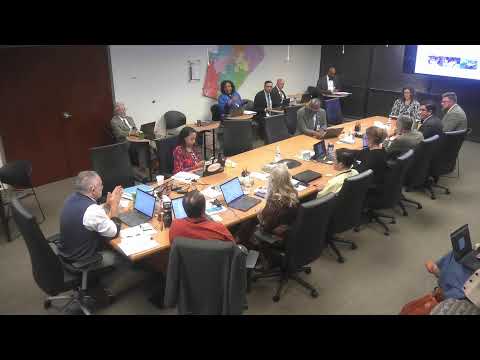
District staff presented a review of public feedback on the Wake County Schools draft 2026–27 student assignment plan at the board work session on Oct. 21 and outlined a small set of recommended adjustments ahead of a public hearing later that night.
The presentation recapped outreach since the Sept. 2 release of the draft, including virtual sessions, an in-person open house and an online ThoughtExchange forum. Staff said the engagement was large: the assignment-planning site had more than 16,000 visits as of Oct. 14; the ThoughtExchange received 835 participants who posted 758 unique “thoughts” and generated roughly 29,660 ratings. Staff reported about 805 participants across live events and recordings and estimated about 100 actual attendees at the open house after correcting the check-in count.
Why it matters: the plan would open a new elementary school and change feeder patterns in several high‑growth areas; those changes affect calendar alignment, sibling/cohort continuity and transportation for many families. Staff said the primary goals of the draft were to (1) establish the new elementary’s attendance area, (2) align middle- and high-school feeder patterns for cohort continuity and (3) relieve crowding in growth areas while minimizing the number of families impacted.
Staff highlighted several communities where concerns were strongest. In the area set to feed the new elementary, planners recommended routing students to Westlake Middle and Middle Creek High to create a continuous K–8/middle–high cohort and to take advantage of capacity at Westlake and Middle Creek; staff said the shift also helps relieve crowding at Herbert Akins Middle. Staff said families could apply for “generous stability transfers” to remain at a current school if they can provide their own transportation.
In the White Oak / Mills Park area, staff described pressure from immediate crowding at White Oak and Mills Park that, they said, requires moving existing students (rather than future developments) to provide near‑term relief. Staff said White Oak’s capacity with trailers is 1,352 but that the school has been operating nearer to about 1,600 students, a level planners described as unsustainable for building operations. To ease the transition, staff recommended adding a traditional-calendar application option for families who would be reassigned to Turner Creek Elementary so those families have parity with other Turner Creek applicants.
Other changes described included adjustments to feed Crestmont/Pines into Turner Creek and Salem Middle to stabilize Mills Park and a recommendation to align a portion of Beckett Crossing with Apex High in order to improve feeder efficiency and reduce crowding at Apex Friendship High.
Transport and special education: staff acknowledged repeated questions about registration logistics, bus routes and how individual IEP services will transfer to new schools. Staff said responses to many of those questions have been posted in a public FAQ and that special education staff provided specific answers that are available on the enrollment website; staff summarized that special-education services will be available but that details vary by case.
Next steps: staff said they will take any comments from the Oct. 21 public hearing into revisions and aim to present a final draft for board action on Nov. 18. Staff also announced an Oct. 29 virtual Q&A and that the new, deeper online forum will remain open for families to explain concerns in more detail through the public-comment period. Staff emphasized their planning goal to affect the fewest families possible while meeting district objectives.
Discussion at the work session included board questions about specific capacity and calendar figures, and staff reiterated that transportation for stability transfers generally would be the family’s responsibility. No formal vote was taken at the work session; the public hearing and the Nov. 18 final vote remain the formal steps for any adoption.