Get Full Government Meeting Transcripts, Videos, & Alerts Forever!
Get email alerts on the Heating Systems topic
No spam. Unsubscribe anytime.
Riverside Local weighs replacing boilers after repeated heat‑exchanger failures; cost estimates range from $64,000 to $274,000
Summary
District maintenance staff told the facilities committee the heat exchangers at Parkside and Riverview have failed repeatedly since 2022. Staff outlined repair and replacement options, gave cost estimates, and said the district is pursuing legal options against vendors.
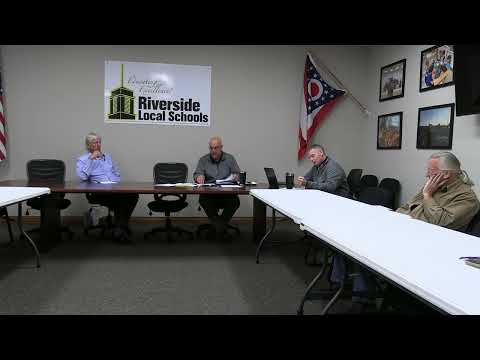
At a recent Riverside Local School District facilities meeting, maintenance staff reported repeated failures of heat exchangers in boilers at Parkside and Riverview and presented options that range from replacing individual heat exchangers to installing four new water‑tube boilers.
The district has documented multiple heat‑exchanger failures since 2022, staff said, and has already paid tens of thousands of dollars for repairs. Maintenance staff described two near‑term paths: (1) replace two heat exchangers (parts only priced at $21,850 each, $43,700 total, plus roughly $9,800 in labor), or (2) replace the boilers with four new water‑tube RBI units (parts quoted at $129,000 total, about $32,250 each) with a labor estimate that could run up to $84,000. Taken together, staff presented a low estimate around $64,000 for two exchangers up to about $274,000 to buy and install four new boilers and ancillary parts.
The maintenance director said the district has already paid about $18,000 for one failed exchanger and roughly $35,000 for another, and that shorter lifespans are a concern: "We have documentation of 2 years," the director said of prior exchanger life spans. The director added, "I would predict that we're still going to have heat exchangers failing in the future" if the district continues to replace exchangers of the existing design.
Staff described technical reasons vendors and an outside engineering firm raised for the failures. Several HVAC vendors and an engineering contact said modulating fire‑tube boilers currently installed may not be well suited to the schools' load profiles; maintenance staff reported that water‑tube boilers are generally thought better suited to the district's modulating demand. Roberts Mechanical, the local RBI distributor involved in the original installations, offered two options: discounted replacement exchangers or discounted water‑tube boilers. Roberts also proposed signing documentation confirming proper installation and operation if the district purchased equipment through them.
Staff said they have opened communications about possible legal remedies against vendors and that a formal letter or legal action was being prepared but not yet finalized. Staff recommended contacting the RBI parent company (MESTech/MasTec in Canada, referenced by vendors) to seek additional remedies or technical guidance. The district noted lead times: two weeks to receive replacement boilers from the vendor once ordered, and a plan to stage work so new units are running before shutting down remaining operational boilers to avoid heating interruptions to school days.
Committee members discussed tradeoffs, including short‑term costs to "buy time" by replacing exchangers versus longer‑term capital investment in new boilers; staff emphasized uncertainty about whether parts for the existing boilers will remain available, noting vendors told them current boiler models are no longer manufactured and replacement parts could become obsolete within five to ten years.
Next steps identified by staff include continuing vendor negotiations, contacting the parent company for RBI/MESTech, preparing materials for a possible special board meeting, and documenting any vendor sign‑off in writing if the district proceeds with vendor‑supplied equipment. No formal purchase decision was recorded at the meeting.
The committee did not pass a motion at the meeting; staff emphasized the district may call a special board meeting if an immediate purchase is required.