Get Full Government Meeting Transcripts, Videos, & Alerts Forever!
Get email alerts on the Municipal Budget topic
No spam. Unsubscribe anytime.
Kaysville budget update: reserves stronger than expected; shortfall from failed Truth in Taxation to draw on fund balance
Summary
City staff told the Kaysville City Council that audited figures show the general fund balance is slightly higher than projected, but the failure of the city’s Truth in Taxation proposal means planned operating costs will be covered from reserves next year unless the council approves new revenue.
Kaysville city officials reported Wednesday that audited figures show the city’s general fund balance ended fiscal 2024 modestly higher than expected, but the council will likely use reserves next year to cover operating costs that voters did not approve through Truth in Taxation.
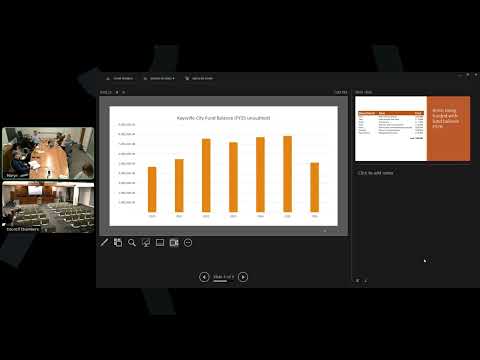
At a council meeting, Jason Christiansen, city manager, presented a financial overview tracing the city’s property tax rate history and said Kaysville remains “the third lowest tax rate of the 15 cities in Davis County, and we have been on the low end for a long time.” He told the council auditors provided an expedited estimate showing the city’s fund balance rose from about $7.7 million at the end of fiscal 2024 to roughly $7.8 million as of June 30, 2024, rather than falling as earlier budget estimates had suggested.
Why it matters: the city had budgeted to apply nearly $1.8 million in new, ongoing operating costs through a Truth in Taxation request this year; because that measure did not pass, those costs are now projected to come from fund balance. City staff told council members that, based on current projections, the general fund reserve could decline to a little over $5 million by June 30, 2026 — still above the council’s roughly $4.1 million threshold but a substantial reduction.
Christiansen explained some reasons the audited carryover exceeded earlier projections: timing of capital purchases (for example, an ambulance budgeted in FY25 will not be shown as spent until delivery, expected next month), and conservative assumptions about employee health coverage. He said the city historically budgeted as if every eligible employee elected family coverage but that actual enrollment is nearer 80 percent, which lowered actual spending.
Councilor Perry Oaks said the presentation left him reassured about the city’s near-term position while urging caution going into the next budget cycle. “I think the takeaway overall tonight is we’re in good shape this year to rely on fund balance,” Oaks said, while also warning that he would object if new hires or ongoing costs beyond current plans were added when the council revisits Truth in Taxation next year.
Council members discussed how to treat the unexpected positive variance. Christiansen and councilors considered setting aside some of the reserves for forthcoming capital projects — including a potential fire station and street maintenance identified in an upcoming master streets plan — rather than leaving the funds unallocated.
The council also discussed items that remain commitments regardless of the Truth in Taxation result. Council members confirmed a previously approved agreement to fund a gymnasium project with the local school district; staff said the district has spent design and engineering funds and plans to advertise the project for bid in a few months. Christiansen noted the council will still need to approve an MOU with the school district that will set terms for usage and operations.
Other budget details discussed included departmental underspending in FY25 (many departments returned unused appropriations), capital outlay underspending (noting $253,000 under budget in capital outlay largely due to the undelivered ambulance), and a roughly 27 percent aggregate increase used as the baseline for this year’s Truth in Taxation planning. Staff cautioned that some line items — for example, turnout gear and certain construction costs — have risen far faster than general inflation.
Council members also discussed broader state-level factors that affected local tax policy. Several speakers referenced increased enforcement by the State Tax Commission of posting requirements tied to Truth in Taxation and said a legislative change had tightened those requirements; staff said several Davis County cities attempted Truth in Taxation this year but none were approved. Christiansen said the city will track changes to state law and the League of Cities’ guidance and account for that uncertainty when preparing next year’s budget.
No formal budget votes, ordinances or appropriations were taken during the meeting. The council adjourned at the end of the report.
Looking ahead: staff told the council they will refine FY26 revenue and expenditure estimates over the next six months, plan for next year’s Truth in Taxation process as the likely starting point for revenue, and return with updated audited figures and refined projections in the budgeting cycle.