Get Full Government Meeting Transcripts, Videos, & Alerts Forever!
Get email alerts on the Public Comment Free Speech topic
No spam. Unsubscribe anytime.
Aldermen debate profanity restrictions in public comment; First Amendment experts urge narrower rule
Summary
Aldermen debated whether to restrict profanity during public comment and heard legal testimony that a blanket ban risks violating the First Amendment.
The Board of Mayor and Aldermen held extended public comment and a policymaking discussion about proposed changes to Rule 3, the meeting conduct rule that would restrict profanity and vulgar language during public comment. Several residents and First Amendment experts addressed the board, urging narrower language and compliance with constitutional protections for speech in a public forum.
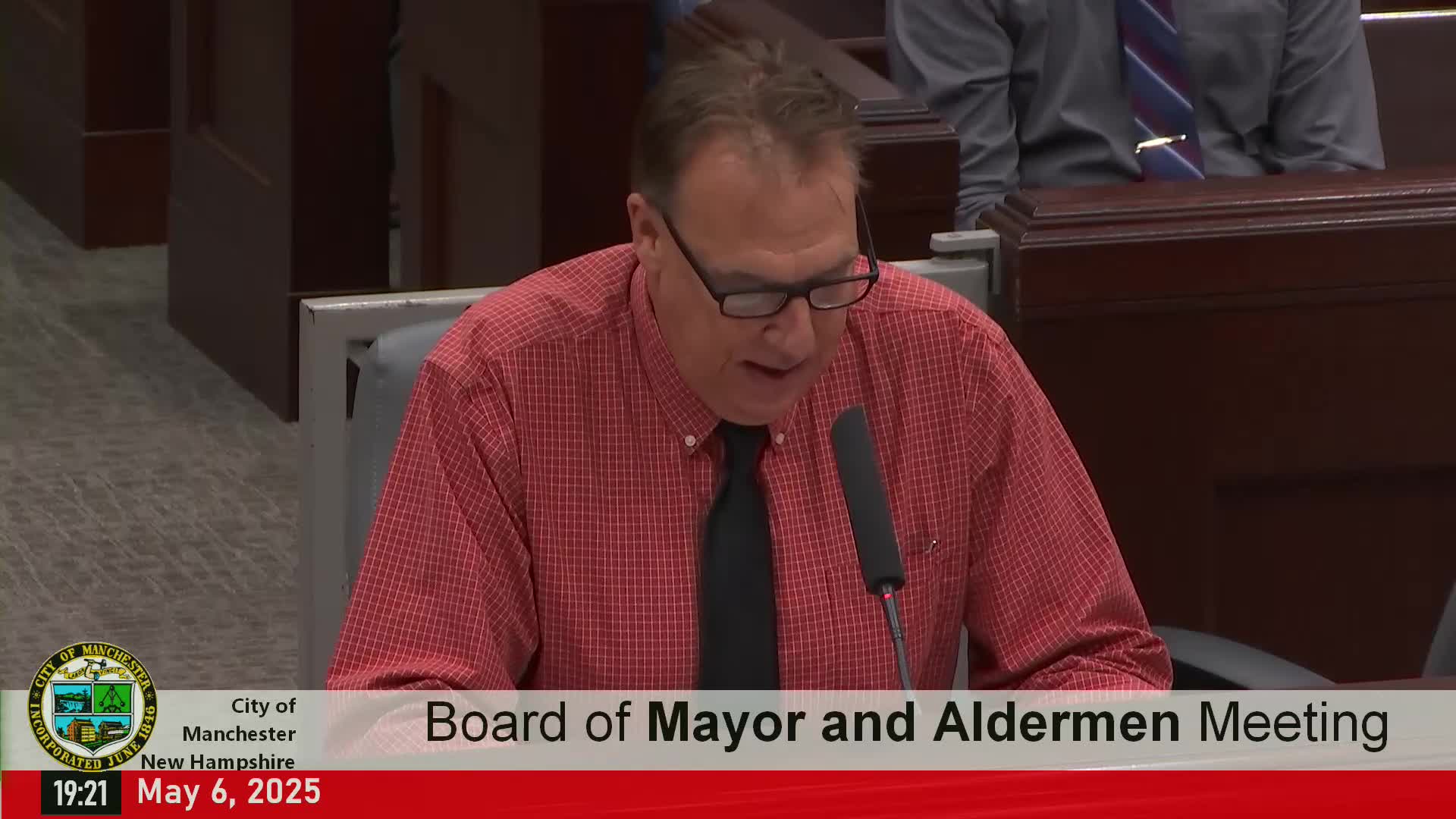
Mark Hayward, speaking as a resident, argued that terms such as "profanity" and "vulgarity" are vague and warned the rule could be applied unevenly. Greg Sullivan, president of the New England First Amendment Coalition, urged the board to adopt language encouraging civility rather than a blanket prohibition; he cited Supreme Court precedent that protects offensive expression. Daniel Pye, a constitutional-law professor at the University of New Hampshire, told the board that a blanket ban on profanity in a limited public forum could exceed what courts allow and advised adopting a rule that preserves decorum without banning particular words outright.
Other aldermen raised practical concerns: one member cited FCC v. Pacifica in arguing that the city—s broadcast of meetings and the presence of children could justify some restraint; others said the city had experienced disruptions at past meetings and sought clearer tools to maintain order. Several commenters urged that the board prefer encouragement of civil language and use removal for disorderly conduct rather than prohibiting specific words.
A motion to "receive and file" the proposed changes to Rule 3 proceeded to a roll-call vote. The transcript records a roll call and procedural confusion in tallying. The meeting record contains conflicting announcements during vote tabulation and, after further clarification, the chair recorded the motion as failed. The transcript shows both an initial clerk announcement of a tally and subsequent comments by aldermen that culminate in the chair declaring the motion failed.
Ending: The Rule 3 proposal remains unresolved after the May 6 meeting. The board heard legal testimony and public comment advising narrower, constitutionally defensible language; aldermen asked staff and the solicitor to continue reviewing the rule and comparable language used by other municipal bodies.