
Council committee approves Ely Park rate increases after season of record rounds
Get AI-powered insights, summaries, and transcripts
Subscribe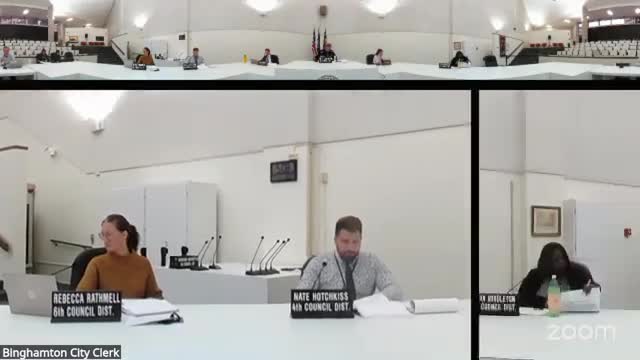
Summary
At a budget hearing, Binghamton councilors approved rate increases and closed the Golf Fund budget after hearing from Ely Park management about record rounds, rising revenue, upcoming capital needs and food-and-beverage plans.
Binghamton City Councilors meeting as a Committee of the Whole approved increases to greens fees and annual-pass prices for Ely Park and closed the Golf Fund budget pages after hearing a presentation from the course’s manager about record play and revenue.
The council’s finance committee voted to raise rates for weekday and weekend tee times and increase annual-pass prices, and then closed the Golf Fund budget (pages referenced during the hearing). The measures passed by voice/roll-call votes recorded at the meeting as 4–0 in favor.
Ely Park management reported the course is on pace for more than 32,000 rounds this season and has exceeded $1 million in total revenue for the first time. Chris Strand, speaking for the course’s management under Troon, told councilors rounds and revenue have grown over the five seasons Troon has managed the facility and credited staff for improved turf and course conditions despite a wet summer.
Strand outlined near-term capital and equipment issues that informed the budget. He said the maintenance-equipment lease that currently costs about $97,000 per year will expire after the coming year (calendar 2026), after which the city will own the equipment outright; Strand said that will reduce the fund’s annual lease expense beginning in 2027 but warned of normal repair costs as equipment ages. He also said the cart lease term ends after next year and that staff will evaluate options—purchase, lease rollover or replacement—during 2026.
On food and beverage, Strand described plans to expand the menu and event business. The budget includes funding for a programmable “vector” oven (listed in the budget as a stove) with an approximate budget figure discussed in the hearing of about $18,000, and an increase in F&B labor to hire a dedicated manager or assistant manager to sell outings, banquets and other events. Strand said Ely Park’s small kitchen limits full-service restaurant ambitions but that the course can grow revenue by hosting more groups, trivia nights and small events and by allowing vetted caterers for some private events while retaining liquor revenues under the city’s license.
Councilors pressed for more resident-specific data; Strand said he did not have a ZIP-code breakdown at the meeting but could provide one later and that the course draws players from beyond Binghamton even though the city has covered facility costs historically. Staff said updated monthly revenue reports would be available after close of September.
The proposal presented to councilors included specific increases for greens fees and annual passes discussed on the record (examples cited at the hearing: weekday and weekend round fees rising by $2–$4 in various time slots; several annual-pass categories increased by amounts cited in the budget discussion). Council members moved and seconded the rate-change motion; the roll call recorded Council member Rathmell, Council member Hotchkiss, Council member Middleton and Chair Kavanaugh voting Aye (4–0). The council later moved and approved closing the Golf Fund budget pages (motion passed 4–0).
Council discussion also addressed a $350,000 capital line tied to clubhouse siding and repairs to cart paths; staff said the city would likely finance that work with bonding or a short-term note and that the Golf Fund would carry the debt service going forward. During the hearing staff said past roof work and pump-house repairs have reduced immediate infrastructure risk, but that irrigation remains the single largest potential failure point longer term.
Approval of the rate increases and closing the Golf Fund budget came as councilors and staff emphasized the goal of moving the operation toward self-sufficiency while growing non-golf revenues (events and catering) and reducing future lease payments when equipment ownership transfers to the city.
Strand and staff said they would return with ZIP-code analyses, finalized September revenue numbers, and more detailed capital quotes for the clubhouse siding and cart-path work.