Get Full Government Meeting Transcripts, Videos, & Alerts Forever!
Get email alerts on the Potter Valley Project topic
No spam. Unsubscribe anytime.
Mendocino supervisors defer vote and send alternate Potter Valley resolution to next consent calendar after hours of public comment
Summary
After hours of public testimony on the Potter Valley Project, the Mendocino County Board of Supervisors voted to reject the original resolution and place an alternate resolution on the Nov. 4 consent calendar, while board members and stakeholders continue negotiations on a post-decommissioning water plan tied to the IWPC and NERF proposals.
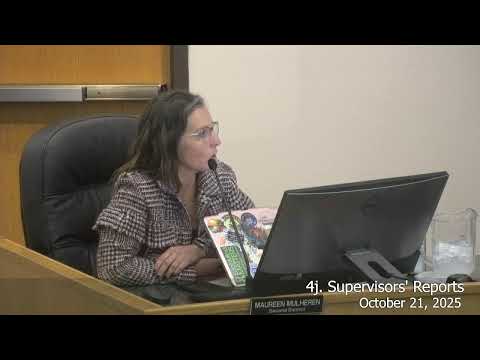
Supervisor Klein introduced a county resolution asking parties to account for community impacts as the Potter Valley Project moves toward decommissioning and removal of Scott and Cape Horn dams. The Board of Supervisors heard more than three hours of public testimony and a long discussion among supervisors before rejecting the original resolution and directing staff to place an alternate version on the Nov. 4 consent calendar.
The original resolution, co‑sponsored by Supervisors Klein and Norvell, sought to prompt county-level discussion and to ask PG&E to “reevaluate its decision to seek decommissioning,” while expressing concern about loss of water‑supply reliability if diversion infrastructure is removed. Klein told the board, “Our communities have been built and predicated on the water coming through the project for over 100 years,” and said she wanted a public forum for residents’ concerns.
Nut graf: The item brought sharply divergent views from residents, water districts, environmental groups and tribal representatives. Several speakers and agencies urged continued collaboration through the Inland Water and Power Commission (IWPC) and the Eel‑Russian Project Authority (ERPA) on the New Eel‑Russian Facility (NERF) and related storage proposals, while others urged stronger county action to protect local water supplies and to require guarantees before any decommissioning proceeds.
Board and stakeholder perspectives
Janet Pauley, chair of the IWPC, told the board IWPC negotiated the water diversion agreement and that the agreement — and newly secured grant funding — offers “the best chance of protecting a continued diversion into the future.” Pauley said IWPC had helped secure “over $9,000,000 in grant funding for NERF engineering and local water resiliency studies” and urged the board to oppose language that could harm the coalition’s work.
Many Potter Valley residents and irrigation district leaders urged stronger county action. Giddis McFadden of the Potter Valley Irrigation District called the draft resolution “well thought out” and said the community needed time to understand impacts. Multiple speakers from Potter Valley said that without storage in Potter Valley, summer domestic wells and local agriculture could be at risk even if a NERF diversion were built.
Environmental and tribal speakers urged dam removal and restoration. Alicia Bales of the Sierra Club said ecosystem recovery and the Klamath dam removals show salmon can rebound quickly after dam removal, and Round Valley tribal representatives and other tribal speakers asked the board to account for tribal rights and impacts on salmon and communities upstream.
Legal and technical concerns were raised in public comment. Attorney Duncan James described riparian and appropriative water rights and said some legal claims could be pursued in court. Engineer George Rao presented back‑of‑envelope cost estimates for storage alternatives and demolition, noting multi‑hundred‑million‑dollar figures for some options.
Board action and next steps
After extended discussion and a request for more time to review an alternate draft that had been circulated that morning, the board agreed not to adopt the original resolution at the meeting. Instead the board approved a motion to reject the original resolution and place an alternate resolution on the Nov. 4 consent calendar for formal consideration; the motion carried with Supervisors Norvell and Klein dissenting.
Supervisor Williams expressed concern that a strong county resolution could damage fragile coalition work and urged a path that preserves the seat Mendocino County holds in interagency talks. Supervisor Norvell said he supported the community’s opportunity to be heard and was not afraid to ask difficult questions of PG&E.
The decision leaves active multi‑party negotiations in place — IWPC, ERPA, Sonoma Water, tribal representatives and other partners are continuing engineering and funding work on NERF and ancillary storage. Board members and many public speakers said the county needs a concurrent plan for additional storage if diversion capacity changes.
Ending: The board signaled it wants further community conversation while keeping county participation in IWPC and ERPA intact; the alternate resolution will return to the board on Nov. 4. Meanwhile, stakeholders continue technical, funding and legal work tied to NERF, potential storage projects and FERC’s license surrender process.