
Walsh County panel clears snag-and-clear plan and approves drainage permits and assessments
Get AI-powered insights, summaries, and transcripts
Subscribe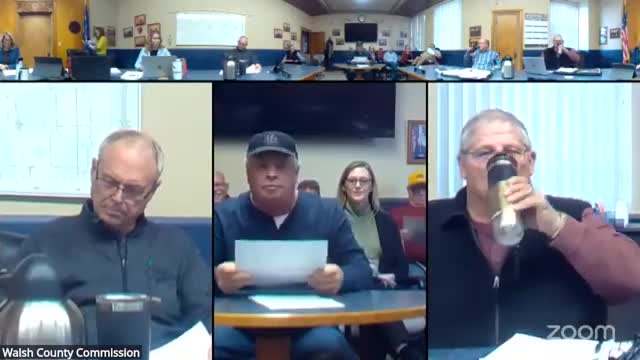
Summary
The county heard a presentation from the Water Resource Authority on snag-and-clear work, authorized assessment up to $0.50 per acre with state matching funds and approved drainage hearings and related permit requests.
The Walsh County Water Resource Authority briefed commissioners on Oct. 21 about ongoing snag-and-clear work and government drain hearings. The authority asked the commission to approve assessments to support river corridor cleanouts and drain maintenance; commissioners approved the request.
The presenter explained the program follows Natural Resources Conservation Service (NRCS) guidance on tree removal and riparian protections. The presenter said the maximum assessment the county can levy for the program is $0.50 per acre and that the authority intends to seek matching funds from the state before proceeding to the state level for approval.
Commissioners also discussed government drains—many installed mid-century—and the challenges of creating assessment areas for drains that previously had no formal assessment roll. The commission approved the process and asked staff to finalize assessment boundaries and fund accounting for individual drains.
Two permanent permits were approved in follow-up to water-board review: a ditch-cleaning permit for Marvin Bullock (County Road 4, Section 25) and a drainage permit for Dushick Farms (County Road 6, Section 6) to tile about 165 acres with the outflow routed to a county ditch and culvert. Staff confirmed downstream landowners were notified and that water-board sign-off was on file for the permits.
The commission’s approvals will allow the Water Resource Authority to move assessment applications forward to the state and to schedule cleanouts where funding is available.