Get Full Government Meeting Transcripts, Videos, & Alerts Forever!
Get email alerts on the Restoration Grant topic
No spam. Unsubscribe anytime.
Commissioners accept grant for Cottonwood Valley Restoration Phase 3, sign indirect-cost certification
Summary
The Bannock County Board approved signature on an indirect-cost certification tied to a Southeast Idaho Council of Governments grant for the Cottonwood Valley Restoration Project Phase 3, keeping a 15% de minimis indirect rate.
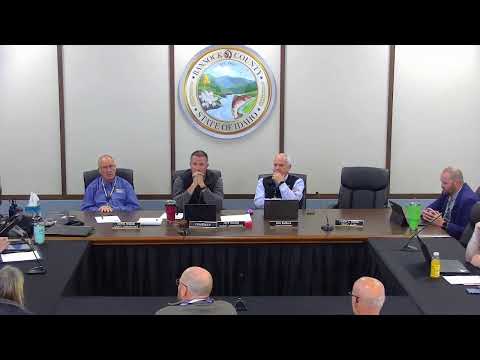
The Bannock County Board of Commissioners authorized signature on the indirect-cost certification for the Cottonwood Valley Restoration Project Phase 3 grant during its Oct. 21 meeting.
Charity Stacks of the Southeast Idaho Council of Governments told the board the next step was for the county to accept the award and sign one form specifying the county’s indirect-cost choice. “So Charity Stacks with Southeast Idaho Council of Governments, here to present the award for the Cottonwood Valley Restoration Project phase 3. The next steps are to accept the award if you wish to accept, and there's 1 form that needs a signature. It's the indirect, how you want your indirect, which is just the same as last year,” she said, adding that the county would take the 15% de minimis rate of the modified total direct costs.
A commissioner asked whether the indirect rate amounted to an in-kind contribution from landowners; Stacks clarified it is money the county receives to cover administrative expenses: “That's money that the county gets to cover expenses,” she said. The board voted to approve signature on the certification.
Stacks reported on recent site visits and said the project’s first phase shows healthy aspen regeneration and that most treated areas are responding well; some pockets from phase two have not recovered as expected, and staff are exploring additional measures. She also said juniper regrowth has been limited and removable in small patches, and that removing juniper helps native fire-resistant species such as aspen return.
The board recorded no further conditions when approving the certification.