
Police present first‑year automatic enforcement numbers; crashes down at two intersections
Get AI-powered insights, summaries, and transcripts
Subscribe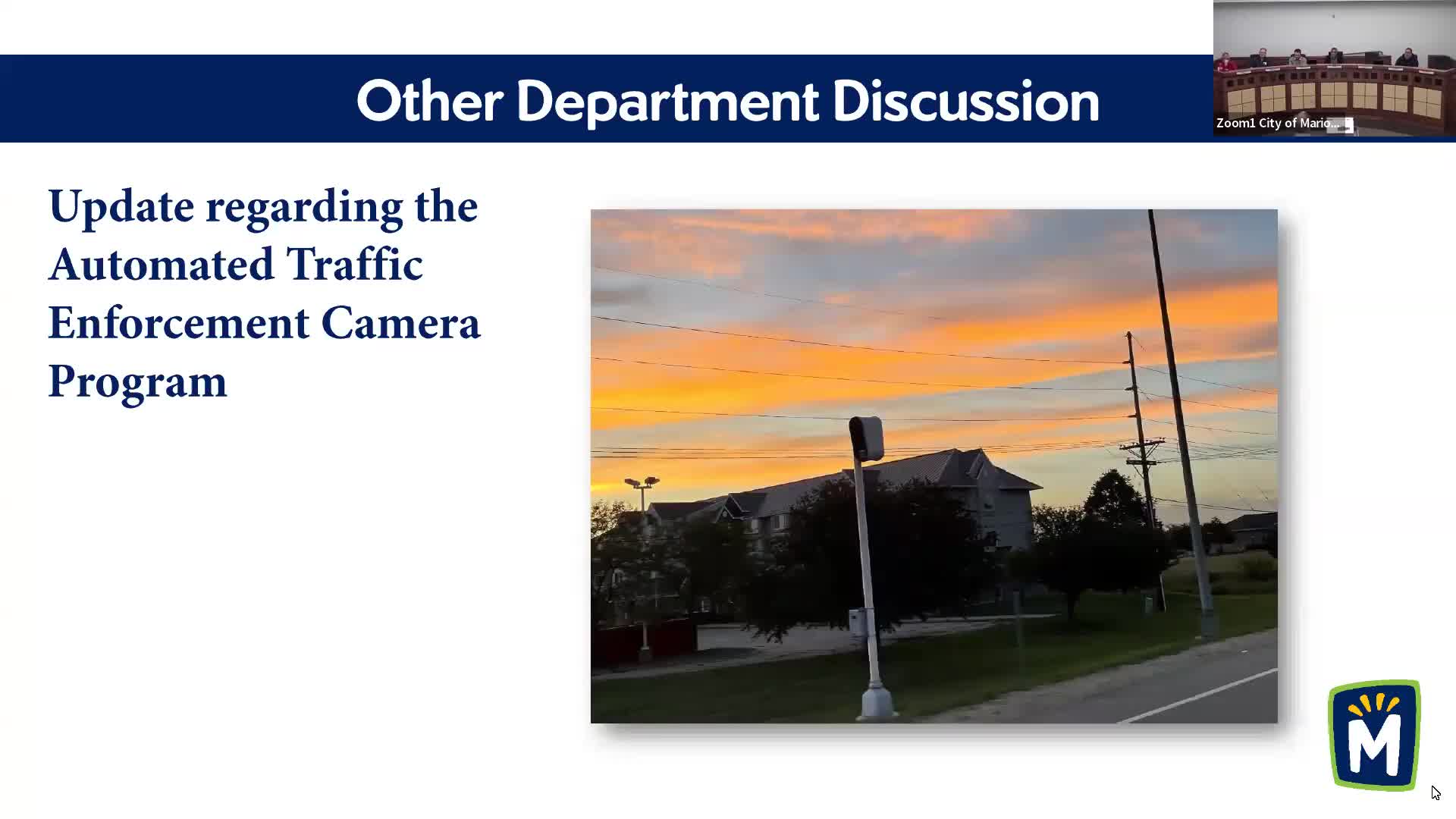
Summary
Marion Police reported 10,463 automatic enforcement citations this year versus 11,972 last year, described permit limits that reduced mobile speed camera coverage, and said injury‑crash rates at two camera locations trended downward.
Lieutenant Corey Birning of the Marion Police Department briefed council on Oct. 21 about the city’s automatic traffic enforcement (ATE) program and presented citation, crash and revenue figures for the first year under a permit system.
Birning said the department was limited to 29 permitted locations for speed enforcement this year (the city had applied for about 58 sites) and that permit conditions now restrict mobile speed units to capturing vehicles receding from the unit rather than approaching. He said some appeals and signage issues put the mobile unit offline for part of October–December but that officers deployed it 43 times after it returned to service.
Why it matters: Birning reported 10,463 citations issued this year, down from 11,972 the prior year. He said red‑light enforcement remained active at major intersections and provided multi‑year crash counts showing safety trends.
Crash and injury trends: At the Highway 100 and East Post Road location, Birning said five‑year averages before ATE were 1.4 accidents per month (39 injuries and one fatality across the earlier five‑year span). In the prior year the average dropped to 1.0 accidents per month with nine injuries; in the current year it averaged 0.92 accidents per month with eight injuries. At Highway 13 and 151, Birning said five‑year averages were 1.5 accidents per month with 49 injuries; last year averaged 1.16 accidents per month with two injuries and the current year averaged 0.75 accidents per month with two injuries. He characterized both locations as "trending in the right direction."
Program finances and contests: Birning told council the total fines paid across the program were about $1.3 million; the city's share was 62.23%, or $809,347. About 5% of citations were formally contested and roughly 12% of contested cases were ruled not liable or canceled on review.
Operational constraints and next steps: The department said state permitting changes constrained site approvals and speed enforcement scope; Birning said the department will file its annual report to the Iowa Department of Transportation in January and will monitor any ATE‑related legislation next year.
Council questions touched on the state permitting rationale and how the cameras treat vehicles that enter an intersection as the light turns red; Birning said the system uses a half‑second grace period in certain red‑light captures and that staff review contested citations case‑by‑case.