Get Full Government Meeting Transcripts, Videos, & Alerts Forever!
Get email alerts on the Public Space Regulation topic
No spam. Unsubscribe anytime.
Rhinebeck trustees vote to bar commercial sales on village property pending legal review
Summary
The board voted to amend the peddler's permit to prohibit selling commercial products on municipal property unless specifically authorized; members asked for legal review before finalizing implementing language.
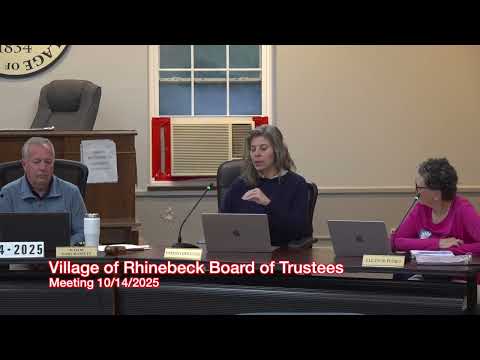
Mayor Bassett led a prolonged discussion about commercial vending and advertising in village parks and on public property at the Oct. 14 Village Board meeting. Board members said a recent sidewalk vendor had sold wares outside an approved sidewalk dining footprint and raised questions about whether the village's existing Chapter 83 peddling and soliciting law covers stationary vending in parks.
Board legal counsel and trustees discussed First Amendment constraints and the need for a time, place and manner policy. The board agreed as an interim approach to amend the village's peddler's permit to "not allow the selling of commercial products on parkland, municipal land, or municipal property without specific permission otherwise," as one motion recorded at the meeting put it. Several trustees stressed they wanted language vetted by the village attorney before final adoption.
The motion to amend the peddlers permit was made, seconded and carried by voice vote; members said enforcement would need to be stepped up to address unauthorized sellers on village sidewalks and parcels.
Trustees emphasized the amendment was not intended to create a business improvement district or to regulate noncommercial expressive activity; the discussion repeatedly distinguished commercial sales from permitted event-related vending. Trustees said the amendment would be incorporated into the peddler permit process and legal would prepare draft text for formal adoption at a future meeting.
Ending: The board approved the interim change by motion and directed legal staff to draft enforceable language for future meetings; trustees said they expect the policy to balance commercial restrictions with allowances for permitted events.