
Scotland County leaders press sheriff on jail overcrowding, overtime and staffing; request hiring, vehicle and incentive plan
Get AI-powered insights, summaries, and transcripts
Subscribe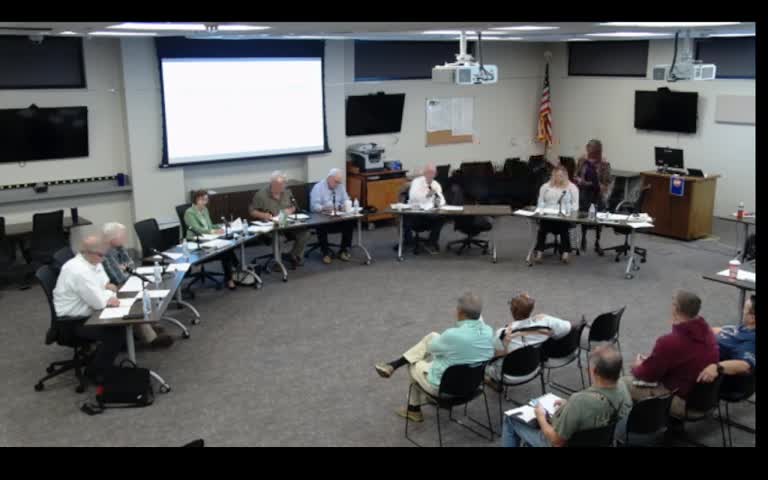
Summary
The Scotland County Board of Commissioners and Sheriff Ralph Kersey held an annual budget discussion Oct. 21 focused on jail overcrowding, high overtime payouts and staffing shortfalls.
The Scotland County Board of Commissioners and Sheriff Ralph Kersey held an annual budget discussion Oct. 21 that centered on jail overcrowding, high overtime payouts and staffing shortfalls — matters commissioners said are both a financial strain and a public-safety concern.
Chairman Tim Ivey opened the meeting by noting growth in public-safety spending since the sheriff took office, saying the combined sheriff's office and jail budget has risen from about $4.6 million in 2014 to roughly $8.2 million in the current budget year. He told the board that the state has directed the county it will need to move inmates because of overcrowding, and that transfers could add roughly $50 per inmate per day in additional costs.
County Manager April Snead summarized recent budget monitoring and actions. “Our board of commissioners voted unanimously to freeze 75% of the sheriff and jail's budget for overtime spending,” Snead said, and she told the board the sheriff then significantly reduced overtime in the weeks that followed; the board later voted to lift the freeze after the reductions took effect.
In his remarks, Sheriff Ralph Kersey portrayed the overtime as a symptom of chronic vacancies and operational demands. He said the county jail is rated for 109 beds but recently was housing roughly 160 to 176 people, and that staffing levels left some shifts with as few as four detention officers. “If you pass my budget, the law was clear that I handle my budget, not micromanage my budget,” Kersey said, describing how he has limited certain duties and adjusted operations to reduce overtime while continuing day-to-day operations.
Commissioners and staff reviewed detailed budget figures presented by the county manager showing overtime payouts over recent years and salary budgets for both the sheriff's office and the jail. The county manager highlighted that overtime payouts in a recent month fell from about $64,000 to near $16,000 after the board's temporary freeze and the sheriff's operational changes.
Board members pressed for more concrete proposals to reduce overtime by filling vacancies and improving recruitment and retention. Commissioners asked the sheriff and county staff to prepare a written plan that could include sign-on or retention bonuses, a strategy for recruiting and training deputies (including use of BLET — Basic Law Enforcement Training — sponsorships), and a timeline and cost estimate for reaching a fuller staffing level. A commissioner said, without disputing the need for some overtime, that the county could hire multiple deputies for roughly the same annual amount being spent on overtime.
Vehicle maintenance and fleet policy were also discussed. The sheriff reported a fleet of about 55 vehicles, several with more than 150,000 miles and a handful identified for surplus; commissioners urged creation of a formal vehicle-replacement policy tied to mileage and mission needs so replacements are predictable and not deferred until failures occur.
The meeting also addressed how the sheriff's office used recently released federal forfeiture funds from a drug case. Kersey said those funds — roughly $544,000 after federal shares — were spent on body cameras, tasers, a new jail scanning system and two vehicles rather than used solely to purchase patrol cars.
Commissioners and the sheriff identified a separate communications breakdown around a $50,000 body-camera grant and the timing of an Axon equipment shipment and invoice. County staff and the sheriff's office characterized the incident as a coordination problem that resulted in the county losing grant funding; commissioners urged clearer procedures so acquisitions and grant timing are coordinated in advance.
The board directed county staff, the sheriff and the county manager to return to the Nov. 3 board meeting with: (1) a hiring and retention plan and options for sign-on/retention incentives, (2) a proposed vehicle policy and a prioritized vehicle replacement plan, and (3) any immediate steps to address jail overcrowding and the projected cost of inmate transfers. Commissioners said they would consider those proposals and where necessary identify funds or policy changes to address both safety and budget constraints.
The meeting ended with the board scheduling follow-up and adjournment.
Ending: Commissioners emphasized they would continue the conversation and asked for concrete proposals at the next meeting so they could evaluate budget and policy options rather than rely solely on short-term overtime reductions.