Get Full Government Meeting Transcripts, Videos, & Alerts Forever!
Get email alerts on the Landfill Cd topic
No spam. Unsubscribe anytime.
Public hearing draws heated opposition and divided business support for proposed C&D landfill on Colon Road
Summary
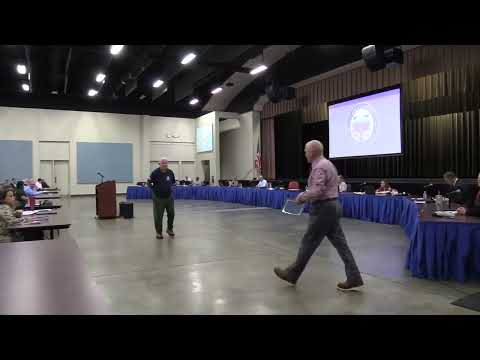
The Lee County Board of Commissioners held a lengthy public hearing Oct. 20 on a proposal by Liberty Waste Solutions to build a construction-and-demolition landfill near Colon Road. Speakers were sharply divided; commissioners closed the hearing and took no action.
The Lee County Board of Commissioners heard more than two hours of public comment on Oct. 20, 2025 over a proposal by Liberty Waste Solutions (Liberty) to open a construction-and-demolition (C&D) landfill and recycling facility on a roughly 116‑acre parcel near Colon Road and Amos Bridges Road.
Liberty representatives including CEO Rick Prather described the project as a C&D facility that would accept wood, concrete, brick and similar construction material, recycle a substantial share of incoming material and operate under state regulations referenced during the hearing. Prather said the footprint of active landfill excavation would be substantially smaller than the total parcel (he said roughly 42 acres would be used for the working facility) and estimated truck traffic at about 5–10 trucks per hour during operating hours. He said the company expects to perform 30‑year post‑closure monitoring and noted opportunities to repurpose the site after closure.
Opposition came from many nearby residents and property owners who said the location lies amid expanding residential subdivisions, churches, motels and planned industrial and housing projects and argued a landfill would depress property values, increase local traffic, cause dust and noise and threaten water quality. Speakers from local development interests — including representatives of Mattamy Homes and Cherokee Land Company — warned that approving a C&D landfill at this site would jeopardize ongoing and planned investments and could deter large industrial or residential projects. Several residents described past damage and debris linked to earlier site clearing activity and raised concerns about safety on local roads.
Proponents said a modern C&D facility would be cleaner than common perceptions of “dumps,” would divert recyclable material from municipal landfills, and would create local jobs (Liberty estimated roughly 12–18 positions at average annual pay levels discussed during the hearing). Supporters pointed to other North Carolina facilities that, they said, operated without offsite odors or pests and that certain C&D facilities had been converted to parks after closure.
A number of factual points and competing claims were debated: one speaker said the application noted a multi‑year capacity measured in “3 65 tons per year for 15–18 years” (as stated in the hearing transcript); Liberty said buffers and berms would separate the site from roads and that state oversight would govern environmental safeguards. At least one commenter and several developers suggested that the site is heavy‑industrial zoned and pointed out prior industrial interest in the vicinity.
After extended public comment, the commissioners closed the public hearing. No vote to grant a franchise or to adopt permit language was taken that night; staff said the hearing record would be part of any subsequent formal review. The board did not prepare an ordinance or make a decision at the meeting. Additional studies, permit reviews and possibly negotiated community benefit (host‑fee) arrangements were referenced by speakers as potential next steps.
Those wishing to comment or submit materials in writing were urged to provide them to county staff; the board will continue its consideration through staff reports and subsequent agenda items. The county did not act on the franchise application at this meeting.