Get Full Government Meeting Transcripts, Videos, & Alerts Forever!
Get email alerts on the Licensing topic
No spam. Unsubscribe anytime.
Tennessee licensing committee approves exam-credit extensions, new CPE exam and recommends accommodation for non‑NASBA credits; approves foreign education-evalu
Summary
The Tennessee State Board of Accountancy licensing committee approved multiple exam‑credit extensions, authorized the National Association of Corporate Directors exam for CPE credit, recommended a limited accommodation for a licensee who claimed credits from a non‑NASBA provider, and approved Scolaro as an approved foreign education evaluator.
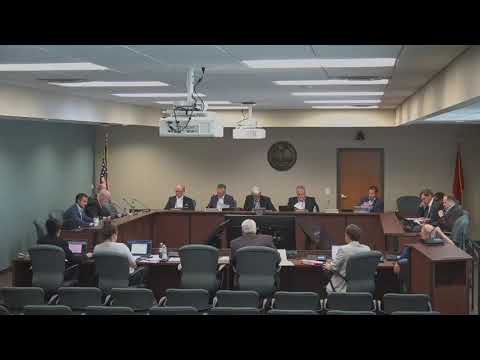
The Tennessee State Board of Accountancy’s licensing committee on Oct. 20 approved requests to extend CPA exam credits for three Tennessee candidates, voted to accept the National Association of Corporate Directors exam for continuing professional education credit, recommended an accommodation for a licensee who submitted credits from a provider not registered with NASBA, and approved Scolaro as a foreign education evaluator for Tennessee licensure.
The committee — chaired by Sam Bennett — voted to grant three exam‑credit extension requests described in materials as hardship accommodations. Executive Director Jen (last name not specified in the transcript) presented three requests: one six‑month extension of a Regulation (REG) score to 03/16/2026 for a candidate caring for a newborn with medical issues; a request to restore an expired Audit score and extend Business Environment & Concepts (BEC) to 11/30/2025 for a candidate who traveled to Pakistan to care for an injured parent; and a request to extend a REG score to 04/30/2026 for a candidate whose spouse had ongoing medical needs. After discussion, the committee moved and approved the extensions by voice vote.
The committee also approved CPE credit for the National Association of Corporate Directors (NACD) exam, a four‑hour, computer‑administered test delivered by Pearson VUE that the staff said translates to 20 CPE hours under the board’s rule (approved exam credit is five times the exam length). Chair Bennett moved the item following staff recommendation and members voted aye.
On a separate CPE matter, the committee reviewed a licensee audit response that included 25 hours of tax CPE certificates from Mark J. Kohler, a provider registered with the IRS for enrolled‑agent education but not registered with NASBA (the organization whose registry the board uses to validate CPE providers for CPA credits). Staff told the committee that Board Rule 0020‑05‑0.0410 reserves the board’s right to approve or disapprove continuing education claimed under the rule. Committee members expressed concern about setting a precedent of accepting non‑NASBA providers but also noted the practical burden on the licensee if credits were disallowed (25 hours plus 16 penalty hours). The committee voted to recommend denial of Mr. Page’s (the licensee named in the materials) request to accept the Kohler credits, but to waive the assessed penalty hours and allow the licensee up to six months (180 days) to make up the 25 hours. The motion as recorded by committee members included language that the committee did not intend to set precedent for other providers.
Finally, the committee considered a request from Scolaro to be approved as a foreign credential evaluation service for applicants who earned their educations outside the United States. Staff reported Scolaro is a member of AICE (Association of International Credential Evaluators) but not NACES; the board already accepts one AICE member and seven NACES members. NASBA told staff it had limited experience with Scolaro. After review of sample reports and discussion about the board’s prior practice of removing evaluators that produced problematic equivalencies, the committee moved and voted to approve Scolaro as an approved foreign education evaluator for Tennessee CPA candidates.
Committee members noted that committee votes are recommendations to the full board; the full board will consider and may ratify these recommendations at its meeting on Oct. 21.
The licensing committee also discussed procedural reminders (which committee members stressed for new board members) and routine items such as the upcoming full board meeting.