
Jefferson County emergency managers outline FEMA reform changes and urge residents to sign up for alert system
Get AI-powered insights, summaries, and transcripts
Subscribe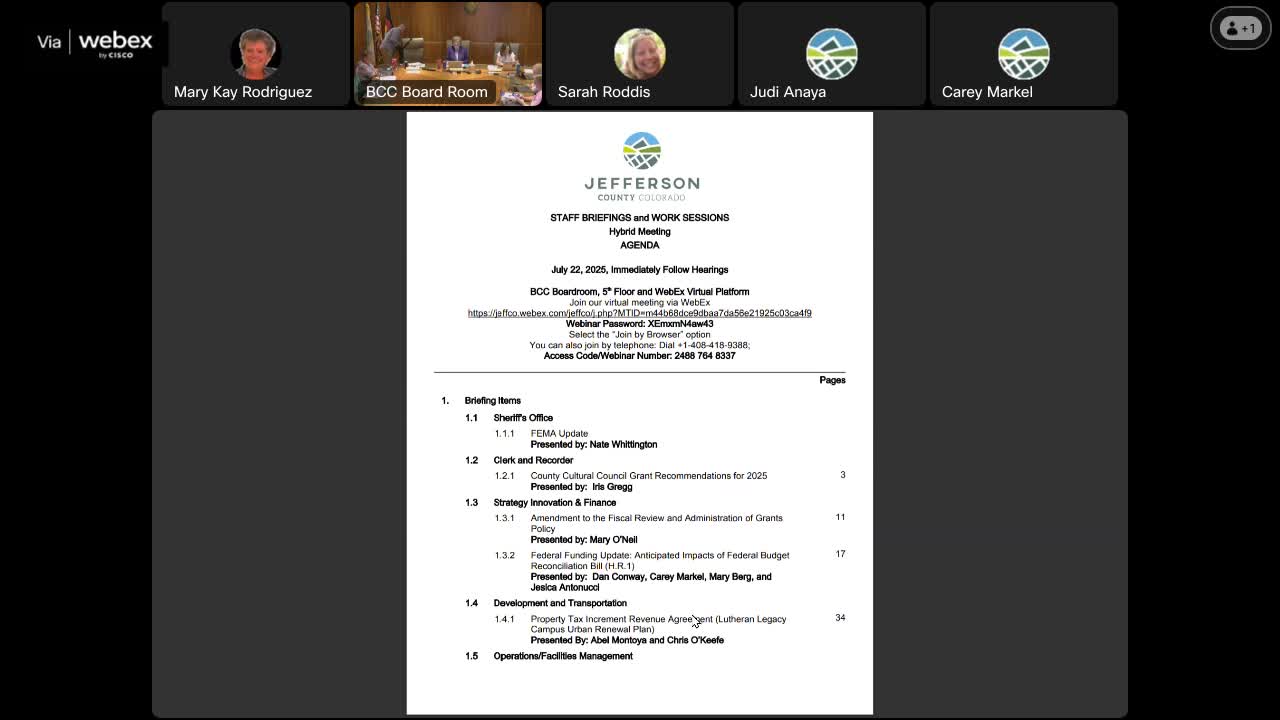
Summary
County emergency management staff summarized provisions of HR 2308 on FEMA's proposed independent status, noted likely shift to locally controlled/state managed/federally funded disaster response, and urged residents to register for the county's Lookout Alerts reverse-911 system after low signup rates were reported.
Nate Whittington, a Jefferson County emergency management official, briefed the Board of County Commissioners on proposals in HR 2308, the FEMA Independence Act, and on local emergency communications on July 22.
Whittington said HR 2308 would move FEMA out of the Department of Homeland Security into an independent, cabinet-level agency, create four deputy director posts, keep 10 regional offices and transfer FEMA staffing, funding and legal authorities to the new agency. “The information I’m giving is coming out of the HR 23 0 8, which is the FEMA independence act,” he said. He summarized that leadership would be “locally controlled, state managed, federally funded.”
Why it matters: Commissioners said the expected shift in roles and funding could change how quickly resources arrive after disasters and asked county staff to watch for procedural or policy changes that could slow responses. Commissioners emphasized the county’s interest in keeping decision-making authority local and in preparing so Jefferson County is not reliant on the state or federal government for immediate actions.
Whittington described the FEMA reform subcommittee structure he has observed: a federal-state-local coordination subgroup, a practitioner-level subgroup for emergency managers and a subgroup to draft final reports. He noted notable practitioner participants and former FEMA administrators serving in advisory roles.
On communications, Whittington told commissioners that only about 13% of county residents were registered for Jefferson County’s reverse-911 system (Lookout Alerts). He urged a signup campaign: “We have got to get a campaign a push to get people to sign out for Lookout Alerts,” he said, and encouraged county departments, events and law enforcement partners to promote registration. He noted Jeffcom has assigned a staff member this year to focus on the Lookout Alerts campaign.
Board direction and follow-up: Commissioners asked staff to (a) monitor implementation guidance from federal and state agencies and flag any local policies that might create response delays, (b) prepare an outreach plan to raise Lookout Alerts enrollment before major events, and (c) help draft a joint letter with the sheriff and other county leaders urging state officials to press for broader representation of inland/wildfire-prone jurisdictions on FEMA reform working groups. Whittington committed to report back with additional analysis and to highlight items that merit county or intergovernmental action.
Ending: Commissioners said they want a fuller presentation at a future work session and asked staff to return with both policy implications and practical outreach steps to increase resident enrollment in emergency alerts.