Get Full Government Meeting Transcripts, Videos, & Alerts Forever!
Get email alerts on the Land Use Development topic
No spam. Unsubscribe anytime.
Public hearing: owners of Big Hickory present plan to rebuild waterfront restaurant; neighbors raise traffic, noise and environmental concerns
Summary
Owners of the proposed Bayside/BIG HICKORY waterfront project sought a comprehensive plan amendment and rezoning to create a commercial plan development for a waterfront restaurant, retail and up to six multifamily units. The council held a first reading and extensive public comment; no final vote appears in the transcript.
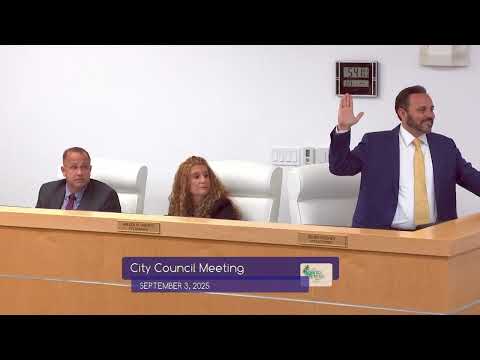
The City of Bonita Springs held a combined first reading and public hearing on Sept. 3 for a proposed comprehensive plan amendment and rezoning that would allow a commercial plan development (CPD) containing a waterfront restaurant, retail uses and up to six multifamily units on roughly 5.07 acres along Bonita Beach Road.
Applicants Tracy and Mike Kautzman (Bayside Holdings on Hickory / Big Hickory Waterfront Grill) and their planning and consultant team presented the project and said the application includes two parts: a small‑scale comprehensive plan amendment to change two western parcels from medium‑density multifamily residential to general commercial, and a rezoning to a commercial plan development (CPD) for the full site. The applicants said the project would include a waterfront restaurant with indoor and outdoor seating, a gift/retail area, ancillary retail and office uses and transient boat slips. They presented a master plan showing a restaurant with roughly 325 seats, two mixed‑use buildings with up to six residential units above commercial space, transient boat slips and parking modifications including a proposed valet program.
City staff and the applicant discussed deviations from the Bonita Beach Road corridor overlay — including requests to remove a required courtyard/wall and to allow flexibility on the maximum street setback — and an alternative enhanced landscape buffer for the frontage. Staff (Mary Thornburg, Community Development) and the applicant said they had revised recommended conditions and would continue technical review at the time of the development‑order application.
Traffic, environmental and design consultants for the applicant presented analyses: TR Transportation Consultants said the traffic study, evaluated for peak season conditions and coordinated with Lee County DOT, indicated the existing roadways could accommodate the project’s projected trips but that a more detailed traffic study would be required at development order. Environmental consultant Tim Hall said the site was historically cleared and modified, that mangroves line the shoreline and would be preserved where feasible, that no dredging is proposed, and that state and federal wetland and aquatic‑preserve permitting would govern final boat slip counts and wetland mitigation.
The hearing prompted extended public comment. Eight registered speakers urged caution or opposition, largely on grounds of noise, boat traffic, boat‑slip impacts on a narrow residential canal, parking and traffic congestion on Bonita Beach Road, and enforcement. Neighbors said the proposed outdoor live music, transient slips and valet/stacking parking raised concerns about late‑night noise, navigation in shallow canal sections, and the city’s ability to enforce restrictions once the project is built. Several speakers who had worked at or patronized the original Big Hickory restaurant supported a replacement but said the proposed scale and deviations could harm adjacent residents and natural resources. Commenters included Deborah April, Jesse Olsolsky, Shana Olsolsky, Stu Young and Vicky DeMeo among others.
Council members and staff asked questions about shoreline mangroves and what on‑site planting would be required to screen headlights and sound from residences across the canal, limits on slip use (applicants said slips would be transient only), whether live entertainment could occur outdoors (staff said it would be evaluated by sound studies at DO and must comply with the city noise ordinance), and the scope and timing of additional traffic and environmental studies. Staff noted that some elements shown are conceptual and will be refined at the development‑order stage.
Because the record in the transcript ends before a final council vote on the comprehensive plan amendment or the rezoning ordinance, the matter remained in the legislative review stage (first reading) at the time of the break in the meeting. Council and staff indicated the application will return with revised exhibits and conditions for further council consideration.