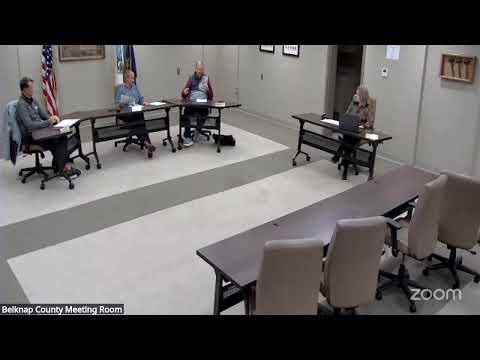
Consultants highlight immediate safety and long‑term cost questions for Belknap County jail
Loading...
Summary
Consultants told Belknap County commissioners the jail has immediate life‑safety and maintenance issues that can be addressed short term, but a full renovation would leave an inefficient facility; they recommended a prioritized two‑bucket approach and flagged potential $16 million‑plus repair estimates over several years.
Consultants presenting a jail analysis told Belknap County commissioners that several immediate repairs are needed to reduce safety and liability risks, and that the county should weigh those short‑term repairs against the cost of a replacement facility.
Dennis Morin, a consultant who presented the analysis, said exterior water intrusion points — leaking doors, windows, failed sealants and corroded frames — and blocked egress at a rear exit are urgent concerns. "I would put that on your list of things to focus on," Morin said, adding that broken interior glazing and damaged shower stalls present safety and maintenance problems.
"From a life‑safety perspective, it's really the only one door for the building as you have it today," Morin said, describing how inconsistent locks, multiple key types and limited camera coverage slow staff movement and could become a safety issue in an emergency. He noted aging plumbing, slow drainage and deteriorated shower finishes as items that increase staff time and slip risks.
The presenters recommended organizing work into two spending buckets: immediate actions that reduce pressing safety and liability risks, and a short‑term package of improvements over the next two to four years. "Our recommendation is to bite that first immediate issues bullet, and then get to the short term issues," Morin said, emphasizing minimizing repeated disruptions to operations.
Consultants warned that extensive renovation has diminishing returns. "You can spend your time and effort and money over the next, whatever, four or five years and do all of this work, but you still have a facility that's inefficient for the staff and doesn't meet ACA or correctional guidelines," Morin said, referring to American Correctional Association (ACA) guidelines mentioned in the presentation.
The report estimated very large costs for deeper renovation and replacement scenarios and flagged staffing and operational costs as major long‑term drivers. "When we find new facilities for counties ... the rest of all of that is operations," Morin said, noting staffing can represent a large recurring expense. He cautioned that a new facility could carry significant capital and operating costs and that no single metric in the report predicts an exact replacement year.
Commissioners asked whether a new facility on county property would be feasible. The presenter said a roughly 100‑bed facility could be reasonable on nearby county acreage but said final siting and size depend on a full program and site study.
Commissioners and staff said they will use the report to prioritize capital requests in the 2026 budget and to convene a working group with the superintendent and facilities director to recommend specific year‑one items.
The consultants provided a detailed cost spreadsheet and offered to rework estimates into narrower project packages if the county identifies a short list of priorities.