Get Full Government Meeting Transcripts, Videos, & Alerts Forever!
Get email alerts on the Data Center Proposal topic
No spam. Unsubscribe anytime.
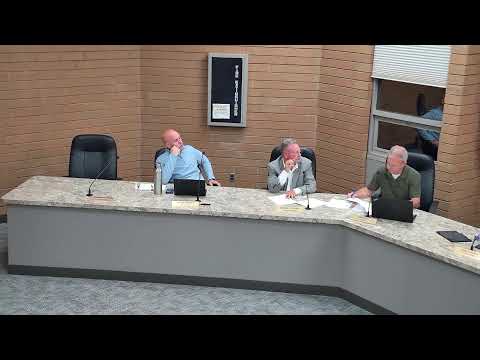
Residents press Norton City Council to block proposed data center near Cleveland–Massillon Road; council to prepare moratorium
Summary
Dozens of residents voiced opposition Oct. 20 to a proposed data center sited near Cleveland–Massillon Road and a limestone mine. Council members said staff will draft a moratorium on new data-center permits and that council would not release the mine for development while it reviews the proposal.
Dozens of residents who said they live within a half-mile of a 92-acre property near Cleveland–Massillon Road urged Norton City Council on Oct. 20 to block a proposed data center, arguing it would cause nighttime noise, vibration and other safety and quality‑of‑life impacts.
The public outcry prompted council members and city staff to tell speakers they would prepare legislation for the next council meeting to impose a moratorium on future data‑center permit applications in the affected zoning classification. Council leadership also said, without approving any final contract, that the city would not release the mine property for development while the matter is under review.
The question matters because residents said the site abuts neighborhoods in Norton and Barberton and raised concerns that continuous power equipment could cause low‑frequency noise and vibration at night, strain local water supplies and require large fuel or power deliveries. Several speakers also said they had uncovered conflicting or incomplete information about the companies proposing the project and asked the city for stronger vetting and buffer standards.
“Those huge motors sound like a half a mile or more away,” said Edward E. Stevens, who identified himself as a Barberton resident near the site. “They produce a low‑level vibration ... and if those are gonna be running 24/7 ... it’s gonna make a lot of us older people lose a lot of sleep.”
Michelle Yasko, a Norton resident who said she lives about a half mile from the property, told council she had read an Oct. 17 update from the project team indicating the developer was “engaging a new development team” and asked, “What does this mean? Are you still considering building a data center in the same site?”
City staff and council members responded that they had received multiple public inquiries and would move deliberately. “We plan to have [a moratorium] ready for the next council meeting,” said Markey (identified in the record as city staff), adding the moratorium would stop new applications going forward but would not retroactively affect applications already in the city’s review queue.
Council discussion clarified two procedural limits that matter to residents: a moratorium typically does not void or rewind an application already submitted, and some applications that meet current zoning rules can proceed unless the council acts. A city staff member told the meeting that the property’s I‑2 industrial zoning previously allowed the applicant to pursue preliminary site approval and that moratoria “do not affect things that happened in the past.”
Multiple speakers urged the council to use additional tools beyond a moratorium. Tanya Vandervene asked the council to expand the city’s setback rules; she noted Norton’s current industrial setback “allows buildings 25 feet from a residential property” and called that distance too narrow for heavy industrial uses. Several residents asked the city to require enhanced background checks and financial vetting for large projects; Rich Stokes said he had called one of the lenders and was told financial review processes were limited.
Other concerns raised in public comment included potential impacts on wells and water use, proximity to a substation and transmission lines, and the safety implications of continuous fuel or gas handling near neighborhoods. Michelle Yasko and other speakers referenced the limestone mine under the proposed site and questioned whether the mine’s presence made the parcel uniquely unsuitable for this type of development.
Council president (unnamed in the record) told the crowd the council had heard the community and that administration would prepare the moratorium ordinance for the next meeting. “We’re not gonna release the mine,” the council president said at the meeting, adding that the city would bring forward any agreement that would be required to allow development on the mine property.
City officials also noted differences in how zoning and conditional permits are triggered: some residential notices are sent only when a conditional‑use or special permit is required; permitted uses under a zoning classification can progress through staff review. Several speakers asked the city to add public‑notice and vetting steps when atypical industrial uses are proposed in or near residential areas.
Council members repeatedly asked the public to allow time for staff to prepare legislation and requested residents continue submitting questions in writing. “Give us time to get through a situation like this,” one council member said.
Next steps outlined at the meeting: staff will draft a moratorium to be presented at the next Norton City Council meeting; the administration will review options to revise setback and zoning language; and council members said they would not move forward to release mine property to a developer without explicit council action at a future meeting.
Community speakers said they planned to continue attending hearings and urged Norton to adopt clearer vetting requirements for major proposals.