Get Full Government Meeting Transcripts, Videos, & Alerts Forever!
Get email alerts on the Rezoning Land Use topic
No spam. Unsubscribe anytime.
Neighbors urge denial of rezoning for 21 triplex units near Kingsbridge over floodplain and access concerns
Summary
Charlotte planning staff recommended approval of rezoning petition 2025025, which would rezone roughly 4.75 acres off Moss Road to allow 21 triplex units, but residents urged denial at Tuesday's public hearing, citing floodplain, access and infrastructure concerns.
Charlotte planning staff recommended approval of rezoning petition 2025025, which would rezone roughly 4.75 acres off Moss Road to allow 21 triplex units (seven buildings), but residents from adjacent Kingsbridge and Steel Creek neighborhoods urged denial at the public hearing on Tuesday.
The petitioner and staff: planning staff described the proposal as a Neighborhood 1 C conditional request that would allow a modest increase in density while dedicating substantial land to tree preservation, open space and future greenway. Staff said the plan limits building height to 40 feet, commits a 10-foot Class C landscape yard and an opaque fence along the site’s northern and southern boundaries adjacent to single-family homes, and promises preferred architectural standards and open-space amenities including a picnic table, bench and playground. The site plan also commits to dedication of a minimum 100-foot buffer along Polk Ditch to Mecklenburg County for a future greenway and a 60-foot easement to connect the greenway dedication area to Laughlin Lane for public access.
The petitioner said the development aims to “diversify some of the housing that is available in that neighborhood,” and that they met with neighborhood organizations and made several changes after community feedback — including moving the construction entrance to Moss Road and removing a proposed park that neighbors opposed.
Neighbors’ objections: multiple residents pressed substantive concerns. Adnan Munurtasan, representing Kingsbridge subdivision residents, said the petition posed three core problems: “The risks of developing within a sensitive flood plain, constrained access, and the strain on our existing infrastructure.” He and other speakers said county floodplain maps place part of the parcel in a floodplain and that the proposed stormwater management and BMP require clarity to ensure existing homes are not made more vulnerable. Munurtasan also said the petitioner’s plan funnels new traffic exclusively into Laughlin Lane rather than providing direct access from Moss Road, creating safety and emergency-access concerns for legacy residents who rely on the same roadway for ingress and egress.
Residents raised infrastructure questions about water and sewer capacity; staff said Charlotte Water had not flagged capacity concerns to date and that all projects must pass a capacity analysis before receiving utility permits. Residents also disputed whether they received timely notification: one speaker said 179 of 204 nearby residents were not notified, while staff and the petitioner said standard notices (300-foot radius and HOA notifications) had been mailed and community meetings held.
Staff and council questions: council members asked whether by-right development on the parcel (the baseline zoning) would allow some duplex/triplex forms and sought clarity about whether the triplexes would be for sale or rental. Staff said zoning does not regulate whether units are sold or rented and that the petition is tier 1 conditional (site-specific notes rather than a full site plan). Staff repeated that the greenway dedication, landscape buffers and open-space commitments helped justify the density proposed and agreed to provide follow-up information to council on Charlotte Water’s capacity review and the by-right development potential for the site.
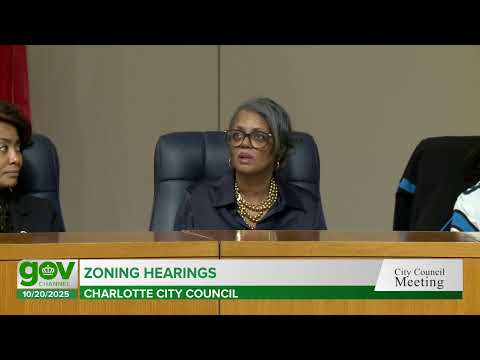
Outcome at the meeting: the council closed the public hearing. Because the petition drew opposition, staff noted the decision could not be finalized at this meeting and would return according to ordinance timing (staff said the item will appear for decision at a later meeting — the petition will be eligible for a final action per the city’s election-year procedures). Staff recommended approval pending resolution of outstanding site- and building-design issues; several council members requested additional follow-up information before voting.
Why it matters: the parcel lies within an established single-family area. Neighbors argued the proposed orientation of access and the floodplain exposure create public-safety and infrastructure risks that have not been resolved in the conditional plan. The petitioner and staff contend mitigation measures, open-space dedication and landscape buffering make the site's density compatible with surrounding development.
What’s next: staff will provide a follow-up report with Charlotte Water capacity findings, a by-right buildable-unit estimate for the parcel, and evidence of neighborhood notification; council will take final action according to the city's rezoning and decision calendar once outstanding issues are resolved.
Quotes: “The risks of developing within a sensitive flood plain, constrained access, and the strain on our existing infrastructure,” resident Adnan Munurtusan told the council. Petitioner representative Chantelle Little said the project aims to “diversify some of the housing that is available in that neighborhood,” and noted changes made after community meetings, including moving the construction entrance and removing a park.
Limits: the council did not vote to approve or deny the rezoning at the Oct. 20 meeting; staff’s recommendation remains approval pending resolution of the listed outstanding issues.