
Board hears annual treasurer report: solvency ratio rises to 11.64% amid recent construction and enrollment shifts
Get AI-powered insights, summaries, and transcripts
Subscribe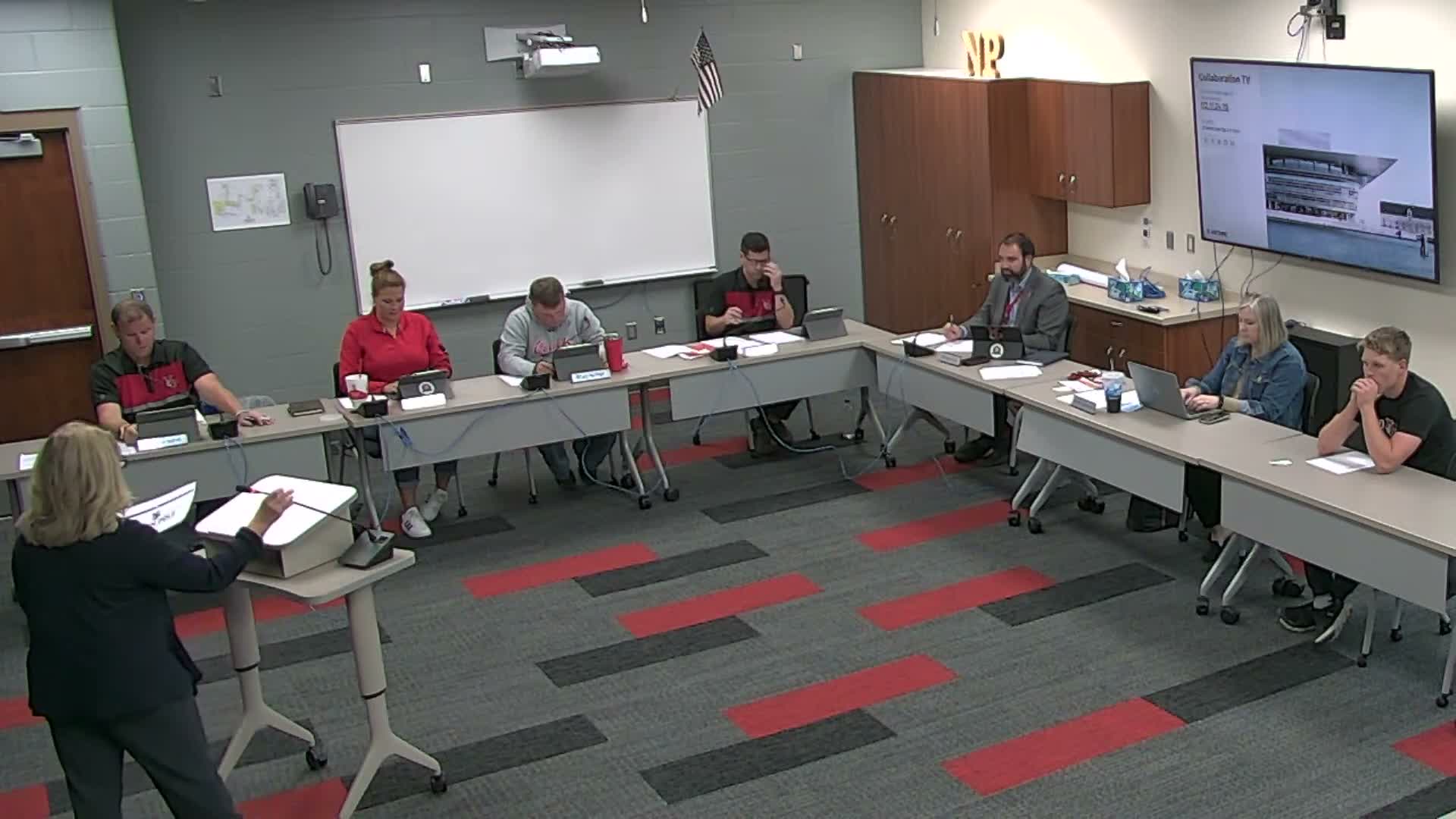
Summary
The district’s annual treasurer report showed revenues exceeded expenditures by $753,000 for fiscal 2025, a solvency ratio of 11.64%, a $502,000 increase in balance over FY24 and changing enrollment that will affect future calculations.
During the October meeting the board received the district’s annual treasurer report, a statutory presentation required by Iowa Code 279.33, detailing fiscal year 2025 results, solvency metrics and implications of recent changes in state funding streams.
Chris Wood, director of business affairs, told the board that revenues exceeded expenditures by $753,000 for fiscal 2025 and that the district ended the year with a solvency ratio of 11.64% (the district’s target range is generally 10–15%). Wood said the district’s balance increased by about $502,000 over FY24.
Wood pointed to several factors that affected the district’s finances: state supplemental aid increases that lag inflation, large capital projects completed or underway (Big Creek Elementary completion, middle school and Central Elementary additions and renovations, West Elementary renovation, softball/baseball field work and a CTE addition), and enrollment shifts. "We ended the year, with revenues exceeding expenditures by 753,000," Wood said.
Certified enrollment: The superintendent reported that certified enrollment as of Oct. 15 showed the district down 13.4 students from the prior certified count. Earlier in the year the district had recorded an increase of about 46.18 students in the prior fiscal year; board members and staff said enrollment variances affect the district’s revenue denominator used in solvency calculations.
AEA funding change: Board members and staff discussed how changes in AEA (Area Education Agency) funding flows will increase the denominator used in the solvency calculation (because more funds will remain in‑house rather than flow through), which is expected to lower the solvency ratio on paper. As one presenter said, "So we will see an increased denominator because of that because we're keeping some of those dollars in house ... it is gonna be a lower solvency ratio."
Unspent authority and spending authority: The report showed the district maintained unspent spending authority year over year by requesting allowable growth for increased enrollment last fall and by adjusting special education staffing to preserve certain spending authority. Staff cautioned that a drop in student count in the current year would reduce the district’s ability to bring in additional spending authority for FY26.
Special education and broader fiscal context: Business staff reminded the board the state of Iowa projects a large revenue shortfall statewide, and the district is monitoring scenarios including no increase in state supplemental aid. Board members asked for further modeling via the CFPM projections (the district works with Piper Sandler) and were told a budget work session with the district’s bond agent and modeling service will be scheduled to run FY26 scenarios.
Provenance (selected transcript excerpts supporting this article): "Tonight, we are checking off 1 of our boxes, required by Iowa code, and it's required by code number 2 79.33 subsection 1 ... we ended the year, with revenues exceeding expenditures by 753,000." (start ~182.4) "North Polk ended the year ... at 11.64%." (start ~413.055) "We did certify the, certified enrollment on, October 15. We are down 13.4 students served, overall for the district." (start ~2736.2952)
Speakers (names and roles as identified in transcript):[{"name":"Chris Wood","role_title":"Director of Business Affairs","affiliation_type":"government"},{"name":"Mister Klein","role_title":"Superintendent","affiliation_type":"government"},{"name":"Board member Ashley","role_title":"Board member","affiliation_type":"government"},{"name":"Board member Kyle","role_title":"Board member","affiliation_type":"government"},{"name":"Staff member (RSP discussion)","role_title":"not specified","affiliation_type":"unknown"}]
Clarifying details:[{"category":"revenues_exceeding_expenditures","detail":"Revenues exceeded expenditures for FY25","value":753000,"units":"USD","approximate":false,"source_speaker":"Chris Wood"},{"category":"solvency_ratio","detail":"Year‑end solvency ratio","value":11.64,"units":"percent","approximate":false,"source_speaker":"Chris Wood"},{"category":"balance_increase","detail":"Balance increase over FY24","value":502000,"units":"USD","approximate":false,"source_speaker":"Chris Wood"},{"category":"certified_enrollment_change","detail":"Certified enrollment change reported on Oct. 15","value":-13.4,"units":"students","approximate":false,"source_speaker":"Mister Klein"},{"category":"special_ed_deficit","detail":"Special education deficit discussed elsewhere in meeting","value":1477044.92,"units":"USD","approximate":false,"source_speaker":"Chris Wood"}]
Authorities:[{"type":"statute","name":"Iowa Code 279.33","citation":"279.33","referenced_by":["annual treasurer report"]}]
Topics and why this matters: school_finance (primary) — the solvency ratio and enrollment drive spending authority and levy decisions; enrollment forecasting vendor accuracy was discussed in the consent agenda and has direct budget implications.
Searchable tags:["solvency","enrollment","AEA funding","unspent authority","treasurer report","CFPM","Piper Sandler"]