Get Full Government Meeting Transcripts, Videos, & Alerts Forever!
Get email alerts on the Student Mental Health topic
No spam. Unsubscribe anytime.
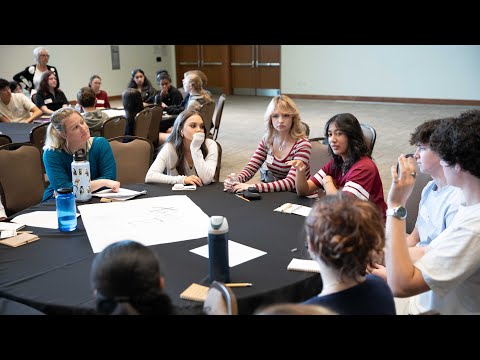
Douglas County students press schools for expanded mental‑health supports, safe spaces
Summary
Students at a Douglas County Youth Congress described delays accessing counseling, bullying and isolation, and proposed interventions including quiet 'safe' rooms, therapy dogs and better follow‑up from counselors. No formal board action was recorded.
Students who spoke at a Douglas County Youth Congress described gaps in school mental‑health supports, bullying and isolation, and urged officials to adopt practical changes such as designated calming spaces and improved counseling follow‑up.
Student 1, a student participating in the Douglas County Youth Congress, said, "When people can kinda understand what you're feeling, then I feel like we'll just see better results." Student 2, another participant, described difficulty getting help from school staff: "When I emailed 1 of my counselors, he never got back to me." Student 3 highlighted the value of student voice: "And they feel that it is a safe place to speak."
The students said social isolation and school culture contribute to mental‑health problems. "We've seen that most students who are suffering from mental health issues are more isolated," Student 1 said. One speaker recounted a personal tragedy: "I had a friend last year and she unfortunately committed suicide," Student 2 said.
Speakers proposed concrete in‑school changes. Student 4 suggested creating "some kind of, like, safe room or safe place for students to go to and calm down," adding a list of features: "Maybe a therapy dog and soft music and iPads and bean bags and just lower lights and you can just decompress." Student 2 criticized current anti‑vaping measures as insufficient: "We're talking about vaping, which is a big issue that we see. And the only thing at my school they're really doing to prevent it is they print out paper signs."
Several speakers described Youth Congress as a forum where students from charter, private and neighborhood schools come together and where elected officials and district representatives participate. "All of the elected officials, whether it's people from the school district or different municipalities or the county, are present in the room," Student 3 said. Student 2 urged officials to act on ideas from students: "The hope is that we'll follow through, and they'll see that in the kinds of classes they get to take in school, the kinds of services that are now available because of these ideas, and the kinds of programs in the community."
Speakers also encouraged use of reporting resources: one student referenced calling "safe to tell" when concerns arise at school. Commenters emphasized the role of school culture and tolerance: "A lot of our problems stem from the lack of social tolerance and diversity within our schools," Student 5 said.
No formal motions or votes were recorded in the transcript provided. The remarks documented were part of student presentations and public comment during the Youth Congress; the transcript does not record any action by a governing board to adopt or implement the proposals.
Students closed by urging officials to listen. "Know that you have a voice here, and we truly wanna listen. Douglas County is a place where it doesn't matter how old you are, great ideas can come from the youngest among us, and we're really here to capture those," Student 3 said.