
City updates CIP priorities and staff presents Kellogg-area infrastructure funding options
Get AI-powered insights, summaries, and transcripts
Subscribe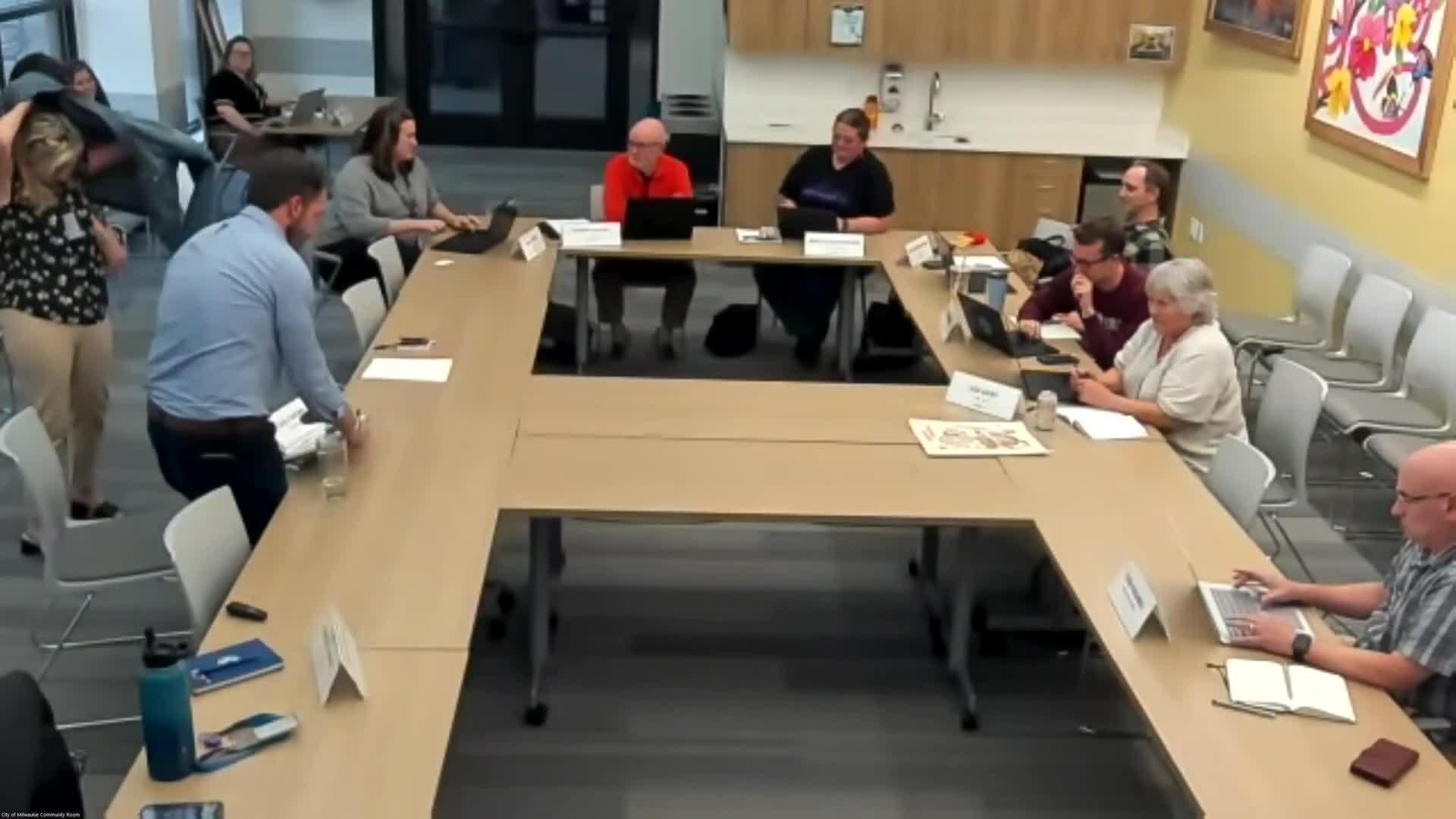
Summary
Staff reviewed multiple capital projects, a new five-year pavement prioritization plan and water/wastewater projects, and council asked for more data on trade-offs, grant prospects and rate impacts for a Kellogg-area project that could require city funding.
City staff gave a broad Capital Improvement Program (CIP) update at the study session, summarizing the status of multiple construction projects, a proposed five-year pavement program, spot-safety improvements and preliminary work on drinking-water and wastewater projects including PFAS testing and sewer-lining work.
Jennifer (project manager) and other public-works staff described projects in design and construction: street and park finishes for several neighborhood projects, a Mall-North shared-road configuration, Marbury Street (awarding a contract and mid-October construction start), Ken Road, Waverly South and 20th Avenue improvements, and the Monroe Greenway segments. Staff said they completed about 8 to 8.5 miles of slurry-seal this year and plan to pause next year to develop a coordinated five-year paving plan that lets utilities and other installations proceed in advance of paving.
On pavement strategy and contractor performance
Staff said the pause on slurry and chip-seal work next year is intended to allow more coordinated planning: work that would otherwise be removed by later utility trenching or stormwater/wastewater repairs would instead be scheduled, designed and staged as part of a multi-year program. Staff also noted mixed contractor performance on slurry projects this year, including aesthetic and handling issues during heat; staff said they will re-evaluate solicitation and contracting strategies going forward.
Water supply and treatment work
Staff reported progress on a city well that has been out of service; they said the city is pursuing additional testing and feasibility work for PFAS treatment. Staff told the council they have applied to the state's drinking-water funding programs and that preliminary indication is the city may be eligible for a combined financing package with up to $6 million in support, approximately half of which could be forgivable under program rules; staff said program terms and final award amounts were not yet confirmed.
Sewer lining and infiltration-reduction work
The public-works team described upcoming sewer-lining and pipe rehabilitation work as priority projects designed to reduce inflow and infiltration. Staff said a lining project of roughly $1 million is scheduled; they plan to install monitoring after lining to measure reduction in inflow and infiltration.
Kellogg-area project and council debate on funding and staff capacity
A major portion of the discussion focused on a Kellogg-area (project-team) infrastructure option being advanced by an external project partnership. Staff presented a high-level cost and rate-impact estimate and asked council how to treat the project in CIP prioritization. Staff said the project would carry substantial construction and long-term operating costs; they reported the city's rate consultant estimated a scenario (assuming the city funded the cost internally) would require a modest additional wastewater rate increase and modeled an illustrative example of roughly a 2.5% increase that would correspond to about $1.25 per month for the average residential customer. Staff stressed the estimate assumed the city would assume the full construction cost and that grants or other external funds would reduce the local share.
Councilors probed funding alternatives (grants and loans), staff capacity and trade-offs. Some councilors said they want the project included in CIP planning and further rate analysis; others warned that adding a large, city-funded project into the CIP would require delaying other deferred local projects and increase staff project-management demands. Council directed staff to include the project in further CIP analysis while also preparing clearer trade-off scenarios showing what would be delayed or de-prioritized if the city were to assume the project's local costs.
Prioritization framework and next steps
Staff previewed a project-prioritization framework to be used in building the next CIP. The matrix weights policy alignment, regulatory compliance, equity, asset condition, external funding, economic development and operational impacts. Staff said they will circulate the methodological notes and scoring details to council and return with a draft CIP in November and a fuller financial draft in February; staff asked council for input on the scoring details before the November discussion.
Other items noted
Staff reported receipt of county funds for a safety study at a rail crossing and noted a federal grant request for a Harrison project remained pending. The city also reported awarding and constructing several spot-safety projects and installing speed-management and solar speed signs.
Why this matters
Several large capital projects affect rates and staff capacity; council asked for clearer cost, funding and schedule options so they can decide whether to prioritize the Kellogg-area project and whether to seek additional external funding before committing city funds.
Ending note
Staff will provide the methodological scoring notes and additional sensitivity analyses, return with CIP prioritization and trade-off scenarios in November, and produce a more complete draft CIP and rate analyses in the winter budgeting cycle.