Get Full Government Meeting Transcripts, Videos, & Alerts Forever!
Get email alerts on the Public Health Air Quality topic
No spam. Unsubscribe anytime.
County risk manager warns hazardous smoke levels; N95 masks required for outdoor workers when AQI rises above 200
Summary
Inyo County risk management briefed supervisors about hazardous wildfire smoke and issued guidance: when the Air Quality Index (AQI) exceeds 200, employees working outdoors should use N95 respirators; public health will distribute N95s at certain county offices
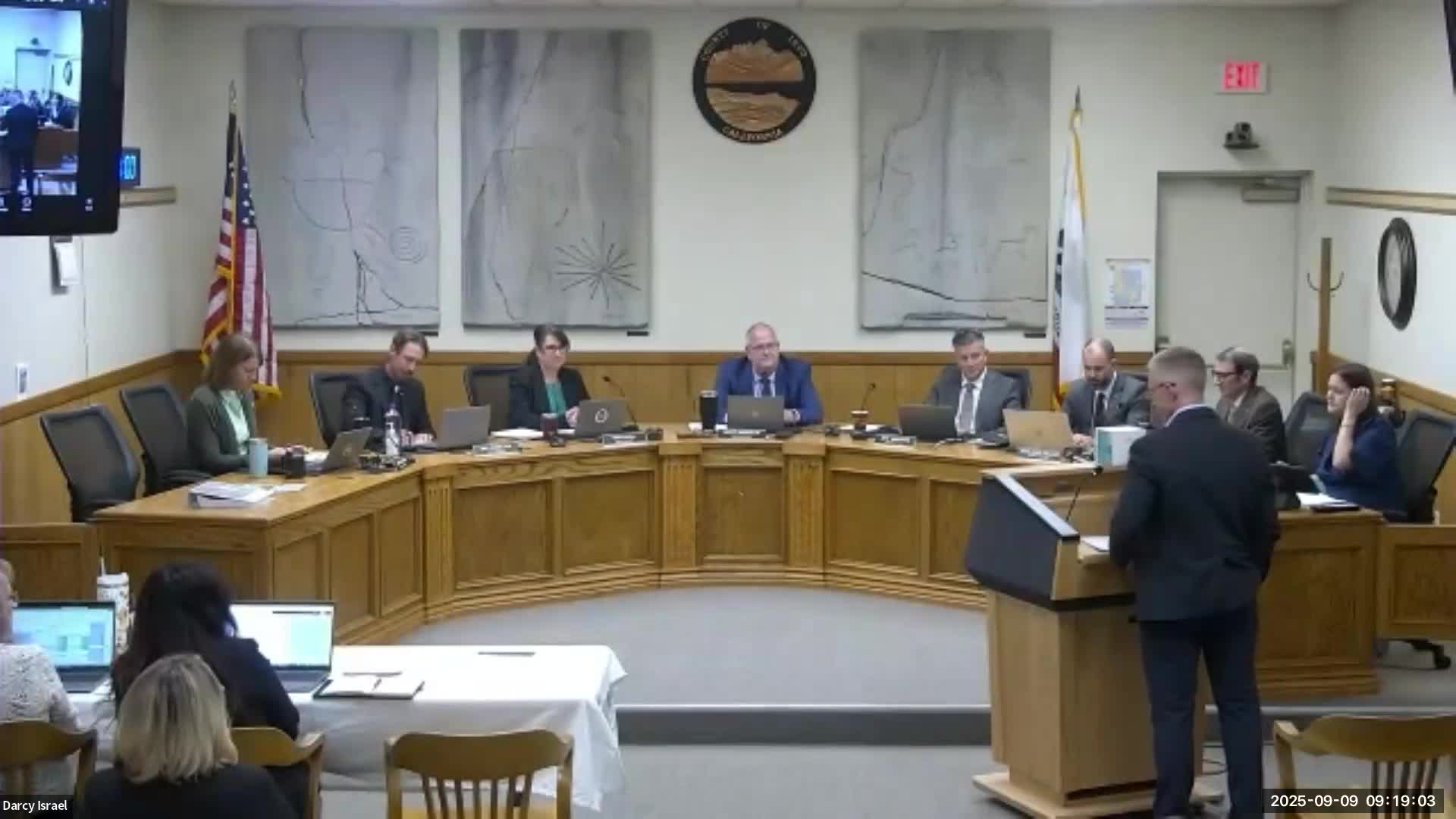
Aaron Holmberg, Inyo County risk manager, told the Board of Supervisors on Sept. 9 that recent wildfire smoke has pushed local air quality into hazardous ranges and that the county is implementing employee protections and public messaging.
Holmberg gave an overview of the Air Quality Index (AQI) and how the county is responding. "When the AQI is above 300, that's when it's hazardous," he said, outlining thresholds and recommended actions: AQI 0–50 is green and regular activities are allowable for most people; 151–200 warrants caution for vigorous outdoor activity; and beginning at 201 the county requires N95 respirators for employees who are working outdoors. "There is a difference between walking from the building to your car and actually physically working outside," Holmberg said.
Nut graf: Holmberg told the board that the county had distributed employee guidance, that about 400 employees had taken a wildfire smoke awareness course earlier in the year, and that public health would make N95 masks available to the public at several county health offices. He also recommended the public consult AirNow.gov and regional air resources board guidance for up‑to‑date AQI data.
What Holmberg reported: he said Bishop's AQI had reached 452 on his phone during the briefing and stressed geographic variability: higher elevations sometimes experienced better air than valley floors. Holmberg recommended that departments with outdoor workers follow the AQI thresholds, that employees check ZIP‑code specific AQI at AirNow.gov, and that county managers be prepared to modify outdoor work plans when particulate levels are high.
Public health support: Holmberg said the county public health department had N95s available for the public at the Bishop Consolidated Office Building, Independence and Lone Pine Health and Human Services consolidated buildings. "This is a very serious health exposure, and we are taking this very seriously for our employees, and we encourage the public to do so as well," he said.
Next steps: supervisors thanked Holmberg and asked staff to coordinate messaging and to ensure departments have N95s and protocols for outdoor work. Risk management and public health said they would continue issuing guidance to county employees and the public as conditions evolve.
Why it matters: wildfire smoke and particulate pollution can cause respiratory and cardiovascular harm, particularly for people with chronic conditions; the county's stepwise guidance ties employee protection rules to AQI thresholds and creates operational triggers for outdoor work and public distribution of N95 respirators.