
El Paso residents say proposed redistricting would dilute border community's voice
Get AI-powered insights, summaries, and transcripts
Subscribe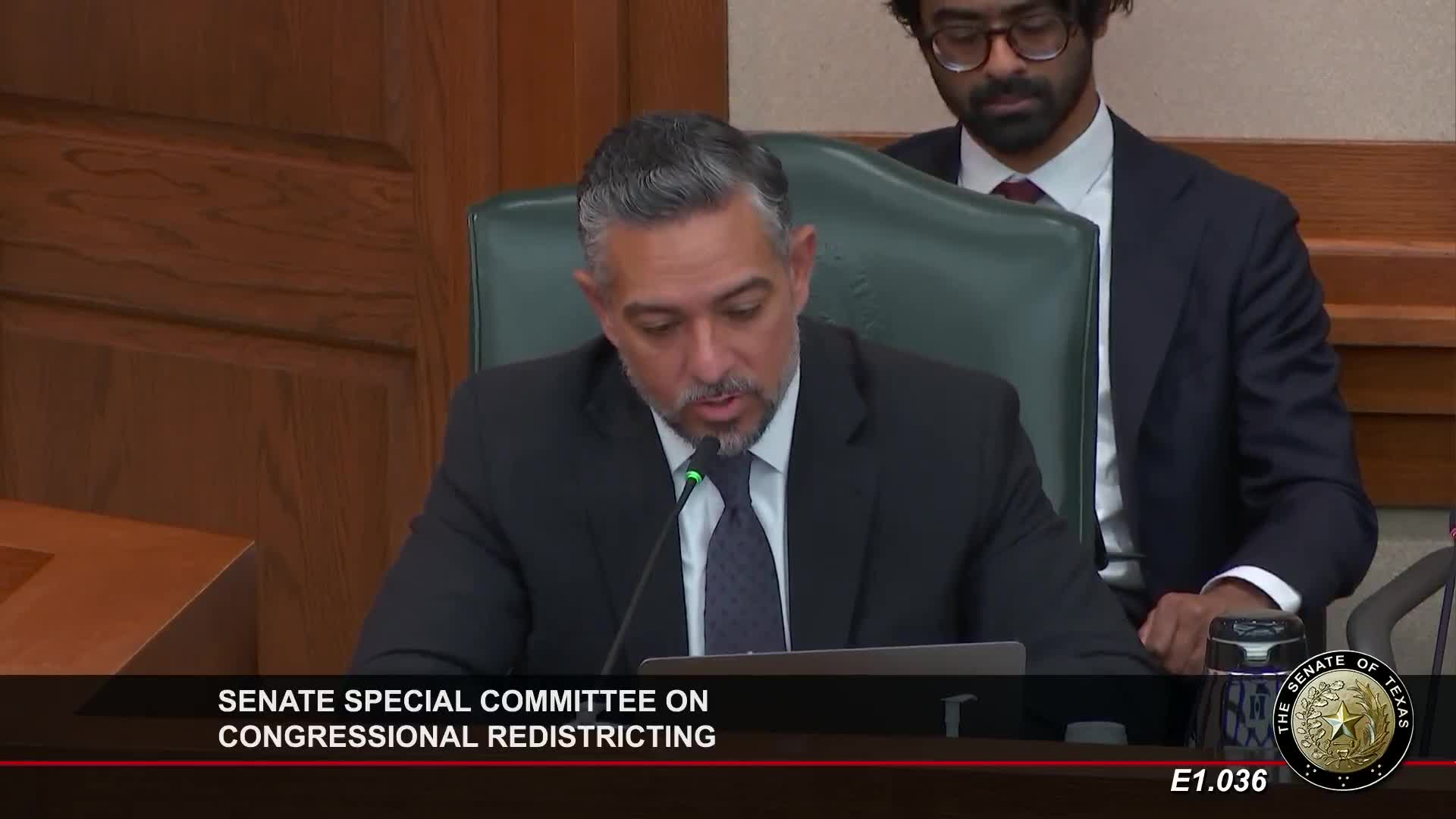
Summary
Multiple West Texas witnesses told the Senate redistricting committee they fear mid‑decade congressional map changes would split El Paso and dilute representation for border communities; several urged maps that keep communities of interest intact and reflect population growth.
Residents and local leaders from El Paso and the Rio Grande Valley used the West Texas regional hearing to urge the Senate committee to preserve communities of interest and to draw congressional districts that reflect population growth in border communities.
Senator Cesar Blanco, representing Senate District 29, opened the hearing and asked senators to ensure maps maintain representation for border and rural communities: "Within my Senate district, there are 2 congressional districts, Congressional District 16 and 23 that must reflect the voices of people who live there. These communities deserve congressional maps that ensure that they can elect their candidate of choice," he said.
El Paso witnesses described repeated experiences they said show the city has been split across sprawling districts that make local representation difficult. A group of residents testified that redrawing lines mid‑decade — especially without public drafts available — risks further fragmenting El Paso's voice in Austin and Washington. "El Paso and deserve to be represented by leaders who live in our community and who are chosen by our community," said one resident who testified on behalf of herself during the hearing.
Multiple witnesses — including community organizers, veterans, and local nonprofit leaders — urged that any revision recognize shared economic and social ties: cross‑border trade, Fort Bliss and military interests, university research and workforce training at UTEP, and a predominantly bilingual population. Luis Figueroa of Every Texan told the committee that population growth in communities of color should be reflected in any congressional plan and that maps should "avoid the mistakes of the past and honor the Voting Rights Act."
Why it matters: Witnesses argued that keeping border communities whole matters for federal funding, border and defense policy and local services. Several said El Paso still lacks consistent federal advocacy and that confusing district lines reduce constituents’ ability to secure aid or timely casework.
The committee did not amend or file a map during the hearing. Members said any map filed with the committee will be made public and trigger additional hearings, at which point residents will again have an opportunity to offer comment.
Ending: Residents asked the Senate to prioritize transparency and to ensure districts reflect the distinct geographic, cultural and economic ties of West Texas and El Paso before any lines are changed.