
House panel weighs bill to bar fundraising by members who leave state to break quorum; bill left pending
Get AI-powered insights, summaries, and transcripts
Subscribe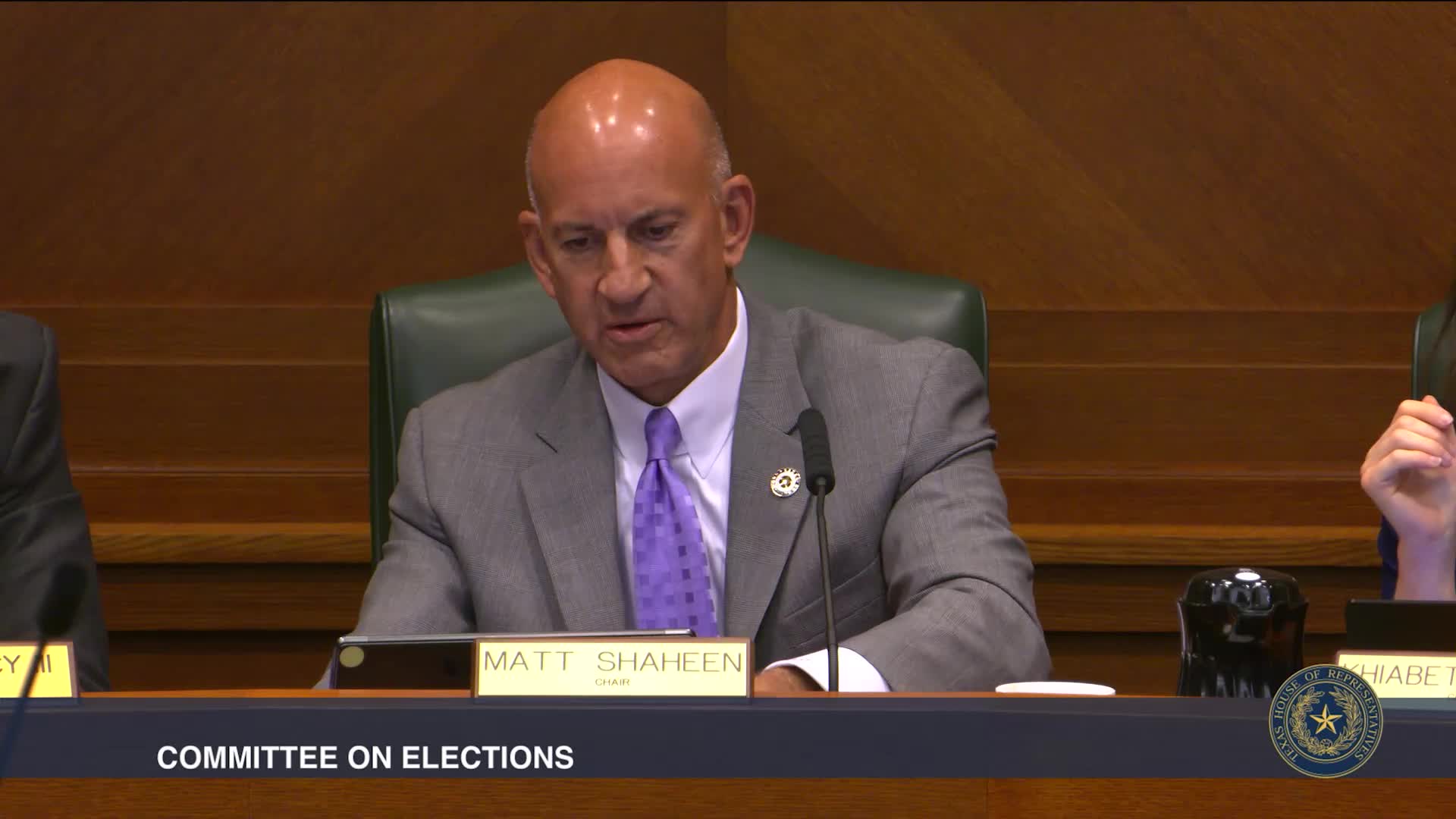
Summary
The Texas House Committee on Elections considered House Bill 18, which would bar legislators from accepting contributions or using campaign funds for travel and related expenses while absent from the state for the purpose of breaking quorum. Members debated constitutional and enforcement questions; the committee left the bill pending.
The House Committee on Elections on Monday heard testimony on House Bill 18, legislation that would prohibit legislators who are absent from the state “for the purposes of breaking quorum” from accepting contributions larger than the daily legislative per diem or using campaign funds to pay travel-related expenses, and would allow civil penalties of up to $5,000 per violation enforced through district court proceedings and the Fifth Court of Appeals.
The bill’s sponsor, identified in committee as Chair Shaheen, told members: "HB 18 prohibits legislators from fundraising or making certain expenditures while absent from the state without leave for the purposes of breaking quorum." The sponsor said the measure is intended to stop lawmakers from financially benefiting when they disrupt the legislative process, not to prevent quorum breaking itself.
Committee members pressed the sponsor on constitutional and enforcement questions. Some members said the Texas Constitution contemplates quorum-breaking tools and internal discipline; others warned the bill could invite court involvement in legislative strategy. The sponsor noted the bill requires a rapid court determination in some instances and that the bill references the per-diem figure set by the Texas Ethics Commission.
A person who testified in favor of the bill, Lauren Pena, said the recent quorum breaks harmed taxpayers and constituents and described seeing lawmakers travel while others in the state suffered. Pena testified, "I'm in favor of this bill because I think that it is horrific that while my constituents... were sitting in our apartment... you guys are taking off private planes, flying up to Illinois, staying in hotels, and eating luxury dinners." Pena also said the special session cost taxpayers more than $1,000,000, an amount she later described in committee remarks as about $1,200,000.
Debate in committee included several recurring lines of questioning: whether the bill would impermissibly restrict First Amendment political speech; whether enforcement belongs with the Texas Ethics Commission or should proceed through courts; whether the measure would create two classes of members (those who break quorum and those who do not); and whether the bill should be limited to special sessions because of time constraints on those sessions. The sponsor said committee amendments are forthcoming and that the bill’s intent is to prevent financial benefit tied to quorum-breaking absences.
At the end of the hearing the chair asked whether there was objection to leaving the bill pending. "The chair hears none, and the bill is left pending," the committee announced, with no recorded roll-call vote.
The measure now remains pending in the Committee on Elections; the sponsor reserved the right to close and indicated he would offer committee amendments.