House creates Texas Interoperability Council to coordinate emergency communications
Summary
House Bill 3 establishes a Texas Interoperability Council and a grant program to improve communications among first responders; the House passed the bill after floor amendments that limited initial funding to $50 million and applied open-meetings rules.
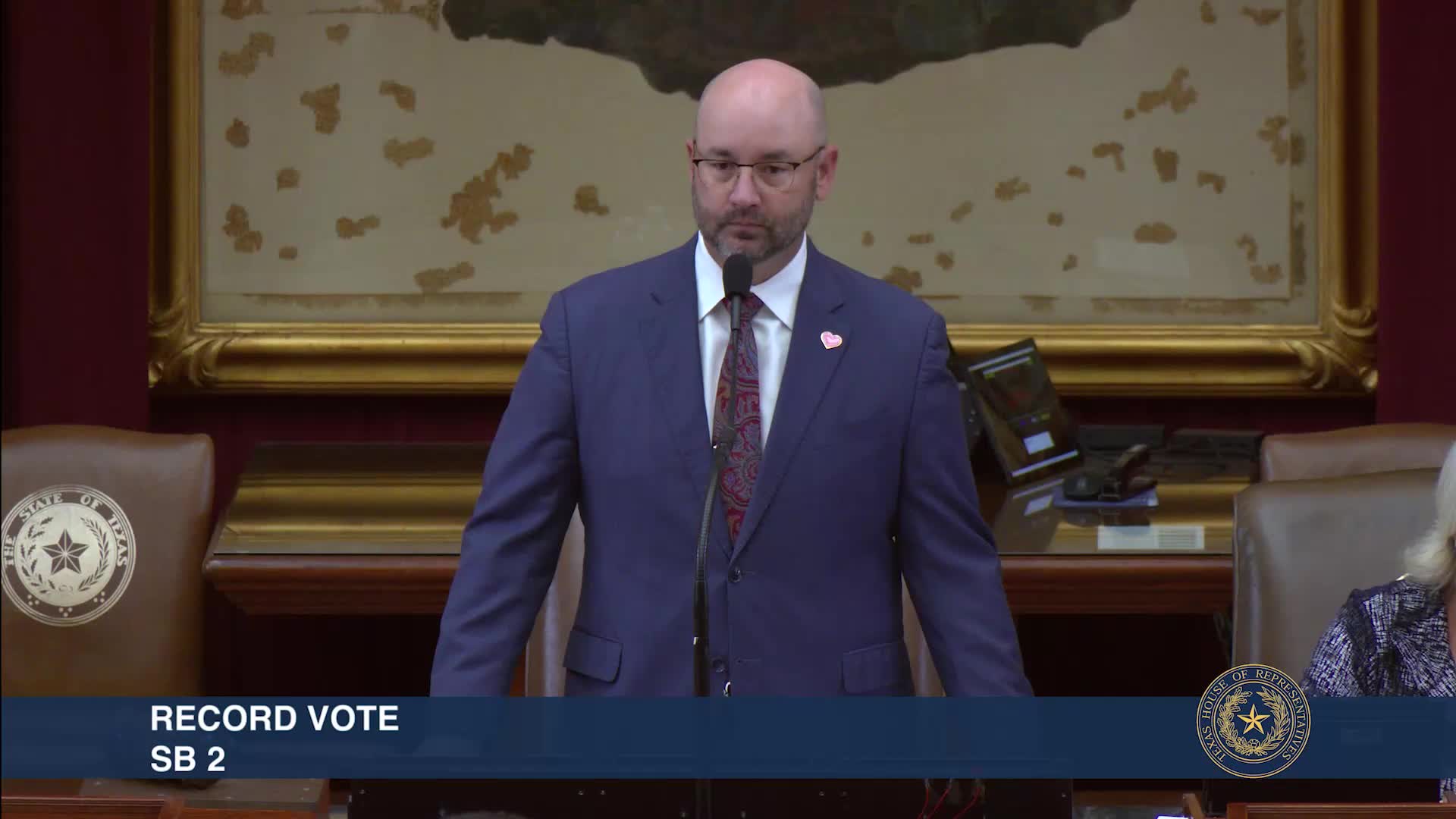
The Texas House approved House Bill 3, creating a Texas Interoperability Council to plan and coordinate statewide emergency communications and a grant program to fund interoperable equipment. The House voted 134-1 to pass HB 3 to engrossment and final passage.
Representative King, sponsor of HB 3, said the bill was written after testimony from wildfire and flood responses that showed first responders can spend the first 36 hours of a disaster trying to achieve interoperability. “When the calvary shows up and Texans are helping Texans, waiting 36 hours before they can communicate with each other cost lives,” he said.
The bill creates a council that will develop a statewide interoperability plan, administer a grant program to help local governments purchase equipment or infrastructure, and set requirements for training for equipment recipients. The sponsor told members the legislation is “technology neutral” and includes an initial $50 million held in trust at the comptroller’s office to stand up the council rather than a recurring appropriation.
Amendments adopted on the floor encourage the council to consider existing emergency communication systems and make compliance with the Integrated Public Alert and Warning System (IPAWS) an eligible condition for grant recipients. Another amendment allows purchase of Project 25–compliant equipment without prior approval from the governor’s office if the equipment meets a federal compliance assessment.
Representative Tenderholt (spelled in transcript as "Tenderhole") asked whether the council would be subject to the Open Meetings Act; sponsors confirmed the act applies and that the council may meet in closed session when discussing national-security issues. Tenderholt also pressed about whether the $50 million was a one-time payment; the sponsor responded, “That is true. This is not an ongoing appropriation. This money is to stand up the council.”
Supporters included Representative Lauderback, who described the bill as a “monumental” step toward coherent statewide interoperability. Representative Verdell, who had opposed an earlier version, said the changes on transparency and funding addressed his concerns and that he would support the bill.
HB 3 passed on final reading; the measure requires subsequent rulemaking and grant criteria, and it directs the council to coordinate training and deployment of interoperable equipment among first responders across jurisdictions.