Get Full Government Meeting Transcripts, Videos, & Alerts Forever!
Get email alerts on the Consolidated Dispatch topic
No spam. Unsubscribe anytime.
Greenville County committee opens discussion on consolidated 911 dispatch to reduce call transfers
Summary
County committee members, fire chiefs and the sheriff discussed a potential consolidated dispatch center intended to reduce 911 call transfers and improve coordinated emergency response; no formal action was taken.
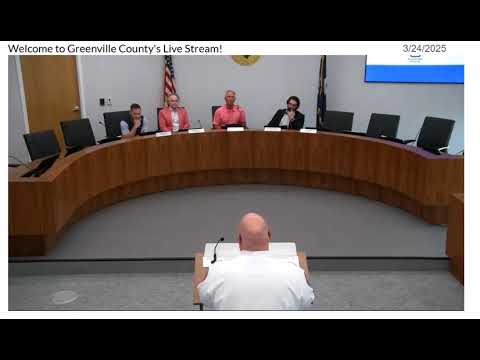
Greenville County’s Public Safety and Human Services Committee opened a public discussion on creating a consolidated 911 dispatch center intended to reduce call transfers and improve coordinated emergency response across the county.
The committee discussion focused on how multiple public safety answering points, or PSAPs, can delay emergency response when calls are transferred between agencies. Joshua Holzheimer, of the City of Greer Fire Department and representing the Greenville County Fire Chiefs Association, described how seven PSAPs in the county handle 911 calls and said that medical calls must often be transferred to an EMS communication center, creating delays.
“The consolidated dispatch center would streamline the 911 call answering and dispatch processing,” Holzheimer said, arguing it could “improve response time, reduce redundancy, and provide better coordinated” emergency-service responses.
The discussion centered on practical examples and concerns. Holzheimer described a May 31, 2021 incident in which a 911 call was answered and routed among multiple centers over a period that, by the timeline he read from records, resulted in a Gantt Fire engine arriving about 13 minutes after the initial call. He also cited an ISO grading dataset that he said showed the county had roughly 94,000 transferred calls and that 21,000 transfers were completed in under 30 seconds, a metric he pointed to as evidence of delay in the system.
Sheriff Lewis told the committee that staffing and pay are the county’s largest hiring hurdles for communications centers. “Pay. I mean, retaining people is more of an issue than recruiting people,” Sheriff Lewis said, adding that certified communications specialists can move to other employers for higher pay and different schedules. He described prior budget attempts to shift positions to raise pay and said some staffing changes tried by the office would have created internal pay-compression issues.
Several municipal chiefs emphasized the need to include municipalities and all affected agencies in any consolidation plan. Matt Hamby, police chief in the City of Greer, urged the committee to invite municipal leaders and the county’s police and fire chiefs to detailed discussions and to study other counties’ experiences. “There were some consolidation efforts. Some of the agencies probably had to back out of it, after it started, for various reasons,” Hamby said, urging further research into examples such as Charleston and York counties.
Committee members and speakers also raised operational concerns: training dispatchers to handle a broader set of responsibilities, the learning curve for a single CAD (computer-aided dispatch) system, and municipalities’ reluctance to cede local control. The sheriff suggested a focused stakeholder retreat that would include police chiefs, fire chiefs and EMS to “air that out” before any formal decisions.
No formal motion to create a consolidated dispatch center or to allocate funds was made during the meeting. Committee leadership characterized the agenda item as an early-stage public discussion to gather input. The committee did not direct staff to prepare an ordinance or make a binding decision during the session.
The discussion concluded with the committee chair reiterating support for first responders and confirming this item was for information and stakeholder input rather than for immediate action.
Ending: The committee left the matter open for future meetings and stakeholder sessions and did not schedule a vote or set a deadline for a follow-up report.