Get Full Government Meeting Transcripts, Videos, & Alerts Forever!
Get email alerts on the Road Paving topic
No spam. Unsubscribe anytime.
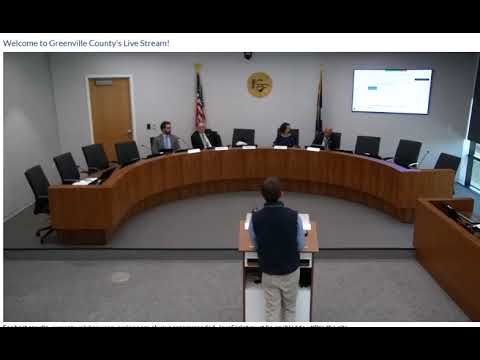
Greenville County committee approves road paving list after presentation on falling pavement scores
Summary
The Road Infrastructure and Public Works Committee approved a county road paving list after a presentation showing average pavement condition fell from 65 in 2020 to 61 in 2024 and that 13% of roads are in backlog (PCI ≤ 40). The list will move to full county council.
Greenville County’s Road Infrastructure and Public Works Committee approved a road paving list at its meeting after an engineering presentation that showed county pavement conditions declined between 2020 and 2024 and that material and labor costs for paving have risen sharply.
Seth Kaiser, the county’s paving engineer in the Engineering and Maintenance Division, told the committee the county uses a four-year survey and a pavement-condition index (PCI) that scores roads from 0 (worst) to 100. “In 2020, the average condition was 65. The average was 61 in 2024,” Kaiser said, and he added that 13% of the county’s roads have a PCI of 40 or below — the department’s definition of backlog.
Kaiser outlined the county’s process: an external consultant evaluates pavements, staff combine individual road PCIs into district averages, staff group work into neighborhood paving groups to reduce disruption and cost, and field assessments with high-definition video verify PCI scores and record pre-paving repairs. He said the county paved 37 miles of two-lane roads and preserved more than 11 miles in 2024, and that in recent years the department has paved 119 miles across 457 roads. “We’re not just putting an asphalt surface on these roads. We are recycling them 6 to 8 inches deep into the road base,” Kaiser said. “These roads will look good 25 years from now.”
Committee members pressed staff on coordination and cost drivers. Kaiser said staff typically notify major utilities — MetroConnex, Greenville Water, Piedmont Natural Gas and Duke Energy — so utility cuts do not occur after paving, and that staff coordinate with the county’s redevelopment authority on subdivision projects. He said there is not yet a routine coordination meeting with planning and zoning, but staff reach out to planning when known projects might conflict.
On costs, Kaiser said per‑mile paving prices rose from about $300,000 per mile around 2020 to roughly $750,000 per mile in the county’s 2024 bids. He attributed the increase to multiple factors, including higher labor rates (flaggers), cement price spikes tied to supply-chain issues, and material costs for binders that are shipped in. The committee discussed potential tariff impacts on material costs and the risk that rising prices could force schedule changes for residents expecting work on their streets.
Kaiser and staff described preservation and low-cost treatments the county has piloted. He said the county treated 11 miles with an asphalt-rejuvenator in 2024, a lower-cost preservation approach that extends the life of roads not yet in poor condition; staff shared a social-media post documenting the pilot.
Committee members also reviewed asset data: more than 7,000 individual county roads are in the network, about 74% of which are classified as residential (dead-end or subdivision streets), and the county has identified over 800 neighborhood paving groups to organize work. Committee members asked that the full technical report and the interactive web map of active projects be distributed to the full council and posted on the county website; staff agreed to provide the presentation and report.
Chair and committee members then moved and approved the paving list “as presented” and directed staff to forward it to the full county council for contract preparation. The vote was taken by voice; individual member tallies were not recorded in the meeting transcript.