Get Full Government Meeting Transcripts, Videos, & Alerts Forever!
Get email alerts on the Public Safety topic
No spam. Unsubscribe anytime.
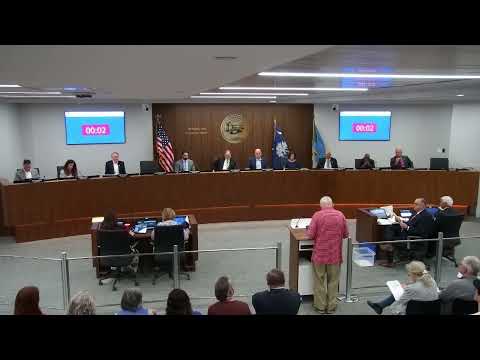
Firearms-sign ordinance fails after council splits 5–5; debate centers on state preemption and employee safety
Summary
Council considered an ordinance to standardize firearms signage at county facilities, adopted an amendment removing an enforcement provision, then failed to pass the amended ordinance on a 5–5 roll call. Debate focused on state law preemption, employee safety at convenience centers, and the proper location/size of signs.
Greenville County Council debated and ultimately failed to adopt an ordinance intended to standardize signage about firearms on county properties, after lengthy discussion about state preemption and workplace safety.
Councilor Collins introduced the ordinance and Councilor Shaw proposed amendments clarifying that signage would apply only to firearms and removing a separate enforcement/violation section. Shaw and other proponents argued the language conforms to a state statute and to an Attorney General opinion; Shaw said, "This is the law," noting that state law limits local regulation and authorizes a specified sign at building entrances. Opponents, including Councilor Dr. Fant and other council members, voiced concern for county employees at convenience centers, where staff report confrontations and threats; a county solid-waste manager, Andrew Tawkish, testified that operators have been threatened on the job and asked for a safety sign to reduce risks.
After discussion, council first adopted the amendment to remove an enforcement section, but on final passage the amended ordinance failed on roll call: 5 in favor, 5 opposed, 2 absent. Councilors debated whether signage would help or worsen safety, whether convenience-center locations (some without enclosed doors) are covered under the state statute, and whether the county should instead pursue deputized presence or other security measures.
Why it matters: The outcome leaves the county without a uniform sign policy for firearms at county buildings and keeps unresolved the tension between a county interest in workplace safety and state preemption of local firearms regulation. Council directed the county attorney and staff to provide additional legal guidance and to return with memos and options.
Ending: The ordinance did not pass; council requested further legal analysis and staff follow-up.