Get Full Government Meeting Transcripts, Videos, & Alerts Forever!
Get email alerts on the Affordable Housing topic
No spam. Unsubscribe anytime.
Councilors debate restoring $2 million for affordable housing as federal funding faces uncertainty
Summary
Councilors urged restoring $3 million total in local affordable-housing support, citing the potential loss of federal CDBG/HOME funds and projects in the pipeline. Developers and housing advocates described how county dollars are used and the affordability bands served by a recent project.
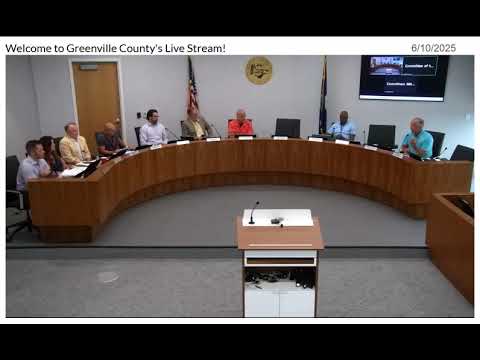
Greenville County councilors debated restoring $2 million that would raise local affordable-housing funding back to $3 million, and discussed how local dollars are used to match federal programs and leverage development.
Councilor Mitchell urged the council to “restore the $2,000,000 to make it $3,000,000 for affordable housing,” saying that federal programs the county often leverages — Community Development Block Grant (CDBG) and HOME Investment Partnerships Program (HOME) — face uncertain federal funding for the next fiscal year and the county should protect projects that are already underway.
Why it matters: county matching dollars are often required or expected for Low Income Housing Tax Credit (LIHTC) and other finance packages; losing federal funds would increase the local burden for existing or planned projects.
Key details and participants
- Federal funding risk: Councilor Mitchell said federal appropriations for CDBG and HOME are at risk in the next federal fiscal year and that local funds could help preserve projects already in development.
- Developer/partner testimony: Amber Stewart of Greenville Housing Fund (appearing as a representative of a nonprofit developer) told councilors about a recent opening: “Riley at the Overbrook ... It's 88 units. It's serving 30% AMI to, 60% AMI, and we also have 19 of those units, our project based vouchers.” Stewart noted that income-restriction rules and fair-housing law apply to placement and rents.
- How county dollars are routed: Councilors clarified local practice: council provides operational or project support through allocations to the local development authority (GCRA), which then awards funds project by project. Stewart said the nonprofit typically uses less than 20% for operations and that “the local dollars go 100% into a local project” when federal operations funding covers staffing.
- Ownership vs rental debate: Councilor McGahee argued for more homeownership-focused programs and down-payment assistance rather than increasing rental inventory, saying, “We're creating a rental class of citizens in our County.” Other councilors pointed to existing homeownership programs such as Habitat for Humanity and to the complexity of financing affordable ownership in current market conditions.
Nut graf: Councilors did not adopt a change at the workshop. The discussion highlighted trade-offs — using local dollars to finish projects if federal funds fall, targeting rental stock versus homeownership strategies, and whether to shift revenue sources (for example, accommodations tax or future transportation revenue) to support housing.
Ending: No budget amendment was adopted at the workshop; councilors asked GCRA and housing partners for more detail on operational percentages, eligibility and how local match dollars would be spent if the federal funds are reduced.