Get Full Government Meeting Transcripts, Videos, & Alerts Forever!
Get email alerts on the Impact Fees topic
No spam. Unsubscribe anytime.
Greenville County planners hear workshop on impact fees; no formal action taken
Summary
Planning commissioners heard a detailed presentation on impact fees from Carson Bise of TischlerBise, including South Carolina legal limits, affordable-housing analysis requirements and credit rules. Commissioners asked procedural and timing questions; the panel did not vote to start a study at the meeting.
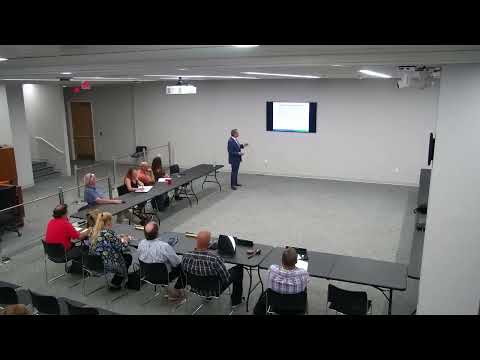
Greenville County Planning Commission members on 2025-01-01 heard a workshop on impact fees from Carson Bise, president of TischlerBise, who outlined how impact fees are calculated, legal constraints in South Carolina and options for reducing effects on affordable housing.
Bise told the commission: "Impact fees are a one-time payment. They're designed to offset new developments' impact on different infrastructure categories or infrastructure systems. We can't use them for operations, maintenance, or general replacement of infrastructure. We can't commingle the impact fees into our general fund." He also said South Carolina law requires an analysis of an impact fee's effect on affordable housing and that the state’s statute requires certain timing and accounting rules.
The presentation focused on the mechanics and legal framework that govern impact fees, why communities use them and common misconceptions. Bise described three common methodologies—buy-in for existing excess capacity, a formulaic present-consumption approach and a plan-based approach tied to an adopted capital improvement plan—and explained credits or offsets that protect new development from being charged twice.
The workshop provided commissioners background rather than a formal decision. Commissioners asked when the county’s pending Unified Development Ordinance (UDO) would return from hold and sought clarity about who would pay fees in different development scenarios. The commission chair said the UDO was expected back in July, and commissioners pressed staff on sequencing but did not move a resolution to initiate an impact-fee study at the meeting.
Bise described specifics of South Carolina’s Impact Fee Act that affect implementation: fee revenues must be held in a separate interest-bearing account, some acts require spending tied to a project’s scheduled construction date (South Carolina’s rule was summarized as a three-year timing requirement connected to project schedules), and the state uniquely requires an analysis estimating an impact fee’s effect on housing affordability. He said jurisdictions typically update fee studies about every five years and often index fees to construction-cost indices between studies.
Commissioners raised common concerns Bise addressed: whether impact fees raise house prices, whether fees discourage development, how credits interact with existing dedicated revenues (sales tax or debt service), and how impact fees relate to grants and interlocal agreements with municipalities and fire districts. On housing, Bise said jurisdictions can mitigate effects by structuring residential fees by house size or phasing fees, but that waiving fees for policy goals (for example, affordable housing or economic development) usually requires replacing the foregone revenue from another source so the impact-fee capital program remains whole.
The presentation included examples from other South Carolina and out-of-state jurisdictions (Beaufort County, York County, Horry County, Grand Junction, Colo., and others) to illustrate different policy outcomes and implementation choices. Bise emphasized that a transparent stakeholder process and careful methodology reduce legal risk.
Next steps described at the workshop: the planning commission would need to pass a resolution to commission a formal impact-fee study (the South Carolina procedure requires the planning commission to initiate the study and forward the study to the elected body). Staff did not present a formal motion or timeline for launching a study during the workshop; commissioners were invited to direct staff to return with options, costs and a draft scope for the commission to consider.
Commissioners and staff who asked questions during the meeting were not identified by full name in the transcript. The presentation and ensuing discussion will be the basis for any future scope of work, stakeholder outreach and a formal resolution if the commission chooses to proceed.