Get Full Government Meeting Transcripts, Videos, & Alerts Forever!
Get email alerts on the Development Impact Fees topic
No spam. Unsubscribe anytime.
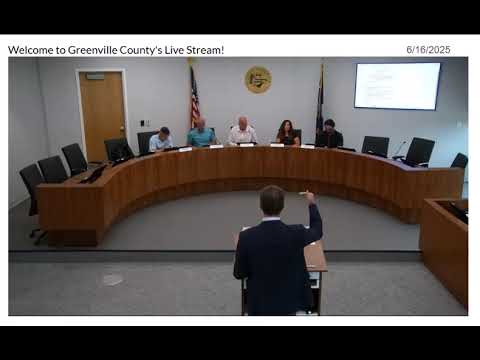
Greenville County panel approves resolution to start study of development impact fees
Summary
The Committee on Finance voted to approve a resolution directing the planning commission to begin the process required by state law to develop a capital improvement plan and a proposed ordinance for development impact fees; the vote only starts the study, not the imposition of fees.
Greenville County’s Committee on Finance approved a resolution to direct the planning commission to begin the statutory process to develop a capital improvement plan and a proposed ordinance that could allow the county to adopt development impact fees.
The resolution, introduced by Chairman Blunt and explained by Mister Antley, opens the procedural steps required under state law; Antley told the committee the resolution is "required by state statute under the, South Carolina's, development impact fee statute" and that planning commissioners will have a set period to prepare a capital improvement plan and draft ordinance.
The move matters because the resolution is the required first step before the planning commission may begin the analysis and public process that could lead to an impact-fee ordinance. "Section 6 1 9 50 of the act requires that if you're gonna begin the process, you begin it by a resolution directing the planning commission to start doing this," Antley said during the meeting.
Councilors questioned how consultant selection and procurement would work. Councilor Collins pressed that the planning commission should have a leading role in choosing any consultant and in the selection committee, saying, "I still believe the planning commission should be in that drive and see or selection committee. ... I think they need to be in the driver's seat." Antley and other staff responded that any consultant procurement will follow the county’s procurement ordinance and that planning commission input would be built into the request-for-proposals and selection process.
Committee members also asked about timing for procurement and consultant selection. Antley said he had consulted procurement staff and that a realistic quickest procurement window could be about 30 days but stressed the timeline depends on the number and quality of proposals received and any required readvertising.
Chairman Blunt underscored the limited effect of the vote: "This is not actually to instant to implement the impact fees or to, to come up with the capital improvement plan is just to start the study, which is gonna be a long and intensive process, I believe." The committee then voted to approve the resolution; the chair announced, "The ayes have it." The resolution directs the planning commission to begin the statutory process but does not adopt any fee, capital improvement plan or ordinance.
Next steps identified during the meeting include a planned workshop with the planning commission and county council to review scope and process before the planning commission proceeds, and the procurement of expert consultants as needed. The planning commission will prepare the capital improvement plan and proposed ordinance within the statutorily prescribed window and then present recommendations back to county council for their consideration.
No implementation or fee schedules were adopted by the committee; formal adoption of any impact-fee ordinance would require additional planning commission work, public notice and council action.