Get Full Government Meeting Transcripts, Videos, & Alerts Forever!
Get email alerts on the Compensation topic
No spam. Unsubscribe anytime.
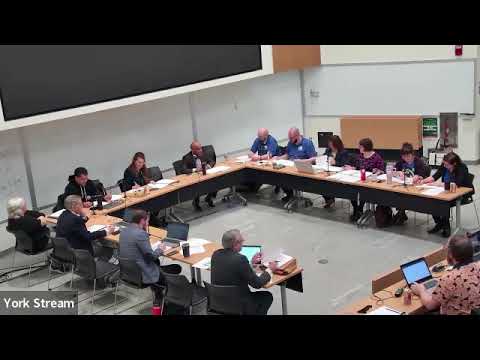
Teachers union presents step-and-lane pay chart, district counters with 2-year offer; both sides open to talks
Summary
The Ithaca Teachers Association opened bargaining with a proposal to create a three‑year step‑and‑lane salary chart and COLA rules; district leaders said they are open to discussion and proposed a two‑year deal and offered financial context for the tradeoffs.
The Ithaca Teachers Association (ITA) opened formal bargaining with a package of salary proposals that includes a three‑year step‑and‑lane salary schedule, a minimum annual cost‑of‑living adjustment (COLA), and technical language clean‑ups to embed the new chart in the collective bargaining agreement.
The district said it is receptive to discussion but proposed a shorter, two‑year agreement and requested data and clarifications before finalizing chart placement and cost estimates. District finance staff framed the trade‑offs in dollars and budget timing during the meeting.
Why it matters: Both sides tied the compensation proposals to the district’s fiscal calendar and to state aid and tax‑levy projections. The district emphasized that average percentage increases implied by the ITA chart would have material budget implications and may require either larger tax levies or program cuts if not matched by state aid increases.
Key details - ITA proposal: Create a step‑and‑lane system to restructure teacher salaries over a three‑year period, with an illustrative year‑one boost built into the chart and a contemplated ongoing COLA thereafter. ITA representatives described the chart as producing an average 8% increase under the sample calculations they shared and said some individual teachers could receive up to about 15% in year 1 depending on placement in lanes and steps. ITA also proposed a minimum annual COLA of 3% thereafter. - District response: District negotiators said they are open to discussing step‑and‑lane but proposed a two‑year agreement as a starting point. District staff emphasized need for payroll data to model exact placements and requested ITA access to the district’s personnel data to “fine tune” placement calculations. - Fiscal framing provided by the district: District staff gave several working estimates intended to be used for modeling: one percent of the ITA payroll equals roughly $400,000; an 8% average increase would therefore be about $3.2 million; projected state aid increases for the upcoming year were discussed in the $2.0–2.7 million range; a 1% tax‑levy change was described as roughly $1.0–1.08 million. District leaders stressed those numbers are sensitive to final state aid and local tax levy decisions. - COLA mechanics and timing: Parties discussed whether COLA would be a separate multiplier applied after step/lane increases and how COLA would interact with year‑to‑year step movement. The district asked for clarity about when a recurring COLA would “kick in” relative to the three‑year chart build‑up. - Related pay items: ITA presented additional compensation proposals related to prior experience credit, overtime standardization (a single standardized overtime rate for out‑of‑contract tasks), sick‑day buyback at retirement and for early resignation notifications, compensation for related‑service overages and substitute coverage in inclusion classrooms, and higher stipends to bring some extracurricular pay to minimum‑wage parity. The district said it had counters or questions on several of those items and in many cases requested additional implementation details.
Points of negotiation and outstanding questions - Data access and modeling: District negotiators asked ITA to share the placement spreadsheet or personnel data needed to map current salaries into the proposed step‑and‑lane chart; ITA said they will provide their calculations but noted some data still needs to come from the district for final modeling. - Impact on budget and tax cap: The district repeatedly tied salary discussions to tax‑levy capacity, state aid uncertainty, and program/cut tradeoffs, saying some proposals could cumulatively raise costs materially above the initial headline percentage. - Off‑chart placements and multi‑year catch‑up: Parties discussed how to handle employees whose current salaries, when adjusted, would not slot neatly on the new chart and whether temporary top‑ups or higher minimum increases should apply until the chart catches up. - Timing for COLA and chart escalation: The parties did not finalize when a permanent COLA would begin, and agreed to clarify the mechanics.
Meeting dynamics and next steps Negotiators agreed to continue the salary discussion with more detailed financial modeling. The district asked for a two‑year framing for any tentative settlement and said it would circulate the underlying payroll data as available; ITA asked the district to provide access to the personnel data it needs to place members on the chart. Both sides signaled receptivity to further discussion but no formal tentative agreement was reached on compensation during the session.
Ending note: The parties scheduled follow‑up bargaining sessions and agreed that technical language and detailed placement spreadsheets will be exchanged ahead of the next meeting so both sides can model the budgetary impact of the proposals.