Get Full Government Meeting Transcripts, Videos, & Alerts Forever!
Get email alerts on the Education Inclusion topic
No spam. Unsubscribe anytime.
Union presses for codified common planning time for inclusion; district signals need to explore scheduling options
Summary
Teachers for the Ithaca Teachers Association presented Proposal 32 to guarantee common planning time for co-teaching and inclusion assignments, outlining minimum daily or weekly time by model and urging the district to establish schedules; district and union agreed to work groups rather than immediate adoption.
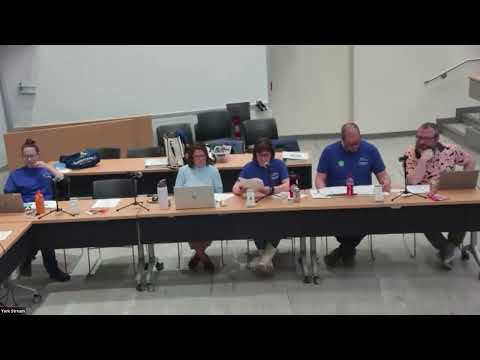
Ithaca Teachers Association negotiators used the April 10 session to press Proposal 32, which would codify minimum common planning time for inclusion assignments and set limits on the number of co-teaching partnerships a teacher may be required to maintain.
Why it matters: teachers told negotiators that inclusion-only student placements are widespread across home schools and that current contracts do not guarantee co-planning time. Union presenters said lack of protected planning time undermines tiered instruction, consistent supports for students with Individualized Education Programs (IEPs) and 504 plans, and educator sustainability.
What the proposal would do - Define inclusion assignments broadly to include any multi-adult classroom situations required by IEPs, 504 plans or state-recommended ENL (English as a New Language) services. - Set minimum common planning expectations by model: integrated co-teaching (at least 30 minutes/day), consultant teacher direct (two common planning periods/week), and consultant teacher indirect (one common planning period/week or 30 minutes of designated Wednesday time). - Recommend limiting the number of partnerships a service-providing teacher must maintain to prevent spreading expertise too thin.
District response and next steps District administrators acknowledged the instructional and legal rationale for common planning time but flagged scheduling complexity, potential impacts on other bargaining units, FTE allocations and financial implications. Administrators said schoolwide scheduling workshops are underway at elementary schools and proposed forming a work group to examine schedules and FTE options, including whether timing changes would require pay or an altered school day.
Context and evidence Union presenters cited research and New York State guidance that co-teaching is effective when teachers share joint responsibility and planning; a union survey showed about half of respondents lack consistent common planning time. Union members described a range of delivery models in buildings and inequitable experiences across teachers and schools.
Ending Both sides agreed the issue is important and complex; they proposed working groups to examine schedules, professional development needs, and FTE allocation before negotiating contract language further.