
Negotiators discuss paid professional development, teacher role in curriculum selection
Get AI-powered insights, summaries, and transcripts
Subscribe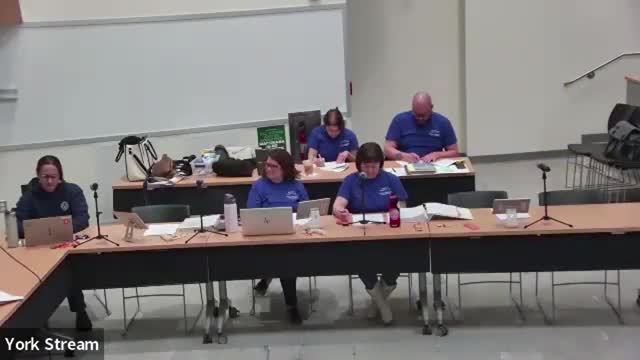
Summary
Bargaining sessions covered a proposal to guarantee 3–5 paid professional development days for new curriculum implementation, a feedback loop for pacing and materials, and teacher participation in curriculum review committees.
Union negotiators proposed contract language to guarantee teachers 3 to 5 paid professional development days annually for training tied to district‑initiated new curriculum adoptions and to require work‑time flexibility in how those days are scheduled (PLC days, release days, summer workshops or after‑school offerings).
District staff and union negotiators discussed operational details: whether the guarantee applies only when a district implements a curriculum wholesale, how the district would define “new,” and whether professional learning time should be tied to a formal curriculum‑review committee. The district said teachers should be included in curriculum selection committees prior to a superintendent recommendation to the Board of Education, but also reminded the group that the ultimate authority to adopt curriculum rests with the Board and superintendent under education law.
Negotiators also discussed a feedback clause that would require the district to use teacher feedback to refine pacing guides and supplemental materials. District staff said feedback tends to converge on pacing and prioritization and that formalized administrative sharing of teacher feedback had been used successfully in prior adoptions. The parties discussed grievance options if the feedback loop does not result in implementation, and district staff said revisions to the grievance process make collaborative escalation possible before filing a formal grievance.
On budgeting, negotiators noted that funding paid professional development (including an example of 20 additional hours at PD rate) could have significant cost implications: the union estimated a hypothetical commitment might cost roughly $300,000 if applied across hundreds of teachers, and the parties agreed to work out specific hours and fiscal impacts in a counterproposal.