
Negotiators seek clearer schedules, prep time and pay for RSPs; district to craft counter
Get AI-powered insights, summaries, and transcripts
Subscribe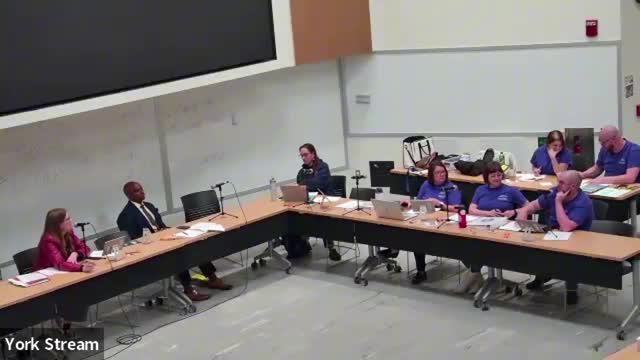
Summary
Proposals to define schedules, nontraditional assignments and pay for related‑service providers (RSPs) prompted detailed discussion about workload, paperwork and a common model for direct and indirect service time.
Union negotiators presented new contract language to define the duties and schedules of related‑service providers (RSPs) — a category that includes speech therapists, social workers and other specialists — and to standardize pay for overage assignments. District negotiators said much of the proposed language reflected current practice and asked for time to review operational impacts.
The union proposal aimed to codify nonstudent time for RSPs: preserved preparation periods, daily paperwork/therapy‑note time, scheduled lunch, and other indirect service time. Negotiators discussed a scheduling model commonly described in the meeting as “3-to‑1” (three weeks of direct service followed by one week for make‑ups, evaluations and planning) and also discussed a 40‑session weekly standard used in district planning. Participants said different grade levels and service models (elementary vs. secondary, group vs. individual) would require built‑in flexibility.
On compensation, the union proposed a formula used in practice for overages: 0.01 FTE for every 15 minutes of additional service and a flat 0.017 FTE adjustment intended to cover preparation and reporting related to the additional services. District staff confirmed a long history of using a similar formula, saying the language largely memorialized how extra assignments have been handled; they asked for caucus time to review final wording and impacts on staffing and budget.
Both sides agreed to continue joint work before the next session. The union asked the district to help estimate the FTE and fiscal impact of the proposed schedule and paperwork time; district staff said projections are complicated because individual IEP needs vary over time and because national/IDEA compliance shapes service decisions.
The parties planned follow‑up conversations with practitioners in elementary and secondary buildings to ensure the proposal aligns with everyday schedules.