Get Full Government Meeting Transcripts, Videos, & Alerts Forever!
Get email alerts on the Teacher Pay topic
No spam. Unsubscribe anytime.
Ithaca teachers press district for step‑and‑lane pay system, say retention crisis requires 7% plan
Summary
Union negotiators told the Ithaca City School District at a bargaining session that teacher turnover is running at about 18% and urged adoption of a step‑and‑lane salary schedule with an average 7% raise over four years; the district did not present a counterproposal at the meeting.
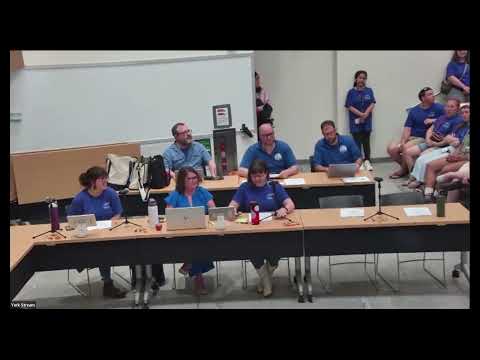
Ithaca Teachers Association representatives presented an analysis at a bargaining session with the Ithaca City School District showing what they described as a teacher retention crisis and urged the district to adopt a step‑and‑lane salary schedule funded by roughly 7% average annual increases over four years.
The union said turnover is “an annual 18%” and that tenure among members has fallen from about 83% to 57% over the past decade. Brian, a union presenter, said the district has hired more than 100 new teachers three years in a row and characterized those hires as replacements rather than new positions. “These aren't new roles. These are replacements. That's churn,” he said.
Union presenters argued step‑and‑lane would end what they described as frequent “leapfrogging,” where teachers with similar experience or credits are paid unevenly because district payroll records are incomplete. The presenters gave examples comparing lifetime earnings for a hypothetical teacher who chose other nearby districts: $72,000 to $107,000 in lost earnings over 15 years in the five examples shown.
Brian and colleagues contrasted the union plan with the district’s stated offer. Union presenters said the district’s current offer amounts to a roughly 5% increase, while the union’s proposal averages 7% per year over four years. “A 5% offer, which the district clearly has the ability to pay…versus our 7% proposal…is actually remarkably achievable,” Brian said, adding that gaps by year were below $1 million in early years of the bargaining model the union shared.
The union also described problems in the district’s personnel records: missing prior years of service and grad credits that, when entered as zeroes, reduced calculated raises for some teachers. The union cited one example it said showed a teacher with 17 prior years of experience and 42 graduate credits recorded incorrectly as having zero prior years and zero credits.
District negotiators did not present a salary counterproposal at the session. David, a district negotiator, indicated the district would continue to review the union’s materials and caucus internally; he told the room the parties would “keep forging ahead” but offered no offer that night. The union urged the district to present a revised offer at the next session.
No formal board or public vote occurred at the session. Negotiators on both sides agreed to continue bargaining at a scheduled future meeting.