
Tallgrass development and Grove RHID credited with tens of millions in local economic activity, city hears
Get AI-powered insights, summaries, and transcripts
Subscribe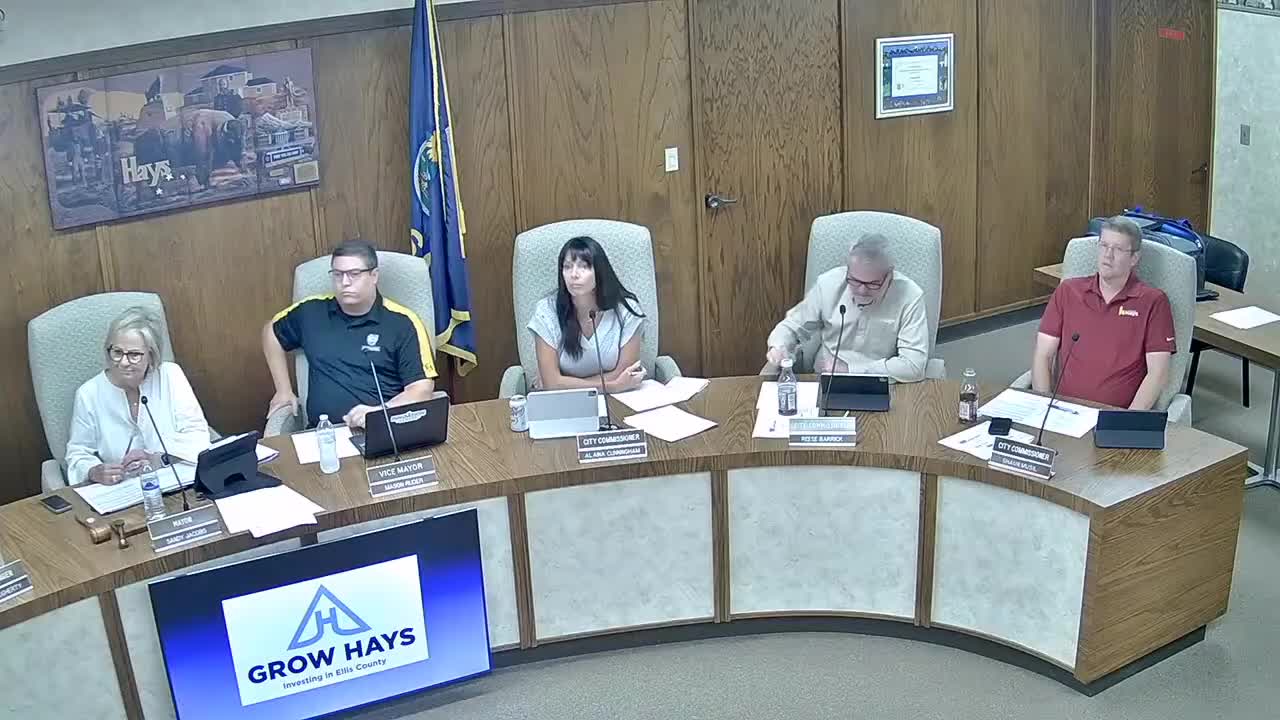
Summary
Grow Hays and Heart of America representatives described the Tallgrass residential project and The Grove RHID to commissioners, detailing construction costs, infrastructure spending, buyer profiles and estimated economic multipliers that together produced an estimated $24.5 million construction‑period economic impact and ongoing annual impacts.
Grow Hays Executive Director Doug Williams and representatives from Heart of America briefed the Hays City Commission on the Tallgrass residential development and progress at The Grove, presenting construction, fiscal and community impacts from the nonprofit‑led projects.
“Phase 1 was 36 lots … Phase 2 was 18. Phase 3 was 12 lots,” Williams said, summarizing the 66‑lot Tallgrass project. He said infrastructure costs totaled about $3,150,000 and that total home construction spending of roughly $19,380,000 produced an estimated $24.5 million local economic impact when applied to a National Association of Home Builders multiplier.
Williams described the role of Heart of America, which purchased the land from the Lusk family and sold lots to participating builders under sales‑price caps the parties agreed to. He said Heart of America undertook additional street work — including grinding and reconstructing a street base — at an incremental $180,000 and that the nonprofit made decisions that a private developer likely would not have undertaken for long‑term community benefit. Williams noted builders Homes by Cornerstone, Platinum Builders and PWC built the homes; Cornerstone built 46 with six still under construction, Platinum built 21 and PWC built five.
Williams provided buyer data: 27 first‑time buyers, 17 new‑to‑Hays households, 15 upsizers/downsizers who sold existing Hays homes and six investor purchases. He described downstream effects: the initial 66 homes, plus resale “chains,” likely made approximately 80–100 homes available across price ranges, supporting real estate turnover and increased sales tax receipts during construction. Williams also explained that while RHID arrangements defer some property tax payments until developer investment is recovered, state school levies and other mill levies still collect certain taxes; he noted the state’s 1.5 mills and a 20‑mill school levy remain part of collections.
The commission and Williams framed The Grove — an adjacent multifaceted project targeting retirees and including a community center and 108 residential units — as complementary. Williams said Bright Minds Academy opened on Aug. 18 with 50 children and that senior residents had moved into phases of The Grove. City officials announced a community center ribbon cutting planned for the next morning.
Commissioners and staff emphasized collaboration among nonprofits, private builders, the hospital and the city in lowering barriers to development, negotiating land price and making infrastructure feasible. Commissioner comments at the meeting highlighted housing supply as the long‑term lever for affordability and noted the project’s role in easing workforce recruitment by increasing available homeownership and rental options.
Williams said he would share his presentation with the commission and audience members; commissioners encouraged wider distribution to county and school officials that participated in project agreements.