Get Full Government Meeting Transcripts, Videos, & Alerts Forever!
Get email alerts on the Education Model topic
No spam. Unsubscribe anytime.
Frank Lou Junior Academy proposes integrated model pairing cognitive‑science instruction, executive function and music
Summary
Frank Lou Junior Academy for Music and Arts (FLAMMA) told TEA interviewers its K–5 model will combine cognitive‑science‑informed instructional methods, explicit executive‑function skill building and intensive music and arts instruction to accelerate long‑term learning.
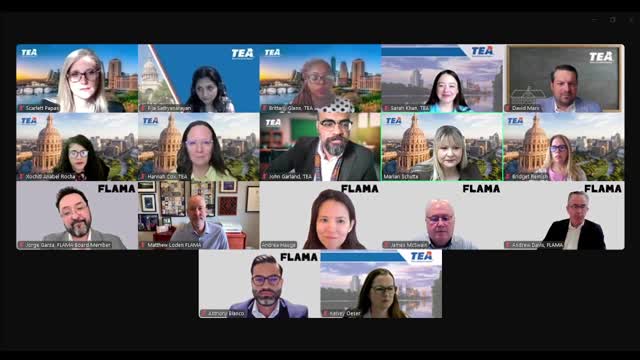
Frank Lou Junior Academy for Music and Arts (FLAMMA) presented an instructional model to Texas Education Agency staff and State Board of Education members that combines three core elements: cognitive‑science‑informed instruction, executive‑function development, and intensive music and arts education.
The board said the model will use high‑quality instructional materials aligned to the TEKS and will train teachers to apply cognitive‑science techniques such as retrieval practice, interleaving and formative assessment. “Our pedagogy is grounded in cognitive science, and we will teach the way the brain learns,” said James McSwain, board member and proposed interim superintendent. Andrea Hoga, board chair, described the model as aiming to “equip teachers with the best methods to build students’ long term knowledge.”
Board members emphasized executive function as a set of observable skills — planning, task initiation, time management and self‑regulation — that FLAMMA intends to teach explicitly, especially in early grades. “Those are the thought processes required to plan and complete a task,” a board member said of the executive‑function component. The early years will use Tools of the Mind, the board said, and will continue executive function development across grade levels.
Music and arts programming is presented as the vehicle to amplify academic gains and to provide culturally relevant instruction for families in East Houston. Jorge Garza, who founded community art spaces and the Segundo Barrio Children’s Chorus, said the choir’s local growth demonstrates parent demand for music instruction: “Families see how music education instills key academic and life skills in their children.”
FLAMMA’s leaders said professional development will be ongoing, not a one‑time onboarding event, and that PLC time and university partnerships will supply embedded coaching. “We foresee our staff members, teachers included, becoming experts in particular aspects of our methodology and therefore becoming the in‑house experts,” said James McSwain.
The board connected the model’s evidence base to chosen curricular materials and to daily low‑stakes formative assessment to inform instruction and measure mastery in real time. Board members noted research showing higher academic outcomes for students receiving high levels of arts instruction as part of broader instructional strategies.
Board members also stressed that the model intends to serve the specific communities near the proposed campus (Second, Third and Fifth wards) and to use music and arts as an access point for emergent bilingual students and students with special needs.
If approved, FLAMMA said it will open with a K–1 cohort and expand a grade per year, aligning staff hiring and PD to enrollment growth.