Get Full Government Meeting Transcripts, Videos, & Alerts Forever!
Get email alerts on the Stormwater Drainage topic
No spam. Unsubscribe anytime.
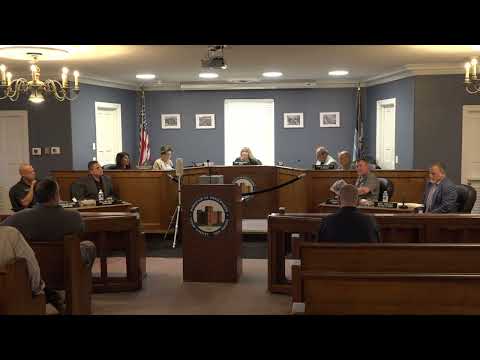
Kenilworth council details stream obstructions, limited municipal authority and next steps on flooding
Summary
Council members and borough engineers spent the meeting reviewing repeated street and backyard flooding, saying most stream obstructions are on private property and recommending outreach, a planning-and-zoning review and targeted fixes rather than one-time stream dredging.
Kenilworth councilors and staff spent the bulk of the meeting discussing persistent flooding across town, the limits on borough authority to alter private streams and a suite of short- and longer-term steps officials say could reduce localized flooding.
The borough engineer reported that recent inspections found sediment, vegetation and—most importantly—physical obstructions such as sheds, decks, fences and small bridges built close to stream banks. The engineer said many of those obstructions predate current state Department of Environmental Protection (DEP) rules, but that removing them is crucial for improving flow: cleaning sediment alone would have only a “minimal impact,” staff said.
Why it matters: Council members said repeated short-duration floods are damaging streets and cars in low-lying neighborhoods and that solving the problem will require coordinated action by property owners, borough staff and, for a major project, outside funders.
What officials said and recommended - Borough engineering staff said the Wilshire drainage project is essentially complete and that a limited number of smaller repairs remain. They described three broad categories of drainage problems: undersized/blocked pipes or catch basins, catch basins that are not connected to the storm system, and stream obstructions along private-property stream corridors. - Staff estimated dozens of obstructions across the borough and said many stream corridors are on private land or are shown as generic “drainage easements” on century-old subdivision maps, which does not plainly give the borough the right to enter and alter the watercourse without recorded permission from property owners. - Councilmembers asked staff to send “friendly” notification letters to property owners when obstructions are observed, to document the issue and invite voluntary corrective action. Staff agreed and said a wider outreach approach—posting a map of stream corridors on the borough website and publishing DEP and local floodplain rules—would follow. - Councilmembers asked the planning and zoning committee to serve as an intermediary to compile short-term maintenance steps and to research how other towns structure residential stream maintenance programs and collection days for vegetative waste.
Limits and larger projects Staff and councilors noted legal and financial limits: DEP rules constrain what the borough may do in stream channels; the borough must typically secure property-owner permission and address insurance and liability issues before work on private land. For large-scale flood control the borough would need major outside funding and federal/state coordination; staff said a Corps of Engineers–scale basin or flood-control project would be the only comprehensive cure but that previous federal funding had been cut.
Specific field findings - Staff said they had observed several professionally sealed drainage pipes where unknown parties had capped inlets or outlets, reducing capacity. - Engineers said one area’s discharge pipe appeared to be surcharging, causing water to back into an intersection; staff plan a flap gate and temporary storage pipe to reduce backflow, but warned that overtopping from an extreme storm cannot be fully prevented by such measures.
Next steps Council directed staff to: - Prepare friendly, documented letters to property owners with obvious obstructions and a list of guidance and DEP requirements; - Have planning and zoning collect examples of maintenance programs other municipalities use and return to council with recommendations; - Produce a borough map for the website showing stream corridors and a short guidance sheet for building and floodplain rules; and - Inspect and camera-scan suspect sewer/storm pipes (a collapsed or choked pipe was identified on Sixth Street as a local priority).
Council members said the response must combine borough action and resident cooperation: engineering staff can make targeted repairs and adjustments, but many gains depend on homeowners removing encroachments or hiring qualified contractors where obstructions sit on private land.