Get Full Government Meeting Transcripts, Videos, & Alerts Forever!
Get email alerts on the State Assessments topic
No spam. Unsubscribe anytime.
TEA staff reviews 19 TAC Chapter 101; board members press for clarity on authority and paper testing opt-outs
Summary
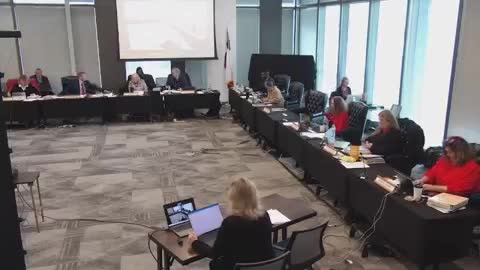
Julie Cole, director of policy and publications for the Student Assessment Division at the Texas Education Agency, told the Committee of the Full Board that the agency is conducting its required four‑year review of 19 TAC Chapter 101 (Assessment).
Julie Cole, director of policy and publications for the Student Assessment Division at the Texas Education Agency, told the Committee of the Full Board that Texas Government Code section 2001.039 requires state agencies to review their administrative rules at least once every four years and presented the agencyreview of 19 Texas Administrative Code, Chapter 101 (Assessment).
Why it matters: The discussion focused on what parts of the assessment rules remain within the State Boardof Education(SBOE) purview and what authority the commissioner of education exercises. Committee members sought practical clarity about which assessment decisions the SBOE can influence and which are controlled by statute or commissioner rule.
The scope of the assessment program: Cole said the Texas assessment program includes the STAAR general academic assessments, the STAAR Alternate 2 alternate assessment, TELPAS (the English Language Proficiency Assessment) and TELPAS Alternate, and several optional programs allowed by statute.
SBOE authority vs. commissioner: Members, including Member Francis and Member Rainer, asked for the legal background on the boardvs. commissioner question. A staff speaker identified as Vaughn summarized a prior attorney general opinion: the SBOE has general oversight of the assessment program, but specific authority to adopt the actual assessments has been assigned by the legislature to the commissioner. Staff said the board still retains authority on limited topics, including an annual approval of costs for private schools that opt to administer state assessments.
Paper administration and parent requests: Members pressed staff about whether districts must offer a paper version of an assessment and whether parents may demand a paper administration. Staff said the law (cited in the meeting as Texas Education Code section 39.02342) allows districts to offer paper administrations and creates a statutory process for parent, student or teacher requests for a paper administration in a subject area. Staff said the law limits such opt‑in requests to 3% of an assessment population if a district offers the paper option, and that those limits do not apply when an admission, review and dismissal committee (ARD) for a student with an IEP determines a paper administration is a necessary modification.
Who decides whether to offer paper: Staff said it is a district decision whether to provide a paper option at all; if the district offers paper administrations, requests are handled on a first‑come, first‑serve basis subject to the 3% statutory limit. Members noted confusion in the field; staff said the agency will continue to communicate the statutory limit and that the referenced statute is Texas Education Code section 39.02342.
Staff follow-up and next steps: Cole and other agency staff said the review presented is limited to determining whether reasons for adoption of each rule continue to exist. The committee was told the review will be posted for public comment in the Texas Register and will return to the committee at the April meeting for any required next steps.
Ending: Members urged clearer guidance for districts and parents about the interaction of board rules, commissioner authority and the statutory opt‑out/opt‑in timeline. Staff said they will continue outreach and provide written references to the statutes discussed.