Get Full Government Meeting Transcripts, Videos, & Alerts Forever!
Get email alerts on the School Operations topic
No spam. Unsubscribe anytime.
Texas State Board of Education adopts new operating rules after hours of debate over TEKS reviews, public testimony and ad hoc committees
Summary
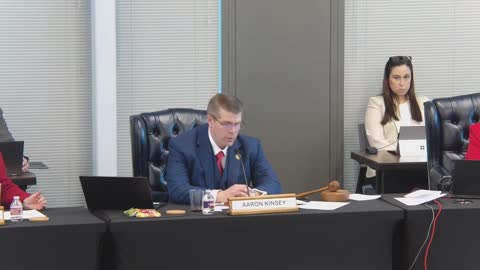
The Texas State Board of Education on Jan. 28 adopted a revised set of operating rules after extensive debate over TEKS reviews, instructional‑materials procedures, public testimony and the transparency of ad hoc committees.
The Texas State Board of Education on Jan. 28 adopted a revised set of operating rules after extensive debate over how the board will handle TEKS reviews, instructional‑materials procedures, public testimony and the transparency of ad hoc committees.
The rules were approved following several hours of line‑by‑line amendment work by the board in Austin. The adoption, made by vote of the full board, establishes procedures for how the board and its committees will review and adopt the Texas Essential Knowledge and Skills (TEKS), how the board will accept and distribute written testimony, and how ad hoc committees will share their work with the public.
Why it matters: The operating rules set the board’s internal process for major responsibilities including TEKS review and instructional‑materials consideration. Changes approved at the meeting affect how educators, publishers and members of the public will interact with the review process and how the board’s committees will provide advance notice and materials for their work.
What the board adopted
- TEKS review procedures: The board added explicit language saying its committee process includes “adoption of procedures and processes related to TEKS reviews and adoptions.” That language, proposed and repeated in multiple motions by Member Maynard, is intended to make clear the board’s role in establishing the practical steps and work groups used during TEKS revision work.
- Instructional‑materials language: Members removed older “proclamation” wording from the rules and replaced it with a reference to “review and adoption of instructional materials pursuant to the board’s internal process and adoption of related processes and rubrics,” a change board members tied to implementation of House Bill 1605 (as discussed during the meeting) and to the board’s newer instructional‑materials review process (IMRA). Legal staff advised the board that proclamations still exist in the Education Code for certain TEKS‑triggered situations, but the board updated its operating‑rule language to reflect current practice.
- Public testimony and registration: The board revised registration procedures for speakers. The adopted language directs speakers to register online via the SBOE website and confirms that in‑person registration at the SBOE office is not available while TEA offices are under renovation. The rules also add a requirement that an automated registration receipt be generated and that written testimony may be emailed to testimony@sboe.texas.gov for distribution to board members and executive agency staff.
- Ad hoc committees and public access: Members debated at length whether ad hoc committees should automatically be treated as public meetings subject to the Texas Open Meetings Act. Concerns raised included staff capacity to host streamed and staffed remote hearings and the potential need to post and physically host committee chairs for public participation. After multiple proposals and a lengthy floor debate, the board adopted amended language intended to increase public access and clarity: ad hoc committees will make committee reports available to the public and provide reasonable opportunities for public testimony, while the board retained flexibility on specific procedures and the level of formal Open Meetings Act requirements to apply in each circumstance. Legal staff cautioned the board that in some circumstances an ad hoc committee’s actions could trigger Open Meetings Act requirements and that following TOMA removes uncertainty.
- Other changes: The board struck a small number of older, unused rules, including a provision authorizing acceptance of certain gifts for charter‑applicant site visits and an obsolete reference to a Texas resource review process. The board also clarified travel reimbursement language for members who serve as directors of the Permanent School Fund (PSF) corporation.
Debate highlights and legal questions
Board members raised recurring concerns about staff capacity for livestreaming and managing additional committee meetings, the difference between advisory fact‑finding work and action by the full board, and how much procedural detail to put in the operating rules versus leaving to staff procedures. Several members said they favored more transparency for ad hoc committee work; others warned that mandating full Open Meetings Act coverage could be unworkable without additional staff support.
Legal staff (identified in the meeting as Colin and Von) repeatedly advised the board that while ad hoc committees are typically advisory and not required to follow every aspect of the Open Meetings Act, applying the Open Meetings Act is the safest way to avoid legal uncertainty. They also confirmed that proclamations remain a statutory mechanism in the Education Code for certain TEKS changes, and that the board’s authority on Perkins allocations was historically implemented by a percentage split adopted by the board.
Officer elections and committee assignments
Following the operating‑rules vote the board conducted its organizational business required by Texas Education Code 7.107(b):
- Vice chair: Pam Little was elected vice chair by voice vote (reported 14 in favor, 0 opposed). The board then named her vice chair and she accepted.
- Secretary: The board held a contested vote for secretary. LJ Francis was nominated first and received 4 votes in the roll call; Will Hickman was nominated second and was elected secretary with 9 votes to 4.
- Committee assignments: After officers collected members’ ranked committee preferences, the chair announced committee rosters for the school year. The following committee assignments were made in public view: - Committee on Instruction: Gustavo Revelas; Rebecca Belmedero; Audrey Young; Pam Little; Evelyn Brooks - Committee on School Finance and Permanent School Fund: Marissa Perez Diaz; Will Hickman; Kevin Ellis; Tom Maynard; Aaron Kinsey (members named to the committee also serve on the PSF corporation board of directors) - Committee on School Initiatives: LJ Francis; Stacey Childs; Julie Pickering; Brandon Hall; Tiffany Clark
Board members were told each committee will elect its committee chair at its first committee meeting.
Votes at a glance
- Adopt operating rules (main motion: "review and adopt operating rules as amended"): approved by the board (13 in favor, 0 opposed as recorded on final vote). - Pam Little elected vice chair: 14 yes, 0 no (recorded by voice/raising hands). - Secretary contest: LJ Francis 4 votes; Will Hickman 9 votes (Hickman elected secretary). - Committee assignments: announced and entered into the record; assignments were made by the officers in public view.
What the board did not do
- The board did not adopt a blanket rule placing ad hoc committees fully under the Open Meetings Act. Instead it adopted amended language intended to increase public access and require committee reports while retaining flexibility and directing staff and members to work out procedures and timelines.
What comes next
Members directed staff to implement the adopted registration and testimony processes (including the testimony email address) and to assist committees in scheduling and public access. Committee chairs will be elected at the first committee meetings and the committees will begin work under the adopted operating rules.
The State Board of Education’s decisions on internal rules will shape how TEKS reviews, instructional‑materials consideration and public testimony are handled going forward; members repeatedly emphasized the changes are intended to improve transparency and predictability but also noted staff capacity and statutory limits will shape implementation.
Ending
The board concluded the organizational items for the new year and adjourned the meeting after announcing committee rosters and officer elections. Members will next convene in committee sessions as scheduled to begin work under the newly adopted operating rules.