Get Full Government Meeting Transcripts, Videos, & Alerts Forever!
Get email alerts on the Education.charter Museum Model topic
No spam. Unsubscribe anytime.
Museum School of East Dallas pitches community-built ‘museum’ model and extended-day program to TEA
Summary
Founders of the proposed Museum School of East Dallas told TEA reviewers the school was built through a two‑year community co‑design process, will use museum‑style exhibitions and daily community partnerships to deepen TEKS instruction, and piloted camps that produced measurable gains on short pre/post checks.
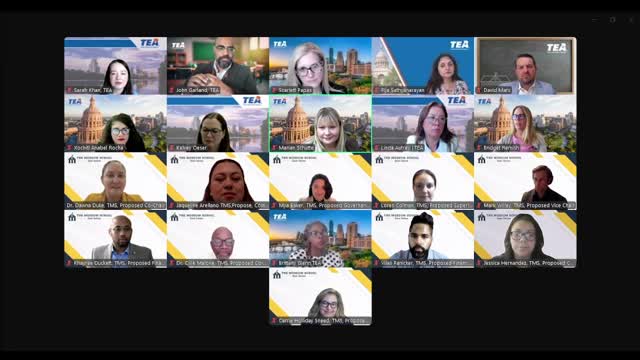
Museum School of East Dallas founders described to Texas Education Agency staff and State Board of Education members on May 14 how a two‑year community co‑design process and summer pilots shaped a proposed K–8 charter that centers immersive, museum‑style learning.
“Today we have a team that’s laser focused on sustainability and accountability,” said Lauren Coleman, founder and proposed superintendent, who told the panel the school was designed “with and for the community” after engaging more than 300 families and roughly 250 school‑age children during the co‑design process.
The school would run core instruction in the morning and an extended afternoon “explore” block that organizers said provides daily, community‑aligned enrichment and intervention. Dr. Donna Duke, a proposed board co‑chair and founder of STEMScapes Collab and Playspaces, said the model emphasizes “age‑ and stage‑appropriate unstructured play and exploration” and uses exhibitions — showcases of student work at the end of instructional units — as a central measure of learning.
The applicants said pilots and camps tested the design. “At our last camp ... we had kids grow from 33% mastery to 80% mastery” on three highly tested fifth‑grade science TEKS items used for a short pre/post check, Coleman said, citing the camp assessment results to illustrate the model’s potential to support standards mastery.
Applicants described a network of local partners they plan to use regularly, including the Perot Museum, Dallas Arboretum, Artist Outreach, LaBoure Boxing Gym and local arts and music partners. The presenters said those partners will be integrated into daily afternoon blocks and aligned to instructional units so students can apply classroom learning in community settings.
Board and applicant witnesses emphasized inclusion and access: organizers said they expect a relatively high proportion of neurodivergent and emergent bilingual students attracted to the model and that daily, scaffolded community experiences will increase exposure and relevance for underserved learners.
TEA and SBOE members asked how the model’s exhibitions and extended day would translate into measurable academic gains; Coleman pointed to the pilot pre/post checks and to national research cited by the National Association of Museum Schools on exposure and achievement, and she said the school will continue to use TEKS‑aligned high‑quality instructional materials and regular assessments to measure student growth.
Next procedural steps: the TEA told the applicants the commissioner’s recommendation will be communicated by May 28, after which the State Board of Education will consider recommendations at a future meeting.