Get Full Government Meeting Transcripts, Videos, & Alerts Forever!
Get email alerts on the Social Studies Framework topic
No spam. Unsubscribe anytime.
State Board social-studies ad hoc committee opens review, hears wide-ranging public testimony on TEKS framework
Summary
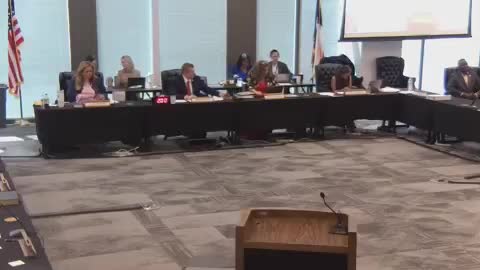
Erin Kinsey, chair of the Social Studies Ad Hoc Committee of the State Board of Education of Texas, called the committee to order April 10 and opened a public hearing to collect testimony on a proposed social‑studies framework that could lead to revisions of the Texas Essential Knowledge and Skills (TEKS).
Erin Kinsey, chair of the Social Studies Ad Hoc Committee of the State Board of Education of Texas, called the committee to order April 10 and opened the first public hearing on a proposed social-studies framework that could lead to TEKS revisions statewide.
Kinsey said the committee, announced Oct. 10, 2024, will research a framework and make recommendations to the full board later this year. “Data reveals that U.S. eighth graders, less than 1 in 4 are proficient in civics. Only 13% are proficient in U.S. history,” Kinsey said, and urged urgency as the committee begins its work.
The testimony collected over roughly an hour included historians, district curriculum specialists, classroom teachers, parents and representatives of education organizations. Speakers addressed sequencing of Texas, U.S. and world history; the number and scope of grade-level standards; developmental appropriateness; teacher preparation; and options that range from integrated curricula to classical-education approaches.
Julia Brookins, senior program analyst for teaching and learning at the American Historical Association, directed committee members to a national report and urged repeated exposure to historical content: “Students benefit from repeated exposure to the same historical content with increasing depth and sophistication across their K‑12 experience,” she said, recommending that states consider when and how topics reappear across grade levels.
Several classroom-level practitioners urged reducing the volume of grade‑level standards so teachers can teach toward depth. Andrea Hutchinson, a social-studies curriculum coordinator in Prosper ISD, said Texas currently assigns too many discrete expectations to a single course and recommended prioritizing historical‑thinking skills. Hutchinson described the scope in middle grades: “Eighth grade U.S. history currently has 99 standards to be taught in approximately 171 instructional days,” she said, and proposed a two‑year U.S. history sequence across seventh and eighth grades to allow more time for analysis and primary‑source work.
Northside Independent School District curriculum staff urged restoring or retaining sixth‑grade world‑cultures content removed in the 2022 draft and stressed that work groups should include current grade‑level practitioners to ensure developmental appropriateness. Bianca Salaika, who said she supports curriculum and instruction for social studies in Northside ISD, told the committee that world cultures “is paramount to our young Texans” and that the 2022 framework had removed that course.
Ernesto Rodriguez, senior curator and historian for the Alamo, argued for an integrated narrative linking Texas history to national and global events, telling the committee, “All history is connected. It is not a series of isolated events, but a unified narrative that must be taught as such.” He described the Alamo’s public‑history work and said visitors often lack connections between grade‑level lessons and broader events.
Speakers who favor a classical‑education approach asked the committee to consider curricular models that revisit core texts and skills year to year. Parent and advocate Shonda Halsey described classical pedagogy as emphasizing grammar, logic and rhetoric stages and recommended more sustained engagement with primary documents.
Representatives of advocacy organizations raised concerns about the 2022 framework draft. Mary Elizabeth Castle, director of government relations for Texas Values, said earlier drafts reduced emphasis on some American symbols and figures and called for broader stakeholder engagement and transparency in any revision process.
Several presenters and committee members emphasized teacher preparation and professional development. Stephen Mints, identified as a professor of history, said many social-studies teachers have limited university coursework in history and recommended partnerships with colleges and universities to strengthen classroom instruction.
The committee did not take formal action at the hearing. Kinsey closed the session by thanking testifiers and saying the ad hoc committee will meet again in coming weeks to consolidate ideas and work toward the report due in June (committee charge). She also urged board members to begin considering nominees for content advisors who will be asked to work on the framework.
The committee accepted 10 pre‑registered testifiers and four late signups at the hearing; the public‑testimony period was limited to two minutes per speaker under the board’s operating rules. No votes or motions were recorded during the session.
Next steps: the committee will continue meetings, compile submitted written materials, and prepare recommendations to present to the full State Board of Education; a report deadline tied to the committee charge is scheduled for June 2025 (day not specified).