Get Full Government Meeting Transcripts, Videos, & Alerts Forever!
Get email alerts on the Charter Application Overview topic
No spam. Unsubscribe anytime.
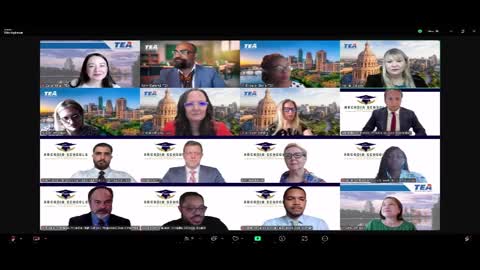
TEA holds capacity interview for Arcadia High School charter application
Summary
The Texas Education Agency on Wednesday conducted a capacity interview with Arcadia Schools for its proposed Arcadia High School, a public charter planned as a single campus serving grades 9–12 with a first‑year enrollment target of 240 ninth‑grade students and a planned maximum enrollment of about 960 students at scale.
The Texas Education Agency on Wednesday conducted a capacity interview with Arcadia Schools for its proposed Arcadia High School, a public charter planned as a single campus serving grades 9–12 with a first‑year enrollment target of 240 ninth‑grade students and a planned maximum enrollment of about 960 students at scale.
The session, led by Mary Anne Shetty, deputy associate commissioner of authorizing and policy at TEA, was a two‑hour, applicant‑panel interview that included TEA authorizing and finance staff and several State Board of Education members. The commissioner will use staff findings and the interview to make a recommendation to the State Board of Education; applicants were told they will be notified of the commissioner’s proposal by May 28.
Arcadia’s leadership and founding board presented the school’s vision for a small, relationship‑driven high school model built around team teaching, intensive data use, and community‑sourced teaching fellows. Mohammed Maroof, introduced as the proposed superintendent, told the panel the model “focuses on 3 core priorities” including “innovative instructional practices for every student” and emphasized support structures he said produced improvement in prior schools he led. Arcadia board chair Alan Anderson, proposed treasurer Jerry Nordbrock, and proposed board members including Eduardo Contreras, Alex Shube and others described governance, finance, and community engagement plans.
TEA staff used the interview to probe startup staffing, enrollment assumptions, governance and evaluation processes, facilities arrangements, transportation, student supports for emergent bilingual and special education students, and fundraising plans. The board described a governance plan using an annual evaluation modeled on the TASB framework and monthly data dashboards to monitor progress. Applicants said they aim to avoid contingencies but acknowledged staff follow‑up may be required if the application review identifies omissions or items needing clarification.
TEA staff and State Board members asked detailed follow‑ups about enrollment scenarios and budget contingencies, the donated facility proposed for the school, and how the proposed instructional design would serve English learners and students with disabilities. Applicants responded with operational contingencies (for example, scaling teaching fellow and administrative staffing if enrollment is below targets), fundraising commitments and in‑kind support from nonprofit partners, and a 20‑year facility arrangement with an option described by applicants to formalize long‑term occupancy.
If TEA staff identify items needing follow up, Arcadia staff were told the authorizing team will contact them to address omissions. The commissioner's recommendation to the State Board of Education will follow TEA's standard review timelines; the applicants were notified at the close of the interview that they will be informed of the commissioner's proposal on May 28.