Get Full Government Meeting Transcripts, Videos, & Alerts Forever!
House Bill 2 funds new ‘prep’ allotment and codifies residency, traditional and pre‑service alternative routes for teacher preparation
Summary
TEA staff told the SBEC that HB 2 creates a major new funding and approval structure for teacher preparation: a preparing‑and‑retaining educators through partnership allotment that funds residency, traditional and a new pre‑service alternative pathway, plus Grow Your Own and mentor supports, with phased funding and strict content and partnership
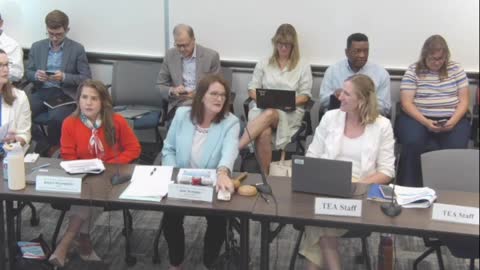
Austin — State Board for Educator Certification members spent the afternoon session with TEA staff reviewing House Bill 2’s sweeping changes to teacher preparation: an entitlement allotment to subsidize residency programs, traditional undergraduate pathways and a newly created pre‑service alternative pathway; incentives and waivers to encourage certification; and content and approval requirements that SBEC must write into rule.
The big picture
TEA staff said HB 2 aims to close the gap between current workforce realities — in which a majority of new hires have little or no training before becoming teachers of record — and evidence that higher‑dosage preparation improves retention and student outcomes. “At full scale implementation, we are looking at close to $400,000,000 a year invested in teacher preparation and certification,” a TEA presenter said at the meeting.
What HB 2 creates (overview)
- A multi‑part preparing‑and‑retaining allotment (the “prep” allotment) that funds five partnership categories: Grow Your Own, residency pre‑service, traditional pre‑service, alternative pre‑service, and a mentorship program. - Clear statutory routes: residency, traditional and a newly defined pre‑service alternative pathway that requires pre‑service practice; alternative certification remains available as today but the new route is distinct. - Content and delivery rules: prep‑funded pathways must embed state‑developed content (reading and math academies, plus additional TEA‑developed foundational skills and behavior‑management modules) and ensure facilitators are trained/certified to deliver that content; residency, traditional and preservice alternative pathways will be restricted in the use of asynchronous coursework unless SBEC grants approval. - Caps and incentives: districts may receive funding for up to 40 residents per district for the residency route and up to 80 candidates combined across traditional and preservice alternative routes (districts choose distribution each year). Funding is phased in; some allotment elements begin 2026–27, with additional…
Already have an account? Log in
Subscribe to keep reading
Unlock the rest of this article — and every article on Citizen Portal.
- Unlimited articles
- AI-powered breakdowns of topics, speakers, decisions, and budgets
- Instant alerts when your location has a new meeting
- Follow topics and more locations
- 1,000 AI Insights / month, plus AI Chat