
House Bill 2 funds new ‘prep’ allotment and codifies residency, traditional and pre‑service alternative routes for teacher preparation
Get AI-powered insights, summaries, and transcripts
Subscribe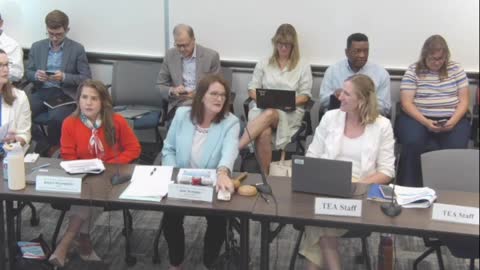
Summary
TEA staff told the SBEC that HB 2 creates a major new funding and approval structure for teacher preparation: a preparing‑and‑retaining educators through partnership allotment that funds residency, traditional and a new pre‑service alternative pathway, plus Grow Your Own and mentor supports, with phased funding and strict content and partnership
Austin — State Board for Educator Certification members spent the afternoon session with TEA staff reviewing House Bill 2’s sweeping changes to teacher preparation: an entitlement allotment to subsidize residency programs, traditional undergraduate pathways and a newly created pre‑service alternative pathway; incentives and waivers to encourage certification; and content and approval requirements that SBEC must write into rule.
The big picture
TEA staff said HB 2 aims to close the gap between current workforce realities — in which a majority of new hires have little or no training before becoming teachers of record — and evidence that higher‑dosage preparation improves retention and student outcomes. “At full scale implementation, we are looking at close to $400,000,000 a year invested in teacher preparation and certification,” a TEA presenter said at the meeting.
What HB 2 creates (overview)
- A multi‑part preparing‑and‑retaining allotment (the “prep” allotment) that funds five partnership categories: Grow Your Own, residency pre‑service, traditional pre‑service, alternative pre‑service, and a mentorship program. - Clear statutory routes: residency, traditional and a newly defined pre‑service alternative pathway that requires pre‑service practice; alternative certification remains available as today but the new route is distinct. - Content and delivery rules: prep‑funded pathways must embed state‑developed content (reading and math academies, plus additional TEA‑developed foundational skills and behavior‑management modules) and ensure facilitators are trained/certified to deliver that content; residency, traditional and preservice alternative pathways will be restricted in the use of asynchronous coursework unless SBEC grants approval. - Caps and incentives: districts may receive funding for up to 40 residents per district for the residency route and up to 80 candidates combined across traditional and preservice alternative routes (districts choose distribution each year). Funding is phased in; some allotment elements begin 2026–27, with additional eligibility phased in 2027–28.
Funding mechanics (high level)
TEA summarized the allotment amounts presented in statute and staff guidance:
- Residency pathway (per candidate): total funding ranges approximately $24,000 to $39,500. Minimum elements include at least $10,000 from the allotment directed toward a resident’s pay (statute also requires the district to pay residents a minimum local amount so total resident pay is higher), and approximately $10,000 paid to the preparation program on completion plus $1,500 for reading/math academy completion. Cooperating teachers and LEAs receive base stipends; LEAs in rural or high‑needs settings receive larger supplements. - Traditional and pre‑service alternative pathways (per candidate): total funding ranges approximately $10,000 to $21,500. Student teachers/residents receive a minimum stipend (e.g., $3,000), the EPP receives completion‑based payments (split for the preservice alternative across internship milestones), and LEAs receive cooperating‑teacher stipends and discretionary support dollars with sliding supplements for rural/high‑need placements.
TEA stressed the allotment is an entitlement: eligible districts that meet statutory conditions may draw the money. Staff also described allowable uses (candidate pay, tuition offsets, coordinator/coach salaries and administrative costs) and said most EPP payments are success‑based (paid upon candidate completion and employment metrics).
New requirements for educator preparation programs
SBEC’s role is central: the board must define and approve the preparation pathways and the criteria that make an EPP eligible for prep allotment funding. TEA told the board it would seek rules that:
- Define the new pre‑service alternative route (timing, minimum pre‑service practice hours, certification path). TEA noted an existing SBEC rule for an “intensive pre‑service” pathway could be a starting point. - Specify conditions under which asynchronous coursework may be used (residency, traditional, preservice alternative programs generally must not rely on pure asynchronous coursework unless SBEC grants an exception). - Require embedding of state content (reading and math academies plus TEA‑developed foundational HQIM skills and behavior‑management content) and a certification process for faculty/facilitators who will deliver that content. - Establish an approval process: an initial plan/interim approval to begin partnerships and pilot, followed by on‑site or quality review (integrated with SBEC’s continuing approval/quality review cycle) to verify implementation.
Content and facilitator training
TEA described a content suite that will be TEA‑developed or TEA‑approved for prep‑funded pathways: reading academies (already statutory for K‑3 reading), math academies (newly required for K‑3 math), a proposed HQIM‑foundational‑skills course (training candidates to use high‑quality instructional materials and to plan/deliver lessons effectively), and a proposed behavior‑management/learning‑environment module. Staff said facilitators must be trained and certified to deliver these materials and that SBEC will set those certification and approval standards.
Asynchronous coursework and program delivery
TEA said the statute bars most asynchronous coursework for the three prep‑funded routes unless SBEC approves a specific asynchronous model. Board members asked about current online delivery across programs; TEA said practice varies widely and research shows weaker outcomes for fully asynchronous models, which is why the statute limits them.
Grow Your Own and mentorship supports
- Grow Your Own: districts may receive $8,000–$12,000 per participant to help district employees (paraprofessionals, bus drivers, etc.) complete the coursework needed to matriculate into a preparation program; participants must enroll in an EPP within three years of program entry. - Mentor partnership: districts receive $3,000 per beginning teacher (up to 40) to fund mentor stipends and mentor training; districts must assign a trained mentor to first‑ and second‑year teachers and may use funds for mentor release time and training.
Phasing and timelines
TEA summarized an implementation horizon that stacks preparation, approval, training and funding: boards and programs should begin stakeholder engagement immediately. TEA proposed:
- Stakeholder engagement in August and board discussion in September on many rule elements. - Applications and technical‑assistance launches in fall (LEAs may apply to form partnerships and access TA supports in 2025–26 to prepare for funded implementation). - First prep allotment funding available for Grow Your Own, residency and mentorship in academic year 2026–27; traditional and pre‑service alternative funding will expand in 2027–28 after further approvals and content readiness.
Board concerns and next steps
Board members raised questions about: how existing post‑baccalaureate and alternative programs fit the new routes; how to treat transfer students and programs embedded in bachelor’s degrees; the practical limits of asynchronous coursework; and capacity for EPPs to scale. TEA said it will publish FAQs and hold webinars for EPPs and LEAs and will propose draft rules for SBEC discussion in September.
Quote from the meeting
"At full scale implementation, we are looking at close to $400,000,000 a year invested in teacher preparation and certification," a TEA presenter told the board, underscoring the scale of the statutory investment.
What was not decided
SBEC members did not adopt rules at this session; many implementation details (precise hour allocations in the 300‑hour prep total, exact approval processes and whether particular EPPs will be eligible year‑one) were left for staff rulemaking and stakeholder engagement.
Why it matters
If implemented as drafted, HB 2 will create a statewide funding stream and approval regime that ties financial incentives to partnerships and specified content and practice‑based preparation. That will change how districts recruit, how EPPs design programs and how novice teachers are paid and supported. TEA and the SBEC will now collaborate to define the program requirements, content approvals and continuing quality review processes needed for the allotment to operate.