
Students tell Texas education panel they need more tutoring, real‑world math and less reliance on screens
Get AI-powered insights, summaries, and transcripts
Subscribe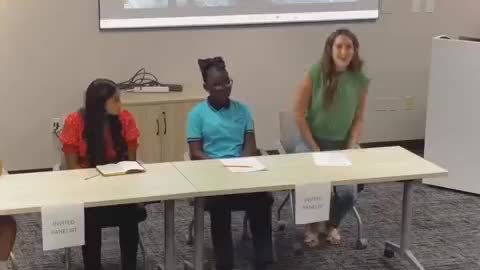
Summary
Five student panelists told a Texas State Board of Education ad hoc committee on math that teaching must be more hands‑on, better paced and backed by more tutoring and classroom time, and warned that online delivery and over‑reliance on AI can undermine learning.
At a meeting of a Texas State Board of Education ad hoc committee on mathematics, a panel of five students told members they want more time, more real‑world examples and more tutoring so classroom math prepares them for later study and everyday life.
The students — Caitlin Krenke, a rising senior at Texas A&M University–Corpus Christi; Destiny Bautista, a junior at Lehman High School; Evan Sebastian, a recent graduate of Dripping Springs High School; Adia Hilton, a rising eighth‑grader at SST Hill Country College Prep; and Peyton Morgan, a rising sixth‑grader at Gorizi Middle School in Austin ISD — said classroom methods, pacing and access to help shape whether students stay engaged with math.
“Math has had an impact on my life,” said Caitlin Krenke, describing examples from family and athletics that made abstract topics tangible. Destiny Bautista urged more in‑school tutoring and earlier, deeper instruction: “I think providing more tutoring times or teaching the class into a deeper level … would help.” Evan Sebastian told the committee math’s value comes from the ways it clarifies patterns: “Math is the language God talks,” he said. Adia Hilton described math as “like a puzzle” and recommended more hands‑on lessons. Peyton Morgan credited timely, personalized help with keeping her confident.
Students told committee members that classroom activities that connect concepts to real life — shopping on a budget, building models, using data sets — made lessons “stick.” Several said purely online instruction and assignments introduced new barriers: some students don’t see instructions clearly on screens, and electronic testing discourages working problems on paper. During discussion, students and board members also flagged concerns that ready access to AI tools can tempt some students to skip the thinking steps, though Destiny said she uses AI only to check her understanding rather than to shortcut learning.
Panelists described specific classroom practices that helped them: interactive whiteboard demonstrations, manipulatives, project work that ties math to history or design, and small rewards or gamified review sessions that boost engagement. Several students said earlier exposure and additional time — more one‑on‑one or small‑group tutoring and better graded progress reporting — would reduce later gaps.
Committee members and staff asked students for concrete recommendations. Students suggested more in‑class, teacher‑led review time; stronger on‑ramps to advanced courses beginning in upper elementary or middle school; and more opportunities for peers to explain ideas to one another. The committee chair noted the ad hoc body will continue work into next year, when its report is due.
The student testimony provided firsthand perspectives from learners in Austin, Corpus Christi, Dripping Springs and other Texas districts and highlighted recurring themes the committee is weighing: how to balance online and in‑person instruction, how much tutoring and hands‑on time to provide in typical school schedules, and how to reduce incentives to rely on AI as a shortcut rather than a learning tool.